Video Interviews for Internal Mobility and Promotions
How to use video interviews for internal mobility, promotions and internal hiring: practical steps, sample questions, a scoring guide, and tips for fairer promotions.

By Tooba Noman
October 26, 2026
18 min read
TL;DR – Key Takeaways!
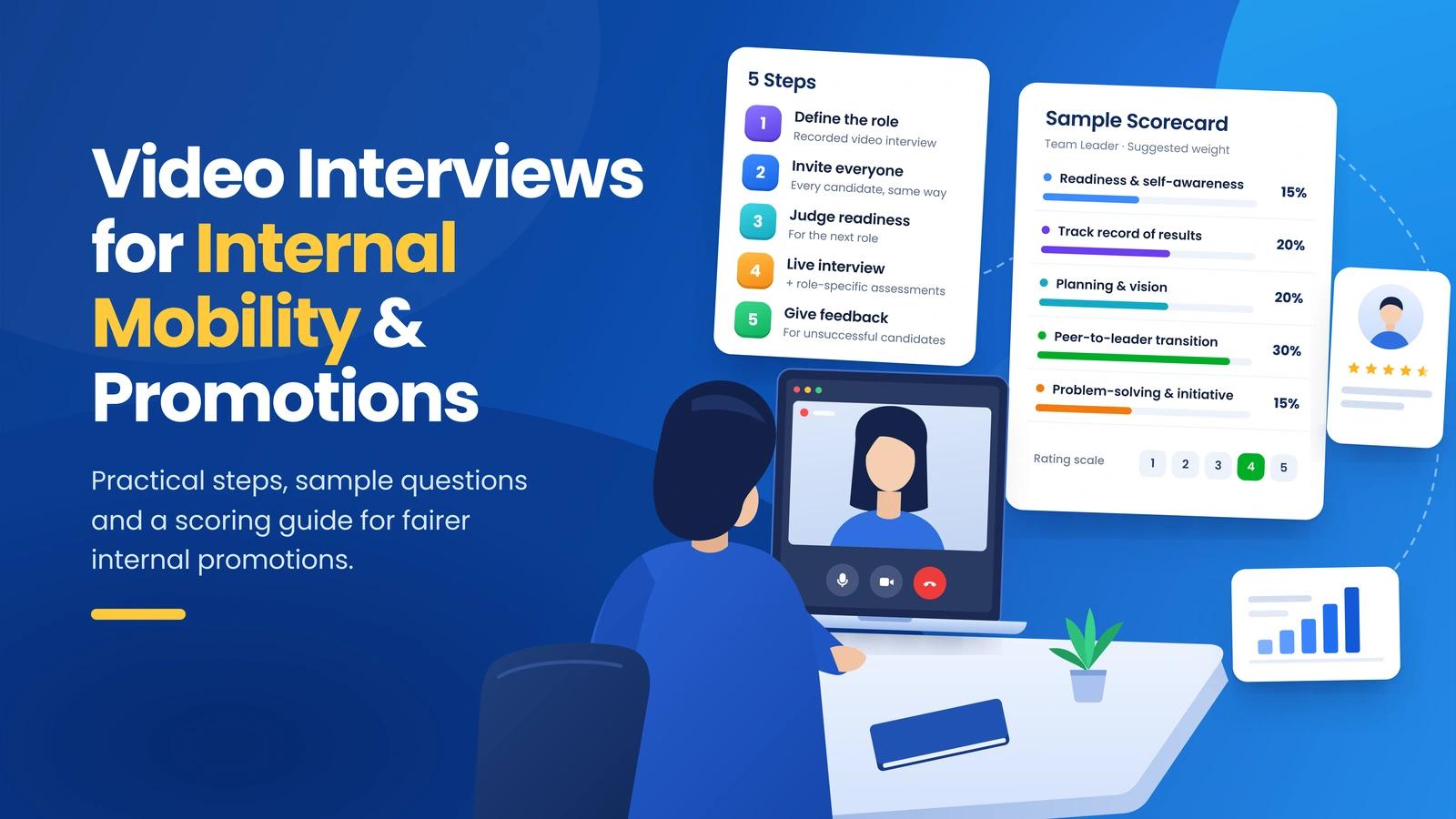
- Judge readiness for the next role, not results in the current one.
- Ask every internal candidate for the same video interview questions and score them on one shared scorecard.
- Widen the shortlist beyond the manager’s favorites with nominations, succession plans and internal posting.
- Use video interviews as the first stage, then follow up with live interviews and role-specific assessments.
- Keep a person in charge of the decision and give unsuccessful candidates honest feedback.
Internal mobility is the movement of current employees into different roles, teams, projects, or levels within the same organization. Rather than looking outside the company for new talent, the business redeploys and develops its own workforce.
John, the company's CEO, needs a new Digital Marketing Team Leader, and he has to consider the four senior-level executives the company currently has. Not an easy job. David, Sara, Albert and Leo are all executives, and each one's performance needs to be evaluated.
Though John has a full view of each one's performance, working out which of them is capable of being a team lead needs deep digging.
Rather than hiring someone from outside or headhunting rival businesses, John encourages internal mobility, and he has the courage and a strong willingness to promote one of them to a deserving position.
The problem now is that all of them have to be evaluated. That's the quiet problem with internal hiring. Businesses form opinions long before a vacancy opens, and those opinions decide who even gets considered. For now, all of them are being considered, but who wins is still pending. And being great at today's job isn't proof someone is ready for tomorrow.
A structured interview gives every eligible employee the same chance to show what they can do. Rather than holding a panel discussion for each of them, a modern approach is to evaluate them through video interviewing. Video interviewing is a practical approach, because people across departments, shifts, and locations can all take part without anyone juggling diaries.
This example covers both internal mobility and promotion. Internal mobility isn't only about promotion; it can also mean employees moving into new roles inside the company, such as a lateral move or a transfer to another department.
Below you'll find out how to set it up, which questions to ask, how to score the answers, and what to tell employees along the way.
Why Internal Mobility Needs a Fair Selection Process
LinkedIn Talent Development’s Internal Mobility Playbook reports that employees at companies with high internal mobility stay 60% longer than those at companies with low internal mobility. This is just a link between the two, not proof that mobility alone keeps people. Still, the report matches what most HR teams see: people stay where they can see the next step.
But a next step only counts if the way you pick people feels fair. When employees watch the same few names get promoted every time, they stop applying. A video interview can be a starting point that gives you, as a recruiter, a way to put the same questions to everyone your management selected based on overall performance.
Review the answers and compare the deserving candidates against what the role needs. Add a clear scoring guide and what you already know about each candidate's performance. The whole process gets easier to run and easier to defend.
How to Use Video Interviewing Software to Hire Internally
In 2025, 42.3% of US employers reported hiring or promoting a candidate from within rather than opting for an external hire, compared to 16.9% in 2024.
Back to John's vacancy. How can he assess all four executives consistently, without leaning on existing relationships or personal recommendations?
Video interviewing software creates a structured screening process as a first step. Instead of choosing candidates based on familiarity or current performance (which matters, but doesn't prove they're ready for a promotion), you can ask the same job-related questions, evaluate their responses against consistent criteria, and identify who should progress to the next stage.
Here are five steps to maintain consistency in the process:
1. Define the role and prepare a recorded video interview
Start with the job, not the people. What does a Team Leader need to be good at? Readiness, a record of results, planning, leading former peers, problem-solving, and backing up the team. Turn those into a short set of questions and give every candidate the same ones with the same instructions.
A few to start with:
- Why do you believe you are ready for this promotion right now?
What it tests: Their self-awareness, readiness, and ability to pitch their own growth.
- What is your biggest achievement in your current role, and how will those skills translate to the new position?
What it tests: Concrete past success and strategic transition of abilities.
- If promoted, what is your top priority or 30-60-90-day plan for your new responsibilities?
What it tests: Proactiveness, planning, and vision.
- How do you plan to handle the transition from being a peer to potentially leading or guiding former teammates? (crucial if it's a step up into management)
What it tests: Boundaries, emotional intelligence, and team dynamics.
- Describe a time you solved a complex problem or took on extra responsibility outside your job description. What was the result?
What it tests: Initiative, problem-solving, and use of the STAR method (Situation, Task, Action, Result).
- How do you plan to support or encourage peers who also applied for this same role?
What it tests: Empathy, maturity, and cultural leadership.
These questions don't test everyday technical skills, which the employees already have. Instead, they look at readiness, big-picture thinking, and emotional intelligence.
Skip the generic “Why should we hire you?” It invites a rehearsed answer and tells you very little. Specific beats broad questions every time.
Before you launch, settle the practical stuff: how much preparation and recording time people get, whether they can retry an answer, and who they can contact if the technology misbehaves.
2. Confirm the shortlist and invite every candidate the same way
Most internal promotions don’t start with a job ad. They start with names. A manager nominates people, a talent review or succession plan for flags who’s ready, or HR checks skills records for people who’ve asked for a leadership move. Many shortlists start out exactly that kind of nomination list.
It’s a good start but check it before you lock it. Harvard Business Review research found that when a promotion has no formal process, the informal shortlist a manager already has in mind usually becomes the final list.
Ask HR and one or two other managers whether anyone else meets the bar, such as someone on another team or shift. If the role is open to wider applications, post it internally with clear eligibility rules and a deadline. Many employers combine these routes, giving employees visibility of open roles while also searching by succession plan and career preference (Cornerstone).
Then send every shortlisted candidate the same invitation, at the same time, with the same deadline and the same interview link. Tell them in writing:
- That several colleagues are being considered for one position
- What the role involves and which skills will be assessed
- How the recorded interview will be used and who will review it
- Whether their current manager will be told, and when
- When they’ll hear back and how feedback will be given
Be careful with confidentiality. Employees often keep quiet about wanting a new internal job because they are afraid their boss will think they are unhappy. In a Gartner survey reported by SHRM, only 17% of employees said their manager helps them apply for internal roles. Some employers only notify the current manager after the employee has applied, so nobody must declare interest before they know they’re a strong fit.
Sending everyone the same invitation sets up everything that follows. All the candidates start with the same information, which makes the final choice easier to explain to the person who gets the role and to the ones who don’t.
3. Judge readiness for the next role, not performance in the current one
Internal candidates usually make the shortlist because they’re good at their current job, so current results can’t decide who gets promoted. The real question is who’s ready for the next role, and the two often don’t line up.
A study of tens of thousands of sales workers found that companies tend to promote their best performers, but those top sellers often turned out to be weaker managers (Benson, Li and Shue, via Chicago Booth Review). CEB (now Gartner) research has been reported as finding that only about one in six high performers also shows high potential (Inc.).
So, build the evaluation around the new role and use three kinds of evidence:
- Recorded answers. These cover the situations candidates haven’t faced yet, such as delegating work, handling a disagreement or coaching a struggling colleague. Score them with one five-point guide for everyone and ask for real examples in the STAR format (Situation, Task, Action, Result). Score what candidates say, not their appearance, accent, or webcam.
- Track record. Use performance reviews and work samples, but read them for signs of readiness, such as mentoring, leading a project, or stepping up when the team is stretched. Strong output in the current role says little about leadership.
- Input from people who work with them. Peers and managers from other teams can add context. SHRM advises caution about using 360 feedback as a rating tool for promotions, so treat it as supporting evidence, not a score.
Have each reviewer score on their own first. Then bring the panel together to compare candidates' side by side against the same standards and challenge any rating that rests on familiarity rather than evidence. Include at least one reviewer from outside the hiring manager’s team, because they don’t know the candidates.
You’re not looking for the person the manager knows best or who sounds most confident. You’re looking for the strongest evidence someone is ready for the role.
4. Follow up with a live interview and role-specific assessments
Once the first screen is done, share the relevant answers and scores with the hiring team, following your organization's access and privacy rules. They decide who moves forward.
Don't let a recording carry the whole decision. After looking at performance reviews and video work samples, give them some role-specific assessments. A candidate might explain how they'd resolve a team conflict beautifully on video. A live follow-up conversation, where appropriate, shows how they handle questions they didn't see coming.
Put together, that tells you what the person knows and how they'd apply it in the new job.
5. Give unsuccessful candidates constructive feedback
Not everyone can get a job. Someone can be excellent in their current role and still need more experience in leadership or decision-making. Their application wasn't wasted. They've invested in this company, and they deserve to know how it went.
Say what they did well, which requirements they haven't met yet, and what to work on before the next opening. A candidate who nailed problem-solving but hasn't delegated much might lead a small project or mentor a new starter. Feedback doesn't need to be a report. A thoughtful conversation or a summary is enough, and it shows employees that internal applications are taken seriously, not rubber-stamped.
A good internal process doesn't just fill a vacancy. It shows people where they can grow next.
Sample Scorecard for Internal Promotion Video Interviews
Asking the same questions is a good start, but it isn't enough. You also need a shared way to score the answers.
Without one, a manager who likes confident, concise answers will score the same video differently from one who prefers detail. Both think they're fair. A scorecard gives the team one reference point.
Here's an example of a Team Leader role. Adapt the criteria and weights to the real job.
| Competency | What reviewers should look for | Suggested weight |
|---|---|---|
| Readiness and self-awareness | Explains why they're ready now and where they still need to grow | 15% |
| Track record of results | Gives a concrete achievement and shows how those skills carry into the new role | 20% |
| Planning and vision | Sets clear priorities and a realistic 30-60-90 day plan | 20% |
| Peer-to-leader transition | Sets healthy boundaries, leads former teammates and supports peers who also applied | 30% |
| Problem-solving and initiative | Uses a STAR example of solving a complex problem or taking on extra responsibility | 15% |
Use a five-point rating scale:
1 – Limited evidence: The answer doesn't demonstrate the required competency.
2 – Some evidence: The answer addresses the question but lacks detail or a clear example.
3 – Meets expectations: The answer provides a relevant example and reasonable explanation.
4 – Strong evidence: The answer demonstrates sound judgment and a clear, relevant approach.
5 – Excellent evidence: The answer provides specific, convincing evidence of the competency at the level the role requires.
Agree on what each score means before anyone watches a video. Otherwise, one reviewer's 4 is another's 3. The weights should come from what the role needs, not from habit. If leading former peers is the hardest part of the role, it should count more than planning.
For a technical specialist moving into a senior individual contributor role, technical problem-solving may matter more than the peer-to-leader transition.
And a high score isn't a promotion. The scorecard supports the decision. The hiring team still owns it.
Can Video Interviews Reduce Bias in Internal Promotions?
Video interviews can reduce bias in promotion decisions, but they can't eliminate it completely. Internal candidates come with histories. Managers already know them, which is useful when it's real evidence and misleading when it isn't. Three patterns come up again and again:
- The visibility effect: An employee who works near the manager gets more chances to show what they can do, while an equally capable colleague on another shift or site gets less attention.
- The familiarity effect: A manager prefers someone they've worked with before because they understand that person's habits and communication style. A less familiar employee gets overlooked despite relevant experience.
- The current-role effect: A high performer is assumed to be the best candidate for promotion. But excelling as an individual contributor doesn't show someone is ready to lead a team.
A structured interview gives eligible employees a more even chance to show job-related skills. The same questions and scoring criteria also make it easier for reviewers to explain how they reached a decision. But standardizing doesn't wipe out every source of bias, so take a few sensible precautions:
- Score answers against role-related competencies, not personal impressions.
- Don't treat eye contact, facial expressions, accent, or camera confidence as evidence of job performance unless a specific, defensible requirement says so.
- Give candidates clear instructions and a fair chance to finish the interview.
- Offer an alternative or a reasonable adjustment when the standard format creates an accessibility barrier.
- Look into unusual scores and disagreements instead of accepting them.
- Check outcomes now and then for patterns that point to unfair treatment.
Video interviewing works as part of a careful selection process. It's not a shortcut around one.
How Should Recruiters Use AI Scoring in Internal Video Interviews?
AI scoring can save time when you have a lot of responses to get through. How much it's worth depends on what you ask it to assess and who checks the result.
Say you're hiring a Team Leader. You might set it to look for delegation, conflict resolution and problem-solving, and use it to summarize answers or apply your criteria. Useful. But it isn't a verdict on someone's potential.
Watch for the traps. A candidate who answers briefly because of their concise can score lower than someone whose longer answer sounds polished but says less. If the criteria reward length or style, the results will too.
The same goes for an accent, a speech difference or a disability that changes how someone comes across on camera. A system shouldn't penalize those when they have nothing to do with the job.
Before AI scores influence a promotion:
- Define the criteria. Decide what a strong answer looks like before candidates record anything.
- Check out the evidence. Read the response or transcript behind a score, especially when the result surprises you.
- Test the scoring. Compare the AI's assessments with trained human reviewers and look into meaningful differences.
- Keep the person in charge. Never promote someone just because a system gave them a higher number.
- Monitor results. Check out the outcomes to make sure the scoring system doesn't unfairly hurt certain groups of people (people with different accents or speech patterns, candidates with disabilities, older workers or non-native language speakers).
The rule of thumb: AI supports the assessment, and recruiters own the decision.
Why Do One-Way Video Interviews Work Well for Internal Hiring?
In a one-way video interview, candidates record answers to the same prepared questions on their own schedule before the set deadline, and reviewers watch later. For internal hiring, that solves a few problems a normal interview can't.
Employees on different shifts and sites get the same chance
With a one-way interview, everyone records at a time that suits them within the same window, so nobody misses out because their calendar didn't line up with the hiring manager's.
The recording doesn't know who sits next to the manager
In a recording, every candidate answers the same questions under the same conditions, and reviewers see answers instead of reputations. Reviewers will still recognize faces, so write the scoring criteria down before anyone presses to play.
Employees can apply without drawing attention
Booking a live slot in the middle of a workday can raise eyebrows with a current manager or teammate.
Recording within an agreed window is easier to fit in quietly. Pair it with a clear answer on who can watch the recording and whether the current manager will be told.
Reviewers can score independently
Each reviewer watches when they have time, scores alone against the scorecard, and compares notes afterwards. That stops the most senior or most confident voice from setting the number, and anyone can replay an answer instead of arguing memory.
HR can screen more applicants in less time
Ten applicants for one Team Leader role means ten live interviews and ten slots in every reviewer's diary. Recorded answers let HR work through the field on a flexible schedule and give the most attention to the strongest responses.
You get evidence for feedback
When an unsuccessful candidate asks what to work on, reviewers can point to specific answers and scores instead of a vague impression. That makes the feedback in step 5 easier to give, and easier to believe.
How to Communicate the Process to Internal Candidates
Since internal applicants are colleagues who'll be working here for years to come, whether they get the job or not, communication matters more here than it do with outside applicants.
Before the interview opens, tell them:
- Why is the internal position open and what does the role involve?
- Why were they considered for this internal move.
- Why are they eligible to apply and how applications will be assessed.
- What does the video interview include and how long it should take.
- Whether there are limits on preparation time or recording attempts.
- Who can access recordings and assessment results.
- How to request an adjustment or technical support.
- When candidates will hear back and how feedback will be given.
Be realistic about timing. If the team expects to review applications within five business days, say so, and update people if the schedule slips.
Set clear rules for who can access recordings, how long they're stored, and when they're deleted. Video answers can contain personal information, so only people involved in the selection should see them. Follow your privacy policies and any local requirements and tell employees how their data is handled.
And don't leave unsuccessful applicants waiting. A short update beats silence every time.
How to Run Internal Candidate Video Screening with TestTrick
Here's how an internal Team Leader round could look at TestTrick. Each step uses a feature the platform already offers.
- Build the assessment around the role. Add the video questions from your scorecard, then set the response time and how many attempts each person gets. You can add a situational judgment or skills test for the same candidate. The interview shouldn't be your only evidence of promotion readiness.
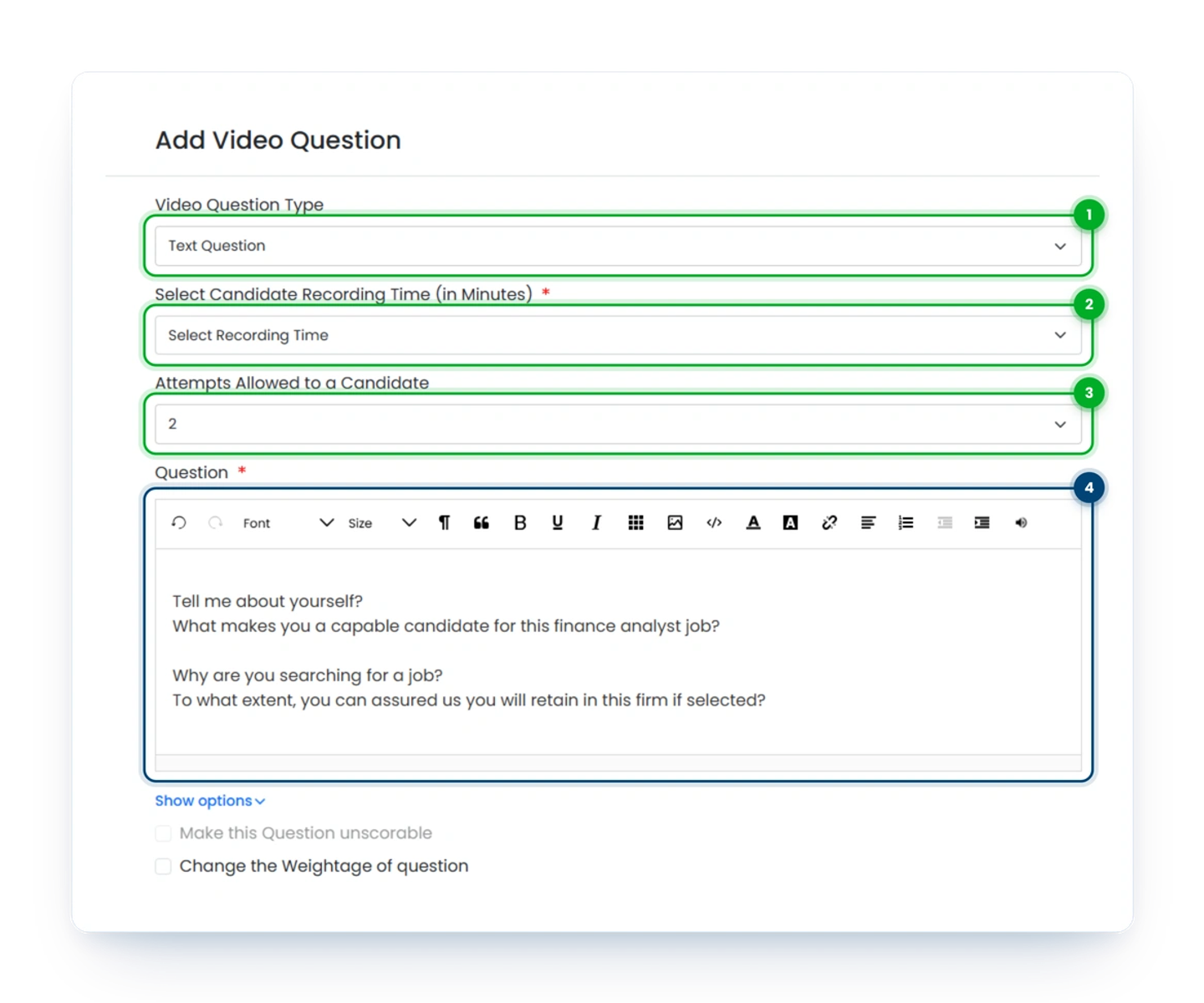
TestTrick Assessment Builder
- Set a deadline instead of booking calls. Pick a window that works for nightshift and remote staff and match the invitation link's validity to it. Links can stay valid for up to 30 days.
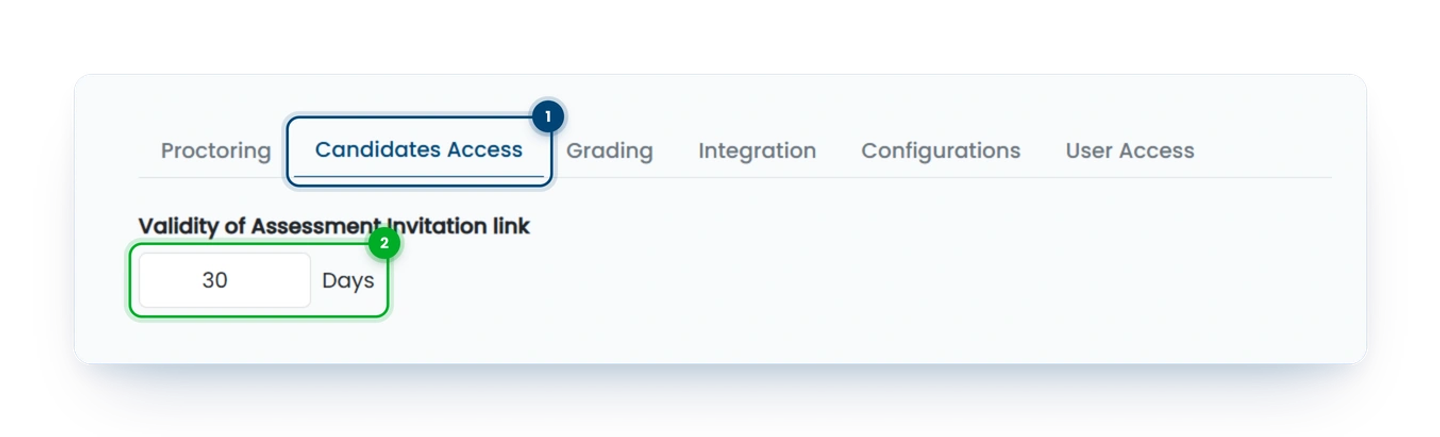
Setting Up Candidate Deadline
- Invite the right people. Email employees one by one, upload a list for a shortlist, or share a public link on the intranet so anyone eligible can apply. If your internal applicants already move through an ATS, you can send invitations from there.
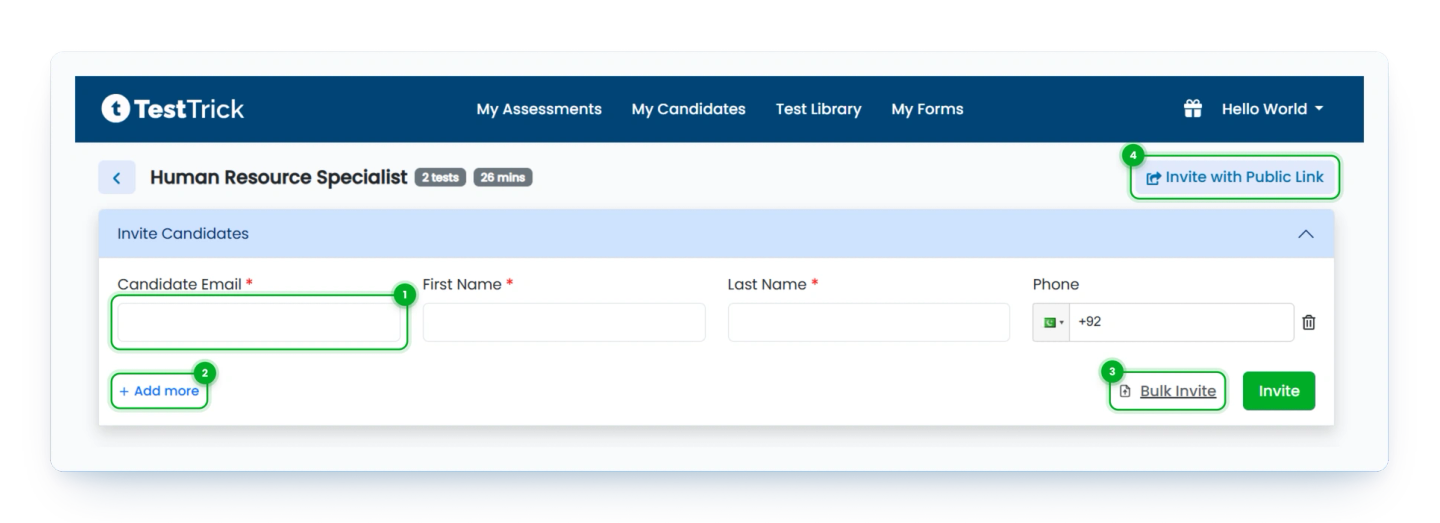
Inviting Candidates
- Make it feel like it comes from HR. Add your logo, brand colors, your own email wording and a short welcome video. Put the details from this article in the invitation: who can watch the recordings, whether the current manager is told, and when candidates will hear back.
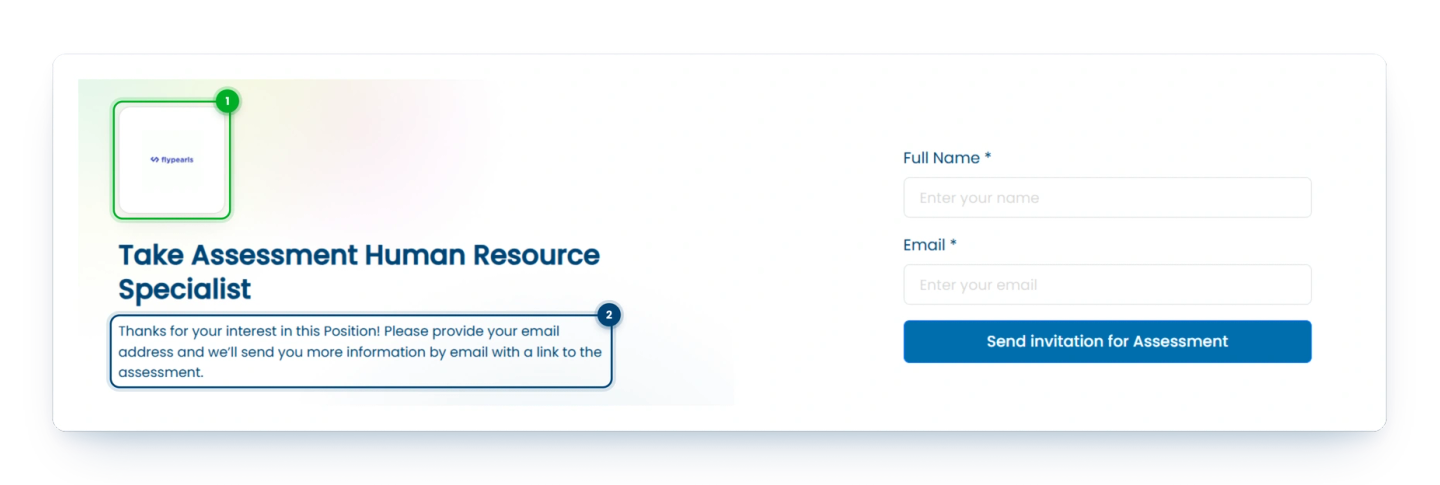
Personalize your Assessment
- Candidate Support Setup. Set up your support email in Configurations and use that same address for your invitations. Before starting, candidates can check their camera and microphone. If they get interrupted, they can pause and finish the test later, which is especially helpful for shift workers.
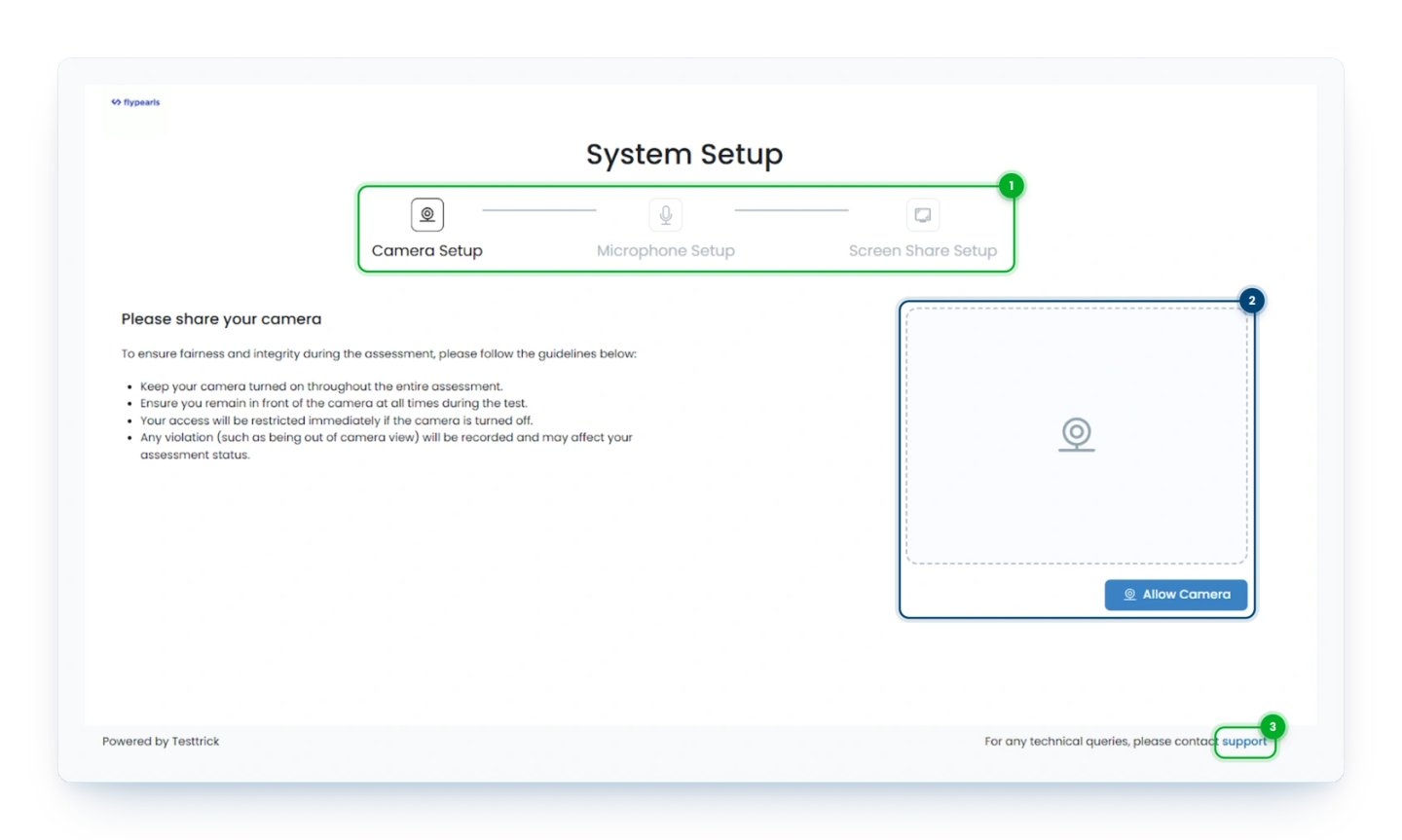
Candidate Support Setup
- Keep proctoring proportionate. Proctoring is optional and set for each assessment. For open leadership questions among your own colleagues, you may not need it. If you switch it on, remember that a flag alone doesn't prove cheating, and that camera and screen tracking don't work on phones or tablets. So, it's advisable to set up a policy that candidates attend the test within working hours, in a private office room.
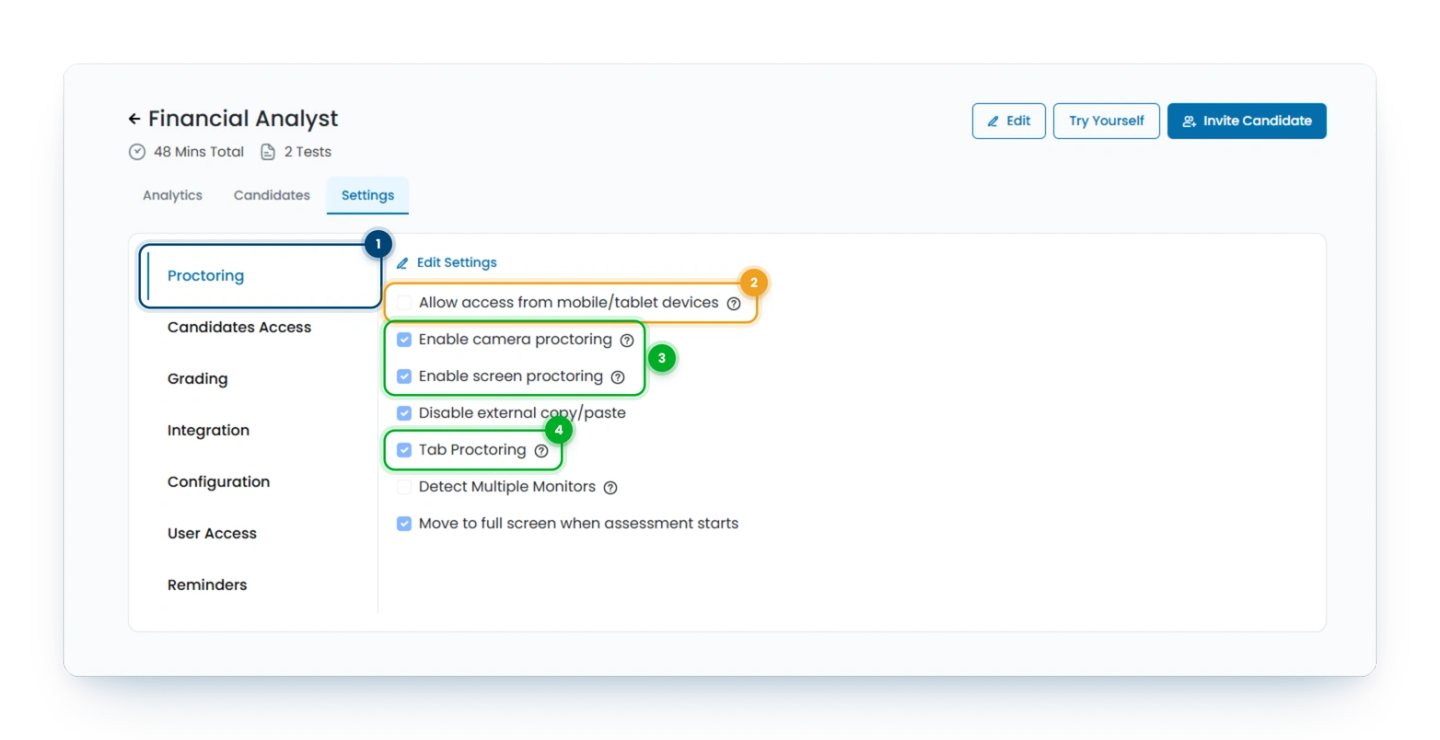
Proctoring Features
- Send reminders and handle extensions. From the candidate list, remind one person or several at once. Anyone who has already submitted is skipped. If someone is approved for extra time, use Extend Date to update their access.
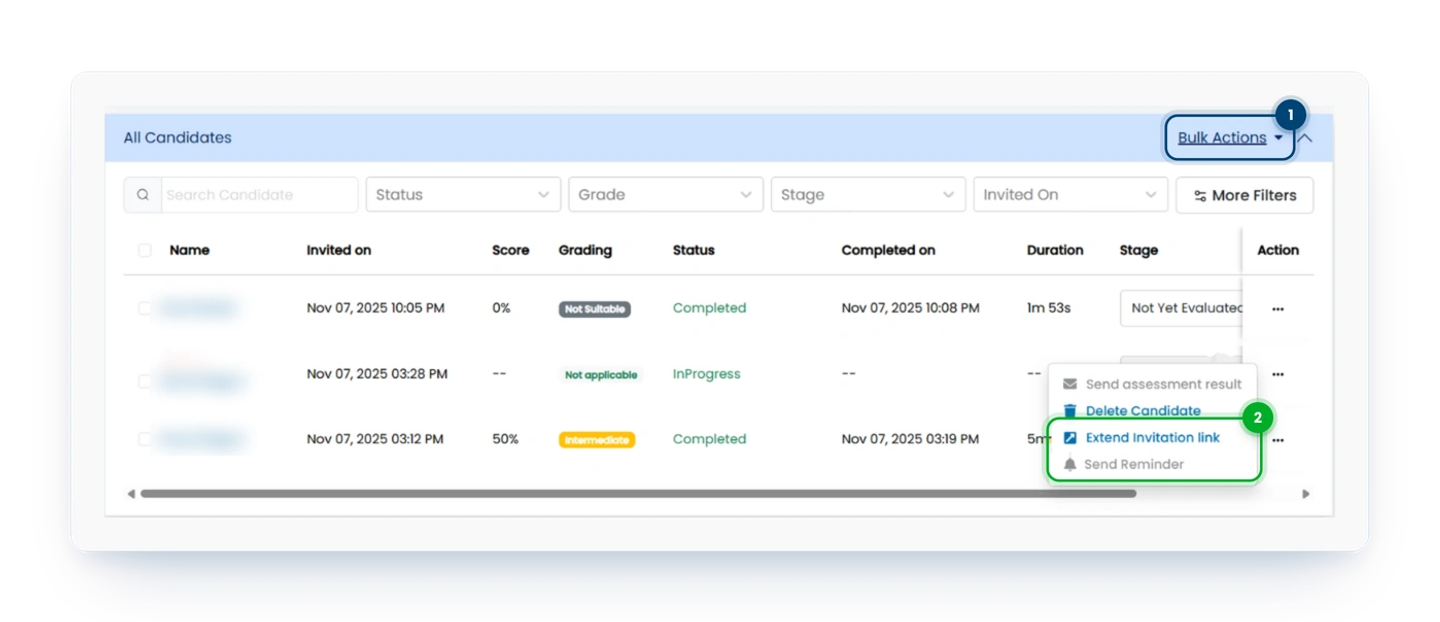
Reminder Setting Options
- Review side by side, with a person in charge. Compare recorded answers against the same standards on one screen in the TestTrick dashboard. If you use AI scoring, it works on text questions answered on video. You can read, change or add to the suggested criteria, see which criteria an answer met, and adjust the score. Your hiring team has the final say.
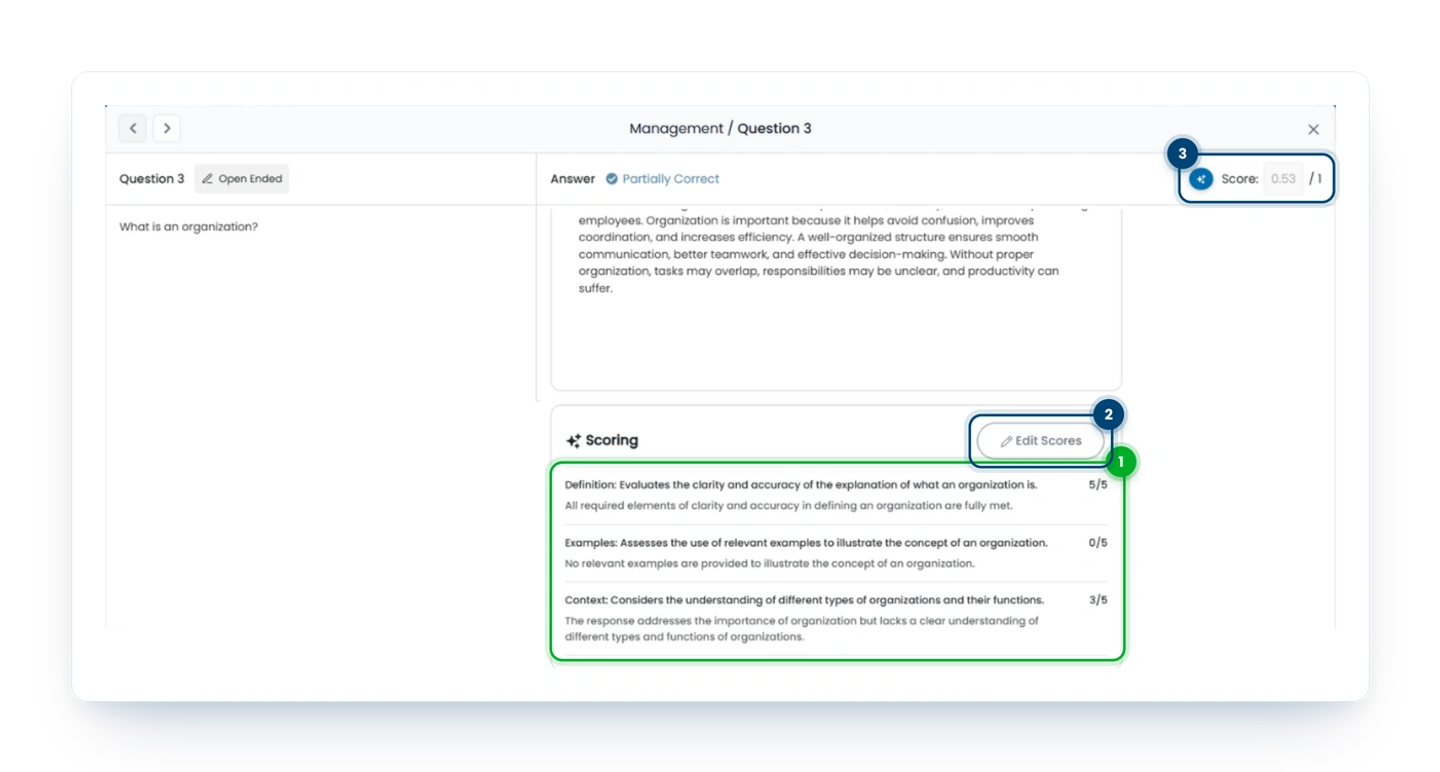
Assessment Review Screen
TestTrick modernizes and streamlines the process. It doesn't make a promotion decision. A lower automated score shouldn't end someone's application unless a person has watched the answer and agrees.
Want to try it? Explore TestTrick's one-way video interview software and start a free trial, no card required. Build your first internal interview with the questions and scorecards in this article.
Frequently Asked Questions
What is internal mobility in recruitment?
Internal mobility is the movement of current employees into different roles, teams, projects or levels within the same organization: promotions, lateral moves, transfers between departments, and other chances to take on new skills or responsibilities.
How can video interviews help with internal promotions?
Video interviews let you ask every eligible candidate the same questions and judge the answers against shared criteria. Combined with performance evidence, they give you, as a hiring team member, a more systematic way to compare people.
What questions should recruiters ask during an internal promotion interview?
Questions should match the new role. Ask about a time when the candidate solved a hard problem, supported a colleague, juggled competing priorities, or handled a disagreement. Then ask what they need to learn to succeed in the job.
Are one-way video interviews suitable for internal hiring?
Yes, particularly for a first screen when employees work different shifts, locations, or departments. Keep candidate experience in mind, and check whether a live interview is needed for the competencies that matter most.
Can AI decide which internal employee should be promoted?
No. AI can help with defined tasks, depending on the system and how it's set up, but it shouldn't replace human judgment. Recruiters review the evidence, weigh the AI scoring along with their own observations and judgments, and stay accountable for the decision.
How can employers make internal promotion interviews fairer?
Use strictly job-related questions, the same scoring criteria for everyone, clear instructions and easy-to-use arrangements. Add other relevant evidence, document the decision, and give unsuccessful candidates constructive feedback.
Should unsuccessful internal candidates receive feedback?
Yes, wherever it is practical. Giving feedback to unsuccessful candidates shows people what they met, what to build on, and how to prepare for next time, and it reinforces trust in the process.
Conclusion
Internal mobility isn't only about filling a vacancy with someone who already knows the company. It's about spotting talent that might otherwise go unnoticed.
A familiar employee might be the right pick. So might a colleague whose skills nobody has seen up close. The point is to judge both against what the role needs, not against how well you know them.
Video interviews give HR a more consistent first stage: clear questions, relevant scoring criteria, a person in charge of the final call, and honest feedback at the end. Video interviews won't replace performance history, practical tests or a follow-up conversation, and they never will.
The best internal hiring process always shows employees that the chance to grow here is real, open, and worth going for.
Build a Hiring-Ready Assessment
Create role-specific, anti-cheat assessments and shortlist candidates on evidence, not guesswork.
Start for freeBy Tooba Noman
October 26, 2026
18 min read
Build a Hiring-Ready Assessment
Create role-specific, anti-cheat assessments and shortlist candidates on evidence, not guesswork.
Start for free