High-Volume Recruiting: A Step-by-Step Guide to Hiring at Scale
Hire more candidates faster without sacrificing quality. Follow our complete guide to high-volume recruiting at scale.
By Favour Etinosa Ogie
July 1, 2026
9 min read
HR just approved you to hire 200 customer service reps in 90 days. You're excited until reality hits. Applications start flooding in. 3,000+ resumes fill your inbox. Your ATS crashes twice. You're manually screening resumes at 11 PM on a Thursday, and you've only reviewed 400 of them.
This is high-volume recruiting without a system.
Most HR teams handle high-volume hiring the same way they handle regular hiring, just faster. That doesn't work. You get buried in applications. Good candidates drop out because your process is too slow. You end up filling roles with whoever stuck around, not who's actually qualified.
This guide breaks down a practical, step-by-step process for high-volume recruiting that works. This will help you source candidates, screen, interview, and onboard them at scale.
What Is High-Volume Recruiting and When Do You Need It?
High-volume recruiting means hiring large numbers of candidates in a short timeframe. Typically, 50+ hires within a few months, often for similar or identical roles.
You need it when facing:
- Seasonal demand (retail during holidays, hospitality in summer)
- Rapid growth and new location openings
- High-turnover industries like call centers, warehouses, and entry-level positions
- New product launches that require large teams quickly
Traditional recruiting doesn't scale. Manual screening becomes impossible when you're reviewing thousands of candidates. Phone screens can't keep up with volume, and qualified candidates may drop out early after waiting weeks for a response.
High-volume recruitment requires a specific approach that balances speed and quality. Let’s look at how to get it right.
Step 1: Plan Your High-Volume Recruitment Strategy
High-Volume Recruitment Strategy
Before you post a single job, know exactly how many people you need, by when, and in what locations. Then work backwards.
Calculate your conversion rates.
High-volume recruitment means handling far more applicants than you ultimately hire. When you’re scaling up, this reality demands a completely different strategy for sourcing, screening, and managing candidates. If you need 150 hires at a 1% conversion rate, you need 15,000 applications. That changes your entire strategy.
Define your requirements clearly.
High-volume roles typically need:
- A few core technical skills that can be tested
- Basic character traits like reliability and communication
- Availability that matches your shifts and locations
Avoid adding nice-to-have requirements. They slow everything down.
Set realistic timelines
- Application to interview: 2 to 3 days maximum
- Interview to offer: 24 to 48 hours
- Offer to start date: 1 to 2 weeks
Anything slower and you lose potential candidates to faster competitors.
Build your recruitment team
For 150 hires in 90 days, plan for at least 3 to 4 full-time recruitment staff plus hiring managers who can block time for interviews. One recruiter can't handle that volume of applications.
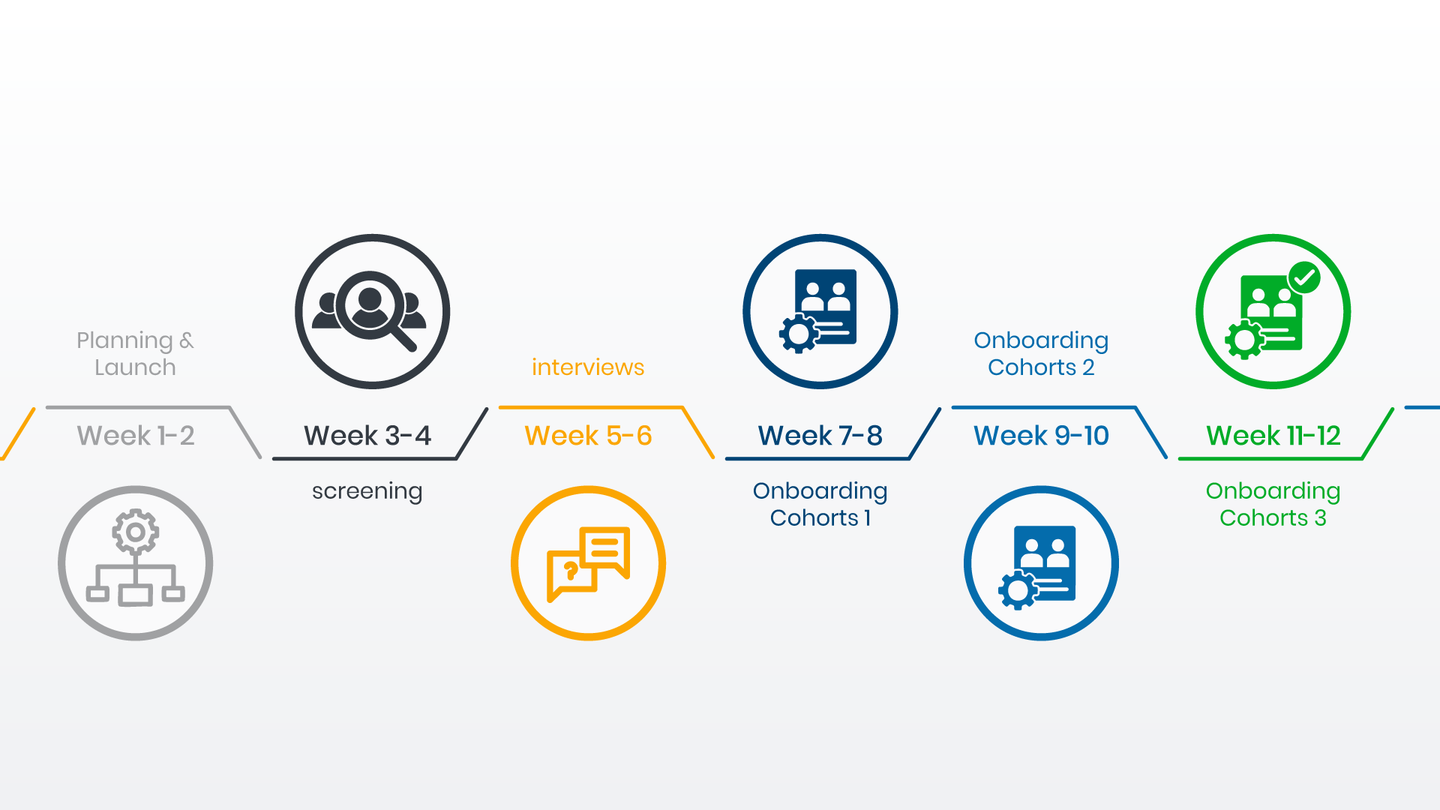
Here's what a 12-week timeline looks like:
| Weeks | Activity |
|---|---|
| 1 to 2 | Post jobs, launch advertising, activate referral program |
| 3 to 4 | Screen applications, conduct video interviews |
| 5 to 6 | Group interviews and job offers |
| 7 to 8 | Onboard first cohort (50 hires) |
| 9 to 10 | Onboard second cohort (50 hires) |
| 11 to 12 | Onboard final cohort (50 hires) |
This approach prevents overwhelming your training team while keeping momentum.
Step 2: Choose the Right Tools for High-Volume Hiring
right tools
You can't do this manually. High-volume hiring requires the right recruitment tools, or you'll spend every hour screening resumes and still fall behind.
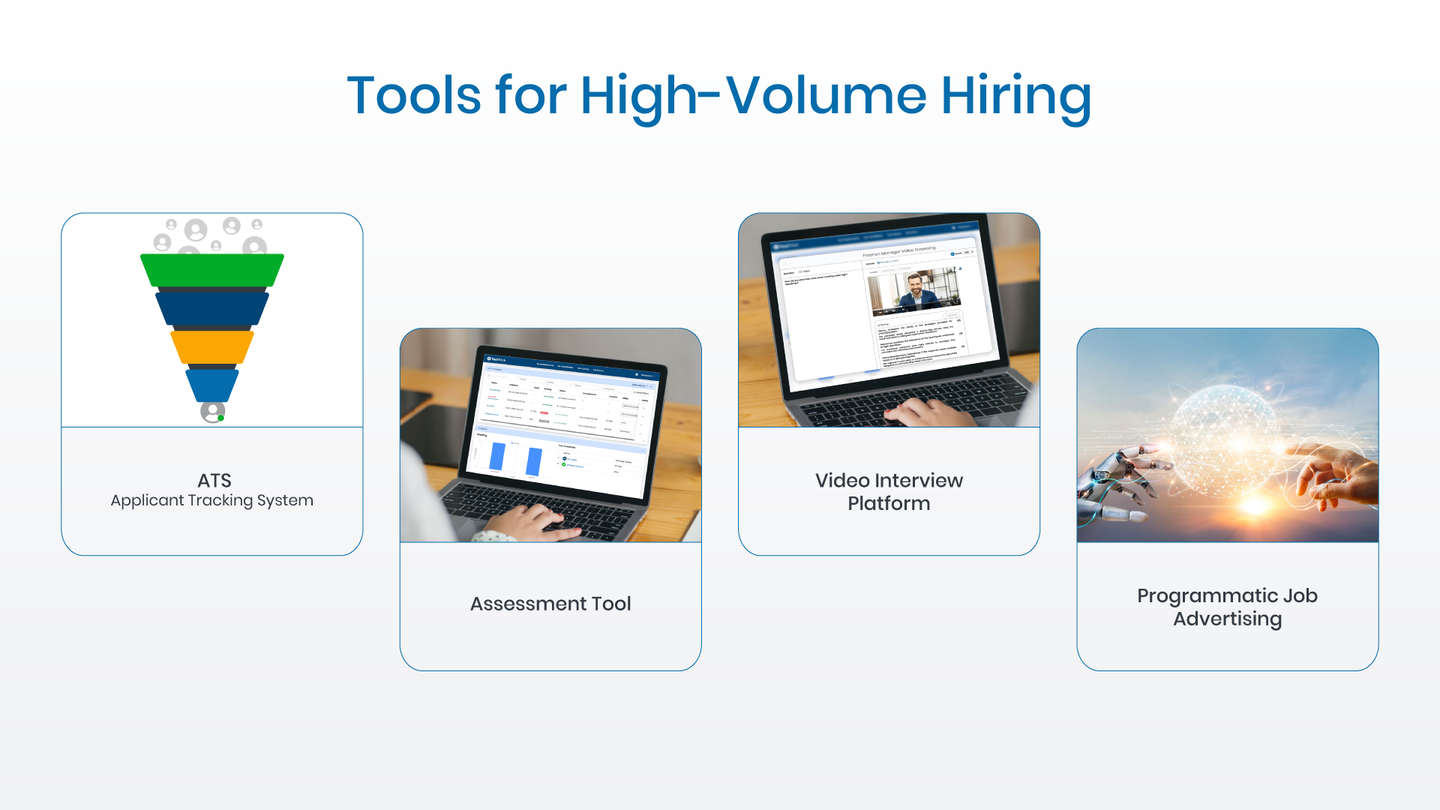
Applicant Tracking System (ATS)
An Applicant Tracking System manages applications, tracks candidates through your pipeline, automates communication, and syncs with your other tools. Look for:
- Bulk actions (move 50 candidates to the next stage at once)
- Automated email responses at each stage
- Knock-out questions that auto-disqualify candidates who don't meet requirements
- A mobile-friendly application process
Without an ATS, you're tracking thousands of candidates in spreadsheets. That's where people fall through the cracks.
Resume Screening and Assessment Tools
Manual screening takes 5 to 10 minutes per resume. At 1,000 applications, that's 80+ hours of work. Automated screening cuts it to minutes. A pre-hiring assessment platform accommodates bulk hiring, personalized invites, video interview questions, skills assessments for technical roles, character traits testing, and anti-cheating features to prevent fraud. See how pre-employment assessment tools work at scale.
Video Interview Platforms
Candidates record video responses to preset questions on their own schedule. You review asynchronously. You can assess 50 candidates in the time it takes to schedule 5 phone screens. For a full breakdown, read this guide to on-demand video interviews.
Programmatic Job Advertising
AI-powered programmatic job advertising automatically posts and promotes your roles across multiple job boards, targets the right candidates, and adjusts spend based on performance. No manual posting to 10 different sites needed. See how recruitment automation software fits into a high-volume tech stack.
Tools you probably don't need
Complex scheduling software, elaborate employer branding platforms, or overly sophisticated skills
Step 3: Source Candidates Efficiently
source candidates
The goal is simple. Get enough suitable applicants without drowning in unqualified ones.
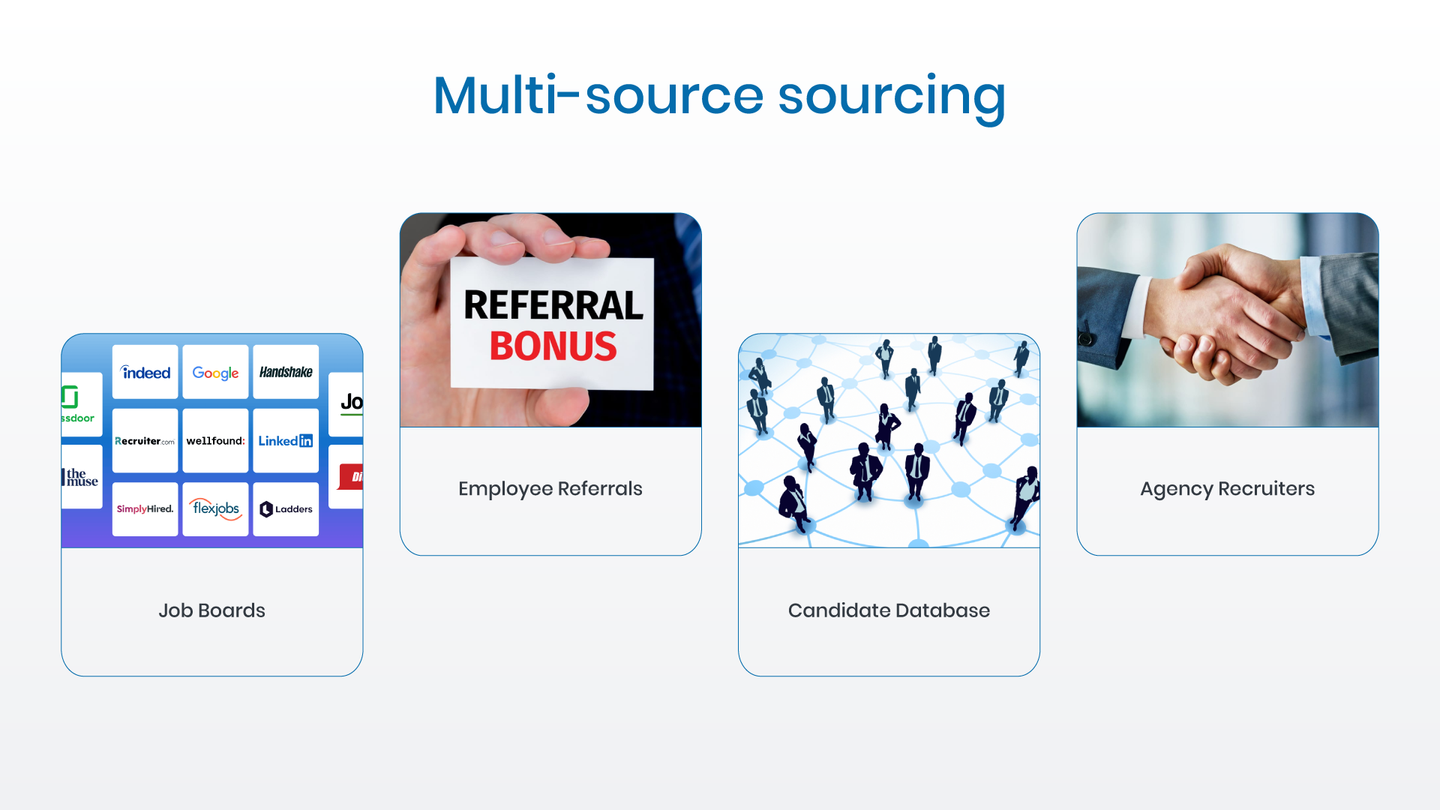
- Traditional job boards like Indeed, ZipRecruiter, and Glassdoor still deliver for entry-level and high-turnover roles. Don't ignore Facebook Jobs and Google for Jobs. Most high-volume candidates apply on mobile.
- Employee referrals at scale. Offer referral bonuses and make it easy. A simple link employees can share in under a minute. Referrals convert faster and stay longer..
- Your candidate database. Build a talent community of people who didn't get hired previously but were qualified. Reaching out to warm leads cuts sourcing time in half. They already know your company, they've applied before, and they showed interest.
- Agency recruiters and search consultants can supplement your recruitment efforts when you're behind schedule. Expect to pay a lot per hire, but they can scale quickly when internal capacity isn't enough.
- Skip: industry events (too slow), highly targeted LinkedIn outreach (works for niche roles, not for volume), and complex talent campaigns.
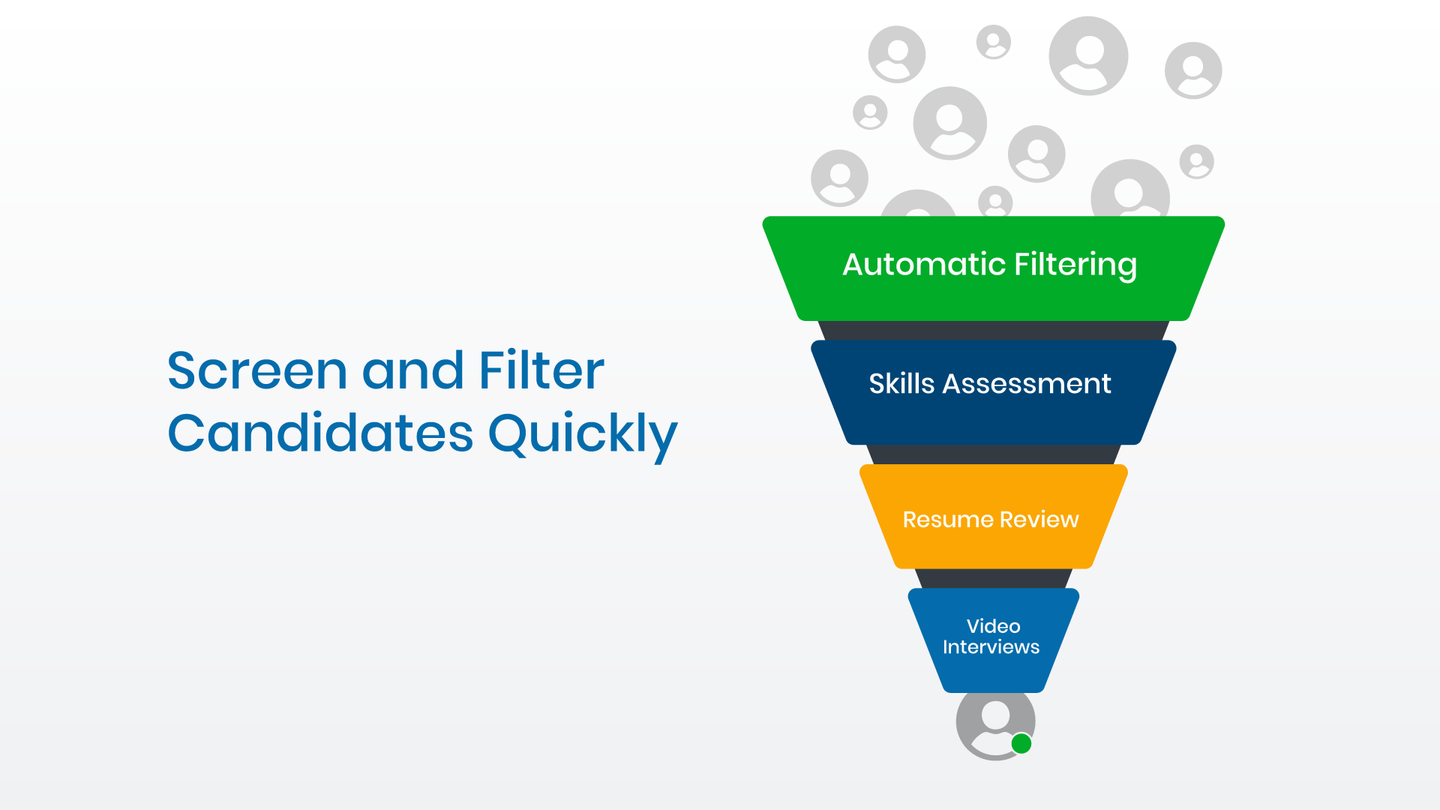
Step 4: Screen and Filter Candidates Quickly
screen and filter
Applicant overload is where most high-volume recruiting processes break down. The fix is screening in stages, not all at once.
Stage 1: Automatic filtering
Use your ATS to disqualify candidates who don't meet basic requirements: location, availability, minimum qualifications. This cuts your volume of applications by 50 to 70% with zero manual work.
Stage 2: Skills assessments
For roles requiring specific skill sets, add a short pre-employment screening test before moving candidates forward. The best talent assessment tools make this fast and job-specific:
- Typing speed test for data entry roles
- Basic Excel for admin positions
- Situational judgment test for customer service
- Technical assessment for IT support
Only review candidates who pass. This cuts screening time by another 50 to 60%.
Stage 3: Resume review (faster)
By now, 2,000 applications are down to 200 to 300. Spend 30 seconds per resume. Look for:
- Relevant experience (even a few months)
- Signs of reliability (consistent work history)
- Clear red flags (major gaps, constant job hopping)
You're looking for qualified, not perfect.
This is a look at the full funnel:
| Stage | Remaining Candidates |
|---|---|
| Applications received | 2,000 |
| After auto-filter | 800 |
| After skills assessments | 300 |
| After resume review | 200 |
| After video interviews | 100 |
| Offers made (80 for 50 hires) | ~60% acceptance rate |
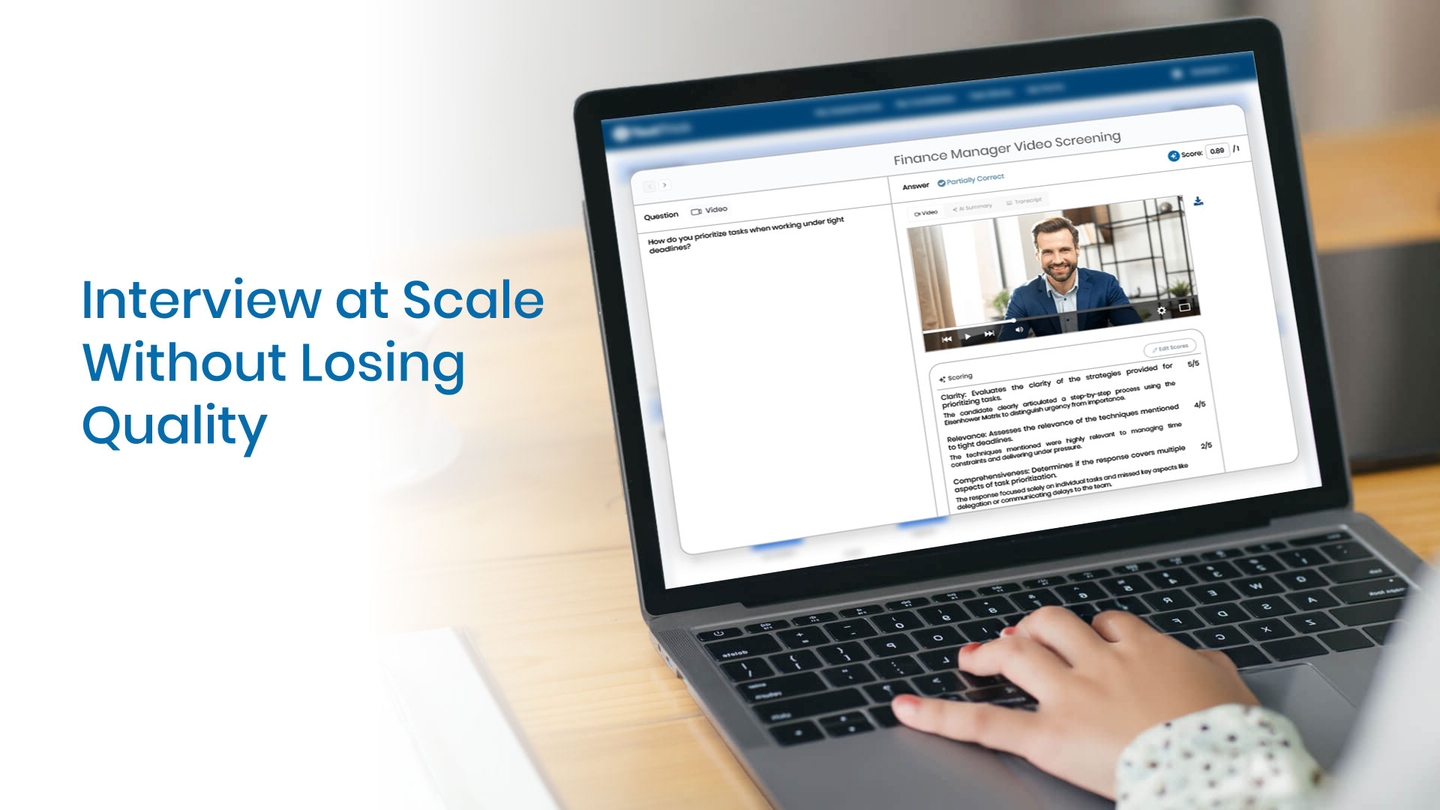
Step 5: Interview at Scale Without Losing Quality
Interview
You need to interview hundreds of people without it taking months.
One-way video interviews first
Candidates record 3 to 4 answers (2 to 3 minutes each) on their own schedule. You review asynchronously. This removes scheduling completely and lets you assess 50 potential candidates in about an hour. For a comparison of the top options, see this roundup of pre-screening interview tools. Ask:
- Why are you interested in this role?
- How would you handle [common job scenario]?
- What is your availability?
Block scheduling for individual interviews
When individual interviews are needed, run 8 back-to-back on set days. Use the same structured questions for everyone. Score immediately after each interview. Make decisions the same day.
What to assess:
- Can they do the job? (skill sets and communication; see soft skills assessment tools for entry-level roles)
- Will they show up? (work history and availability)
- Do they understand the role? (pay, schedule, expectations)
What not to assess: perfect cultural fit, long-term career aspirations for entry-level roles, or passion for the company. Baseline compatibility is enough at this scale.
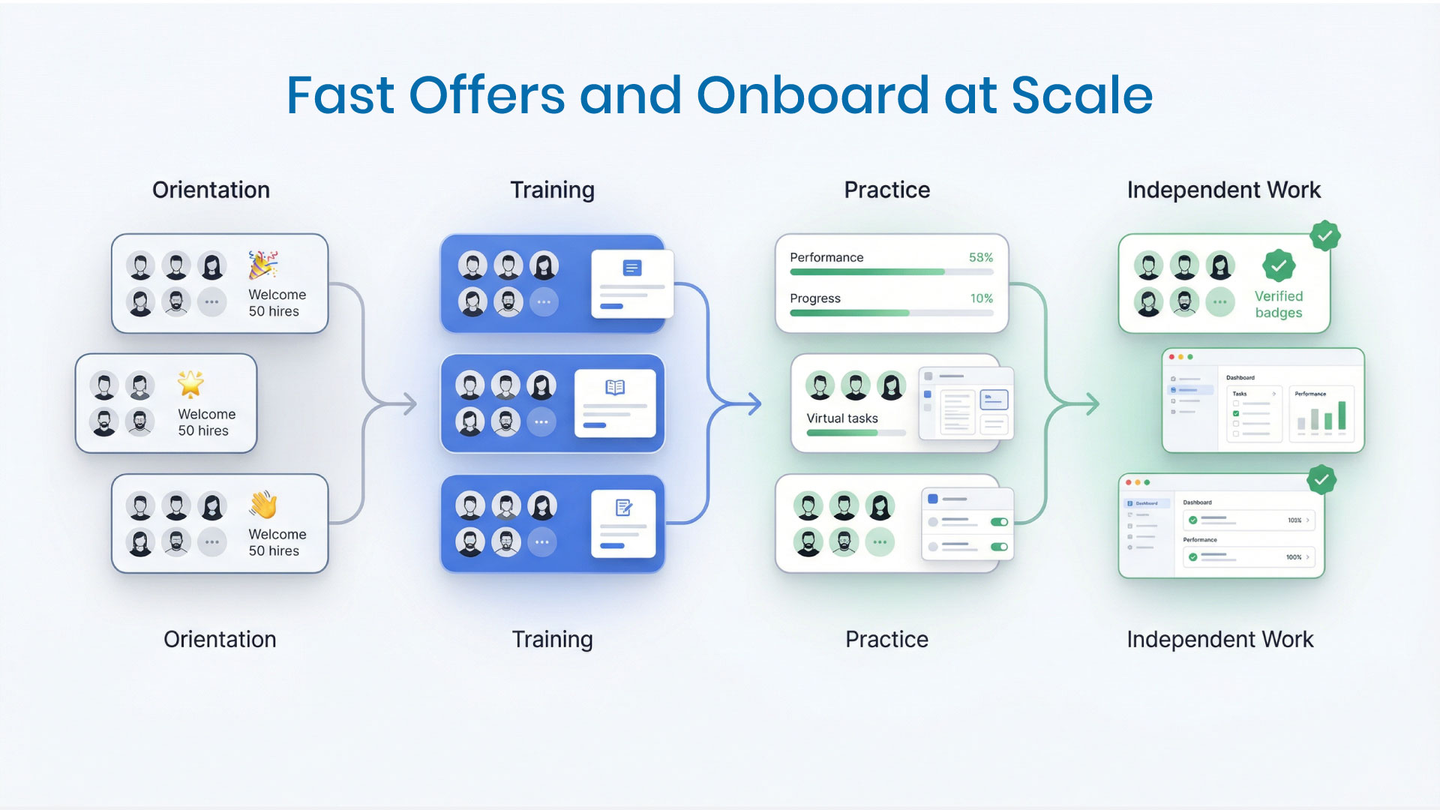
Step 6: Make Fast Offers and Onboard at Scale
offers and onboard
Speed wins. In high-volume hiring, the best candidates have multiple offers. Whoever moves fastest gets them.
- Make offers within 24 hours of a passed interview. Use standard offer letters with digital signatures and a clear start date. Customize nothing at this stage.
- Onboard in cohorts. Schedule group start dates. Everyone starts the same Monday, completes training and paperwork together. For 150 hires, run three cohorts of 50 spaced two weeks apart. It's more efficient and builds team cohesion from day one.
- Send pre-onboarding documents before day one:
- Tax forms, direct deposit, emergency contacts
- Employee handbook and policies
- What to bring and expect on their first day
Sample onboarding schedule for 50 new hires:
| Day | Activity |
|---|---|
| Monday 8 to 10am | Welcome, orientation, company culture, and policies |
| Monday 10am to 12pm | Paperwork and system setup |
| Monday 1 to 3pm | Department-specific training begins |
| Tuesday to Wednesday | Role-specific training and shadowing |
| Thursday to Friday | Supervised practice with immediate feedback |
| Week 2 | Independent work with regular check-ins |
Track these metrics:
- Time to hire - application to start date
- Offer acceptance rate - how many accept vs. decline
- 30-day retention rate - early turnover signal
- Quality of hire - performance at 90 days
If your process isn't working, these numbers tell you exactly where it breaks.
Common Mistakes in High-Volume Recruiting
- Customizing everything. You don't have time to write personalized emails to 500 candidates. Use templates. Automate communication. Save customization for final-stage candidates only.
- Perfectionism. You're looking for qualified and available, not a perfect fit. Don't reject candidates for minor issues that don't affect performance.
- Slow decision-making. Every day of delay costs you candidates.
- Ignoring candidate experience. Employer branding matters even in volume hiring. Confirm receipt of applications. Send status updates. Respond to questions. Rejected candidates talk online and to friends who might be your next suitable applicants.
- Having no backup plan. If your initial sourcing doesn't hit your numbers, know your next moves: additional job boards, higher referral bonuses, or agency partnerships you can activate quickly.
Frequently Asked Questions
How long should high-volume recruiting take?
Most high-volume hiring cycles take 60 to 90 days from first job posting to first day on the job.
The application-to-offer stage should take no more than 7 to 14 days. Anything longer and you lose potential candidates to faster competitors.
What is the biggest challenge in high-volume recruiting?
The biggest challenge is maintaining quality of hire while moving fast.
It's easy to fill seats quickly by lowering standards, but that creates turnover and performance problems later. Companies that screen well upfront, using automated knock-out questions and short skills assessments, consistently report lower 30-day turnover than those that rely on resume review alone. Learn how skills assessment tools keep quality high without slowing things down.
How do you maintain company culture when hiring quickly?
Focus on baseline cultural fit rather than perfect alignment, and reinforce company culture through structured group onboarding.
You don't need every hire to be a culture home run. Screen for core values alignment in your interview questions, use group onboarding to set expectations clearly from day one, and plan for 10 to 20% early turnover with a replacement pipeline already in motion.
What tools are essential vs. nice-to-have?
An ATS and a resume screening or assessment tool are essential. Everything else is optional.
| Essential | Nice-to-Have |
|---|---|
| ATS with bulk actions and automation | Advanced scheduling software |
| Resume screening and assessment tools | Complex employer branding platforms |
| Mobile-friendly application process | Sophisticated analytics (useful later) |
How much does high-volume recruiting cost?
Budget between $500 and $2,000 per hire for an internal high-volume recruiting process, or $2,000 to $5,000 per hire if using agency recruiters.
Expect $500 to $2,000 per hire, including advertising, tools, and team time. Agency fees add $2,000 to $5,000 per hire. Pre-hiring testing tools like TestTrick, however, cost about $480 a year for 600 candidates. If you're new to this approach, start learning about what pre-employment testing is and how it works.
Hire Faster Without Sacrificing Quality
High-volume recruiting works when you have a system: Plan your numbers. Automate screening. Source efficiently. Interview at scale. Make fast offers. Onboard in cohorts.
The biggest mistake is treating high-volume hiring like regular recruiting. It's a fundamentally different process that requires different tools, different timelines, and a different approach.
The fastest way to cut screening time while hiring top talent is with the right assessment tools. TestTrick lets you test technical skills, cognitive ability, and job fit before you review a single resume. Candidates who pass move forward automatically. Everyone else is filtered out. That cuts screening time by up to 80% and ensures you only spend time on qualified people.
Try TestTrick's pre-employment assessments free for 7 days and see how much faster your high-volume recruiting becomes.
Build a Hiring-Ready Assessment
Create role-specific, anti-cheat assessments and shortlist candidates on evidence, not guesswork.
Start for freeBy Favour Etinosa Ogie
July 1, 2026
9 min read
Build a Hiring-Ready Assessment
Create role-specific, anti-cheat assessments and shortlist candidates on evidence, not guesswork.
Start for free