8 Best Testlify Alternatives in 2026
Explore the top Testlify alternatives in 2026. Compare tools with better skills assessments, proctoring, coding tests, and reporting for improved hiring.

By Tooba Noman
August 7, 2026
12 min read
If you’ve been using Testlify, you probably understand why so many teams start there. It’s clean, easy to use, and it pushes hiring beyond resume screening. With a library of more than 3,000 pre-built assessments, recruiters can test technical skills, cognitive ability, and even personality traits without building everything from scratch.
For a lot of companies, that’s enough. It’s a practical way to move toward skills-based hiring without overcomplicating the process. But hiring needs change. You might need lower costs as volume increases. Or deeper specialization for technical roles. Or more flexibility in how assessments and interviews fit into your workflow. In that case, it wouldn’t be wrong to start considering your options.
YouTube
8 Best Testlify Alternatives | TestTrick
This guide walks through eight best Testlify alternatives and where each one makes the most sense. We’ll look at how they handle bulk hiring, skills testing, video interviews, and pricing as you scale, so you can decide what actually fits your team right now.
What to Look for in a Testlify Alternative
Not every assessment platform solves the same problems. Before you compare tools, figure out what you actually need from a Testlify replacement.
Test library that covers roles you actually hire for
A good assessment library saves setup time, but only if it covers your roles. Some platforms have thousands of pre-built assessments across industries. Others focus on depth in specific areas like coding challenges or customer support scenarios.
If you're hiring across multiple departments, you want breadth. If you're mostly filling technical roles, you want specialized role-specific tests that go deep. Customization options matter too. Most teams need the ability to add company-specific scenarios or build assessments from scratch.
Bulk hiring features that actually scale
If you're hiring 50+ people at once, bulk features stop being nice-to-have. You need the ability to send assessments to hundreds of candidates with one action, score and rank them automatically through candidate ranking systems, and filter results without reviewing every submission manually.
Look for CSV upload support, shareable assessment links, and automated shortlisting. If you're clicking through candidates one by one, the tool isn't built for volume.
Video interviews integrated, not bolted on
Some teams only need skills tests. Others want video screening to evaluate communication style and soft skills. If video matters for your hiring process, check whether the platform includes it natively or requires a separate tool.
Native integration is cleaner. You set up one pre-employment assessment that combines skills testing and video questions, candidates complete everything in one session, and you review results from a single dashboard.
Candidate experience that doesn't lose good people
The candidate experience matters more than most teams think. If your assessment platform is buggy, confusing, or takes too long to complete, strong candidates drop out early.
Look for mobile-friendly interfaces, clear instructions, and reasonable time limits. High candidate engagement means better completion rates and access to a stronger talent pool.
The Best Testlify Alternatives in 2026
After testing these platforms and seeing how they handle real hiring workflows, these are the options worth considering. Each one does something different well, so the right choice depends on your specific needs.
1. TestTrick
TestTrick
Best for: All-in-one skills assessment and video screening without workflow restrictions
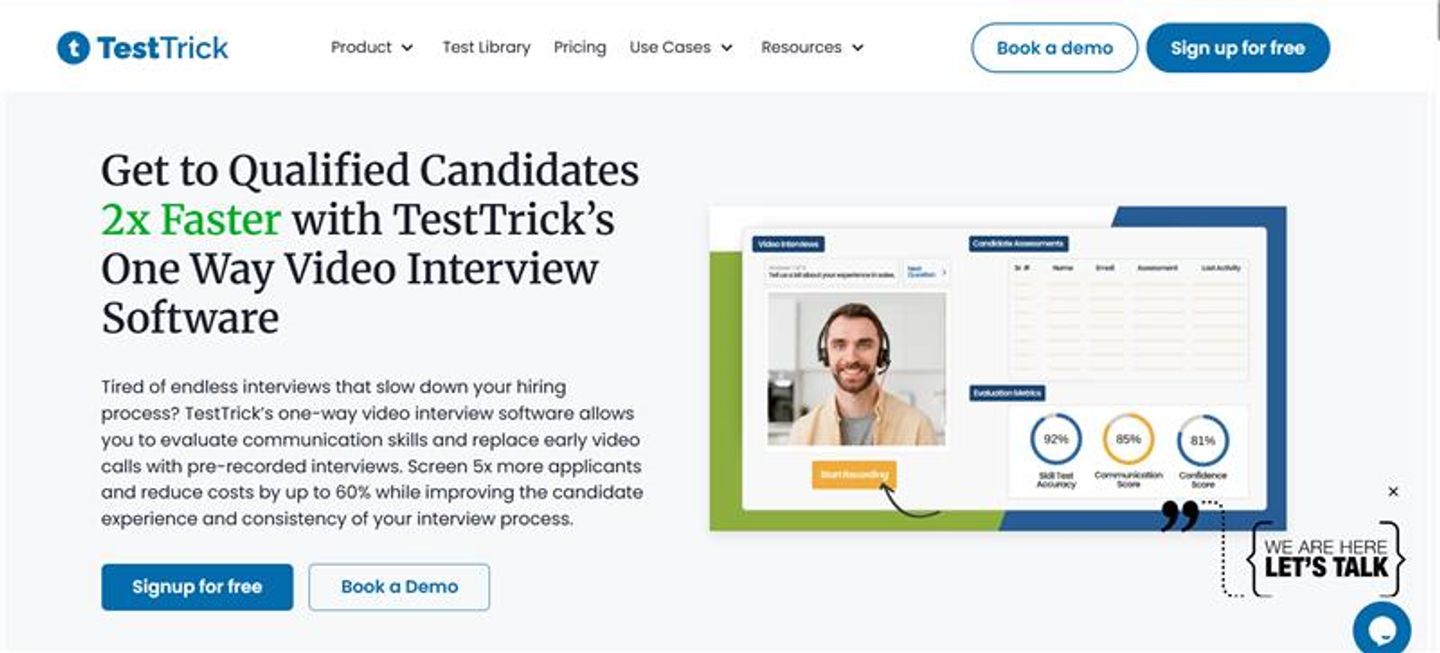
TestTrick keeps screening simple without limiting how you hire. You can run skills assessments, send video interview questions, or combine both. It's up to you.
Need to screen 300 applicants this week? Upload a CSV or share one link with your job post. The platform scores and ranks candidates automatically, so you're not buried in spreadsheets.
The test library covers both technical and non-technical roles, and the assessments are ready to use. If they don't fit perfectly, you can tweak them or build your own with coding tasks, job simulations, written answers, file uploads, or timed challenges. Video questions fit wherever you want them. You're not locked into a preset flow.
Review is where it really saves time. Scores are calculated instantly through candidate scoring, candidates are ranked by performance, and shortlists update on their own. Anti-cheating features run quietly in the background by tracking tab switches, timing patterns, and plagiarism, so you can trust the results without turning the process into a surveillance exercise.
It also connects with major ATS platforms, so candidate data moves automatically instead of living in exports and email threads.
Pricing starts at $49 per month for 50 candidates with unlimited assessments included. Costs scale predictably, and you can adjust plans when hiring spikes or slows down. TestTrick is built for teams that want bulk screening to feel controlled.
Key Features:
- Skills assessments across technical and non-technical industries
- Video interview questions with flexible placement in any assessment
- Bulk candidate management via CSV upload or shareable links
- Automated scoring, ranking, and shortlisting
- Anti-cheating detection (tab monitoring, timing analysis, plagiarism checks)
- Team collaboration with notes and ratings
- ATS integrations with major platforms
- Custom test builder with multiple question types
- Mobile-friendly candidate experience
Pros:
- Combines skills and video in one tool without forcing rigid workflows
- Affordable with transparent, predictable pricing
- Fast setup for bulk campaigns
- Good for diverse hiring needs across departments
- No per-candidate fees that scale unpredictably
- Clean user interface that stays manageable at scale
Cons:
- May feel feature-rich for teams hiring only occasionally
- Works best when evaluation criteria are clearly defined upfront
- Structured assessments may require adjustment for teams used to informal interviews
Pricing:
- Starter: $49/month for 50 candidates
- Basic: $75/month for 100 candidates
- Business: $99/month for 150 candidates
- Enterprise: Custom pricing
2. TestGorilla
TestGorilla
Best for: Large pre-built assessment library across all departments
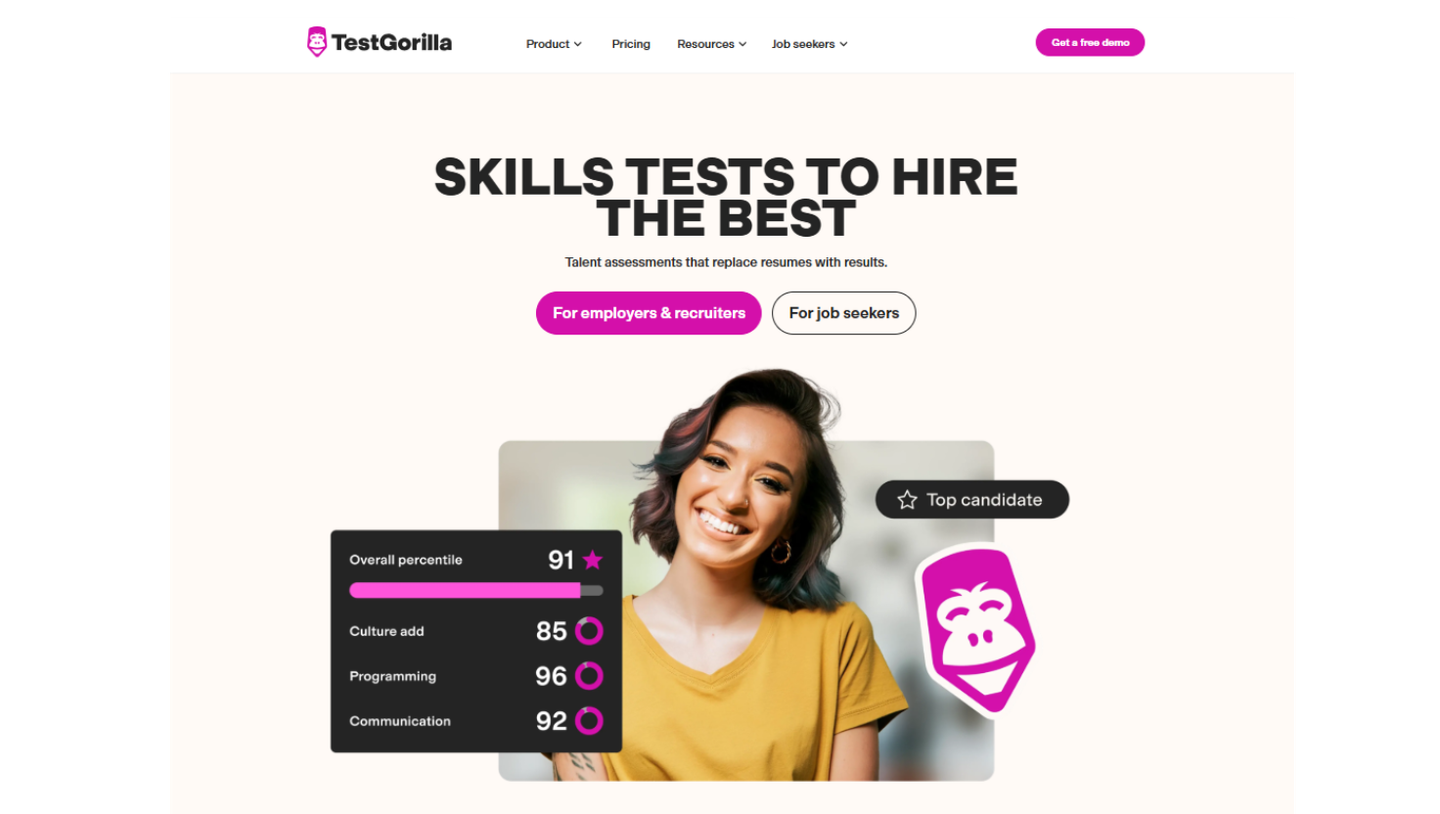
TestGorilla offers over 400 pre-built tests covering technical skills, cognitive abilities, personality traits, language proficiency, and role-specific knowledge. The breadth makes it useful for companies hiring across multiple departments who don't want to build tests from scratch for every position. You can combine different assessment types into custom sequences that reflect actual job requirements.
Video interviews are available but feel secondary to the skills testing focus. You add video components to assessment sequences, but the interface and reporting clearly prioritize test scores over video evaluation. The platform works best when skills are your primary filter and interviews come later in the process.
The trade-off is that long test sequences can feel heavy to candidates. If you're combining four or five different assessments, expect higher drop-off rates. Teams that use TestGorilla effectively keep screens focused on the most relevant competencies and reserve deeper evaluation for later stages.
Key Features:
- 400+ pre-built skills assessments
- Custom test builder with assessment creation tools
- Video interview question support
- Automated scoring and ranking
- Candidate reports
- Anti-cheating measures
- Team collaboration tools
- Custom branding
Pros:
- Extensive and varied test library
- Skills-first approach reduces early interview volume
- Clear, structured scoring
- Suitable across departments
- Candidate reports help explain decisions
Cons:
- Video interview features are secondary
- Can feel test-heavy to candidates
- Not ideal if interviews are your primary screening tool
- Learning curve for complex assessments
Pricing:
- Starter: $135/month for small teams
- Pro: Custom pricing with advanced features
3. Xobin
Xobin
Best for: AI-proctored remote testing with maximum security
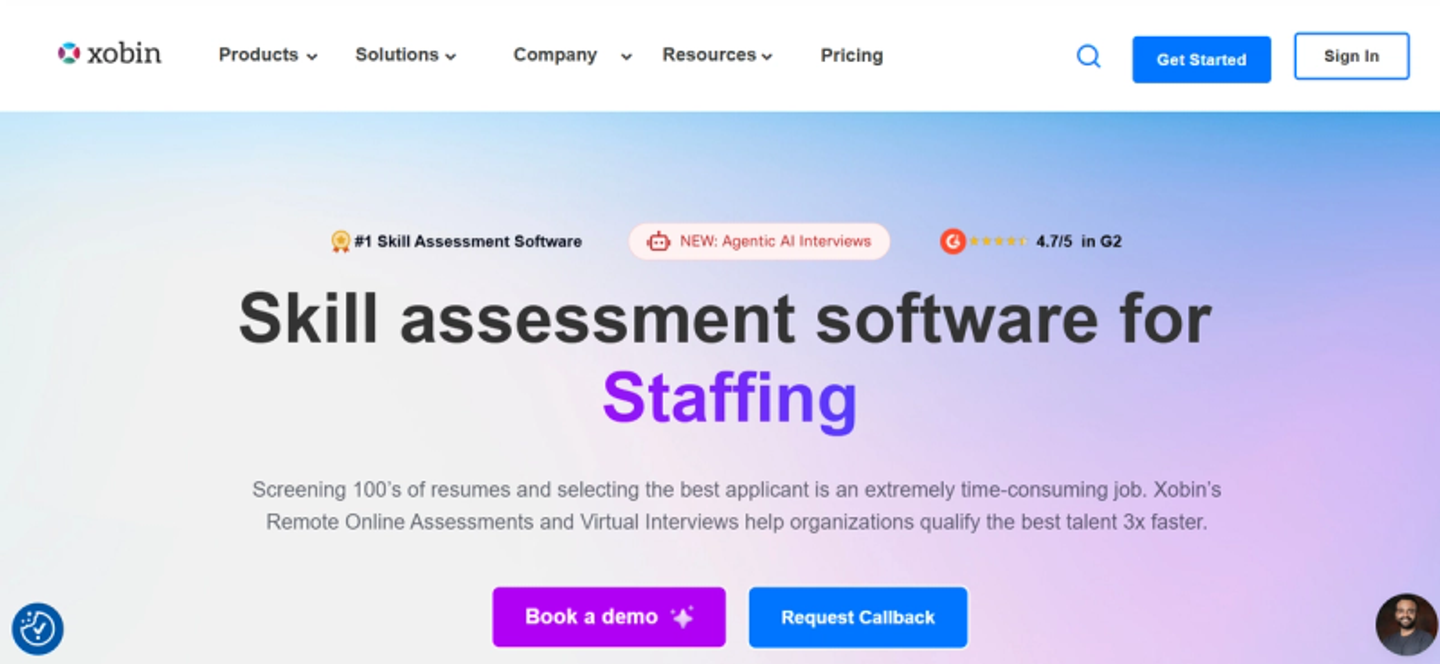
Xobin focuses on secure remote assessments with comprehensive AI proctoring. The platform uses webcam monitoring, facial recognition, eye movement tracking, and behavior analysis to flag potential cheating during tests. These security features work for roles where test integrity matters more than candidate experience, like compliance-heavy industries or high-stakes positions.
Beyond proctoring capabilities, Xobin includes workflow automation for interview scheduling, candidate communication, and pipeline management. The platform can automatically send tests to candidates, schedule interviews with top scorers, and move people through hiring stages without manual intervention. For small teams without dedicated recruitment teams, this automation saves significant time.
Xobin uses a flat annual fee of $699 instead of monthly subscriptions, which can be a barrier if you're not ready to commit long-term or only have seasonal hiring needs. The interface feels dated compared to newer platforms, and setup takes longer than simpler tools.
Key Features:
- AI proctoring with webcam monitoring and facial recognition
- Coding assessments and simulations
- Automated hiring workflows
- Interview scheduling
- Customizable test builder
- Candidate tracking
Pros:
- Maximum security for remote testing
- Workflow automation saves time
- Handles more than just assessments
- Good for teams without recruiters
Cons:
- Intrusive monitoring can deter candidates
- Annual commitment required
- Dated interface
- Setup takes time
Pricing:
- $699/year flat fee
4. HackerRank
HackerRank
Best for: Technical and developer hiring at scale
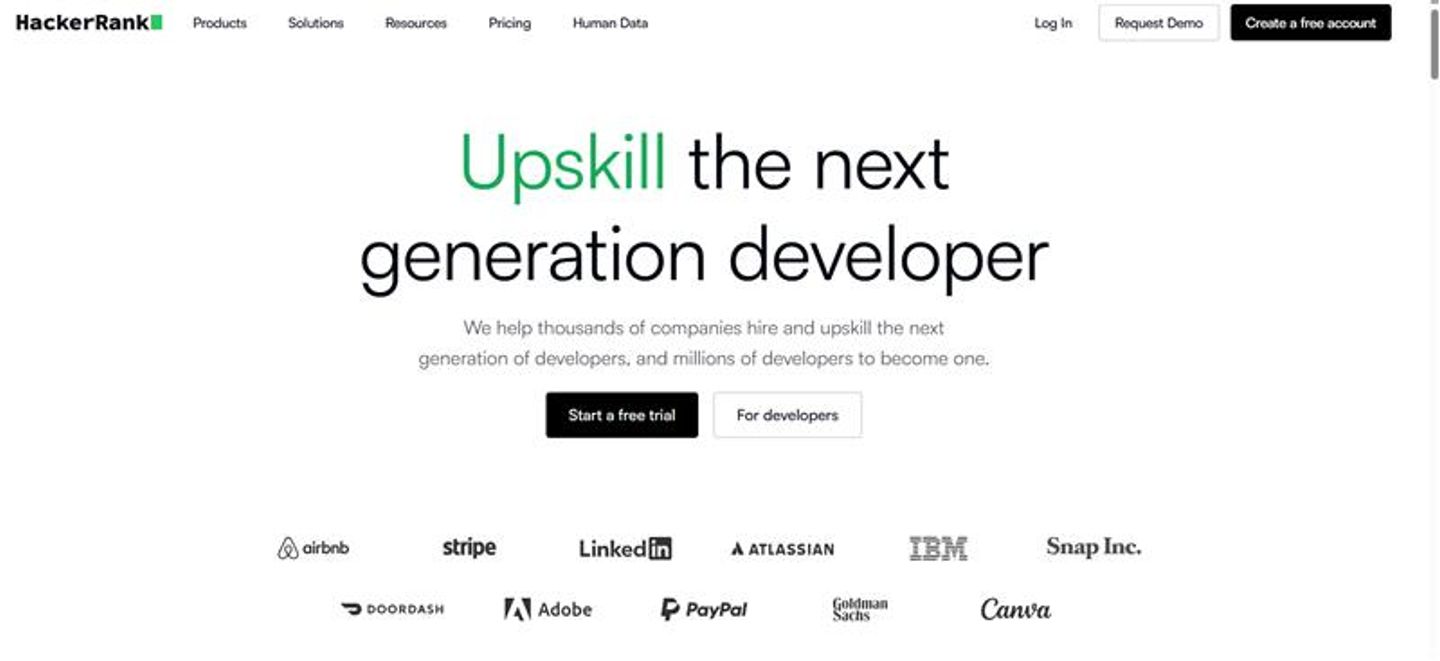
HackerRank specializes in coding assessments with support for over 40 programming languages, real-world challenges, and automated scoring. The platform lets you benchmark candidates objectively against industry standards and includes a large library of technical tests across different difficulty levels. You can also create custom coding tests that reflect your actual tech stack.
HackerRank's CodePair feature allows live coding interviews where you and the candidate can code together in real-time, similar to pair programming. The coding environment supports multiple languages and provides real-time feedback. Plagiarism detection is sophisticated, analyzing code similarity across submissions and flagging suspicious patterns. The platform also provides deep analytics on candidate performance, including time spent on each problem and code quality metrics.
The limitation is obvious: HackerRank is useless outside developer roles. If you're also hiring for marketing, operations, customer service, or any non-technical position, you'll need another tool. The pricing reflects the enterprise focus, with custom quotes typically starting in the thousands annually.
Key Features:
- Coding tests in 40+ programming languages
- Automated scoring and benchmarking
- Real-world problem sets
- Live coding interview interface (CodePair)
- Plagiarism detection
- Team collaboration review tools
- ATS integrations
Pros:
- Clear objective measures for coding skills
- Fast screening at scale
- Benchmarking and comparison tools
- Works well with technical hiring pipelines
- Sophisticated plagiarism detection
Cons:
- Not useful outside technical roles
- Heavy setup for non-technical screening
- No traditional interview support
Pricing:
- Starter: $199/mo
- Pro: $449/mo
- Enterprise: Custom pricing
5. Vervoe
Vervoe
Best for: Job simulations and performance-based hiring
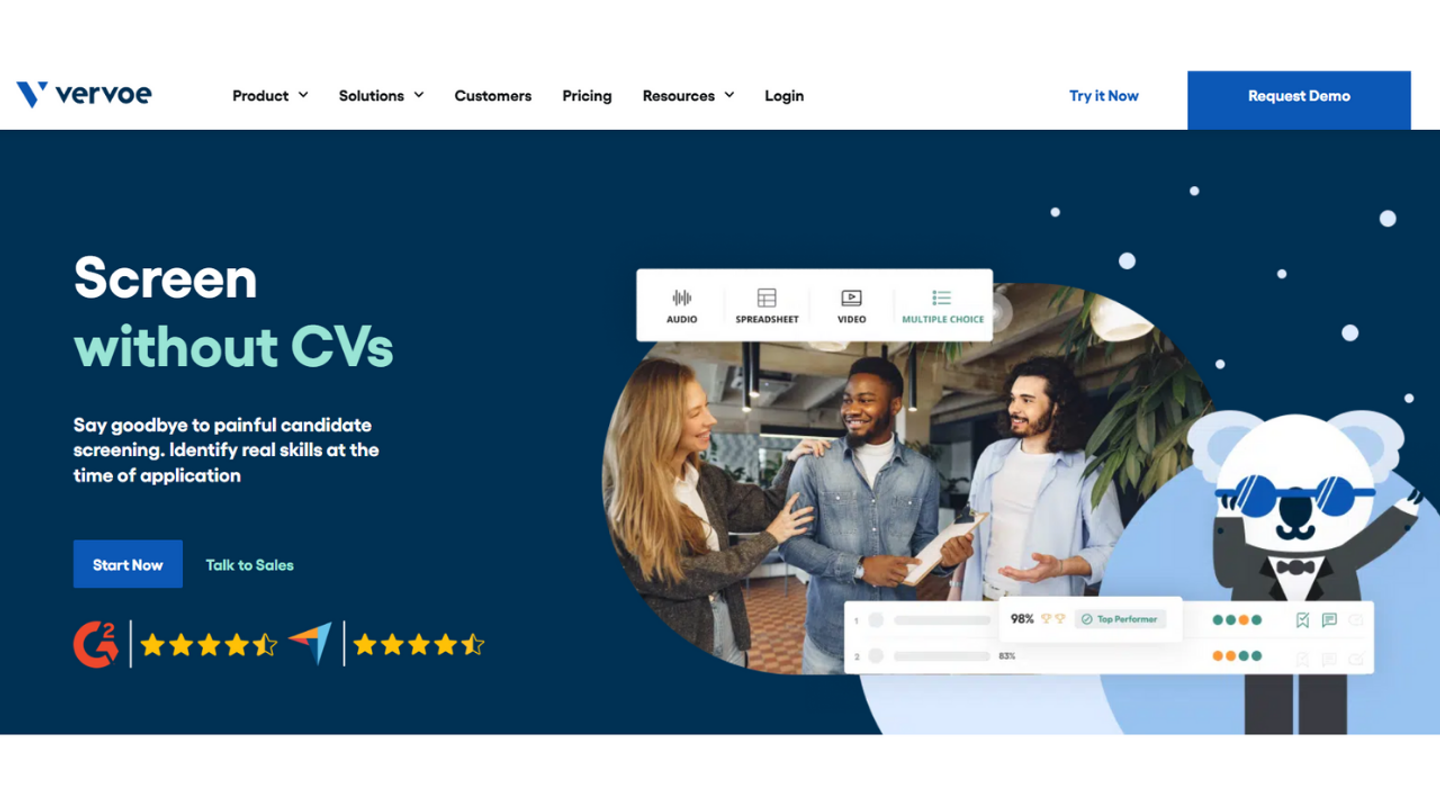
Vervoe takes a different route. Instead of multiple-choice tests or quick video answers, it asks candidates to do the job. A writer drafts a blog post. A support rep works through mock tickets. A marketer outlines a campaign plan. You're not guessing whether someone can perform job-related tasks. You're watching them try.
That realism is the upside. It exposes the gap between theory and execution. Someone might talk confidently about handling objections, then struggle once they're placed in a practical scenario. Vervoe helps surface that early through skill-based hiring.
It does use AI to assist with scoring open-ended responses, but you'll still spend time reviewing work yourself. And building strong simulations isn't instant. You need to design believable scenarios, add context, and decide how you'll evaluate responses. Templates help, but there's real setup involved.
It shines for creative and strategic roles where judgment matters more than ticking the right box. The trade-off shows up in high-volume screening. Manual review slows things down, and pricing is per candidate, which adds up quickly if you're screening at scale.
Key Features:
- Job simulation assessments
- Custom scenario builder
- AI-assisted scoring
- Video and written responses
- Real work sample evaluation
- Skills-based hiring focus
Pros:
- Tests actual job performance, not proxies
- Catches gaps standard tests miss
- Good for creative and strategic roles
- Reduces bias from resume screening
Cons:
- Requires more setup time
- Manual review needed for best results
- Not ideal for high-volume hiring
- Per-candidate pricing gets expensive
Pricing:
- $300 for 10 candidates
- $600 for 50 candidates
- $9,000 for 1,000 candidates
6. Criteria
Criteria
Best for: Psychometric assessments and cognitive evaluations with legal defensibility
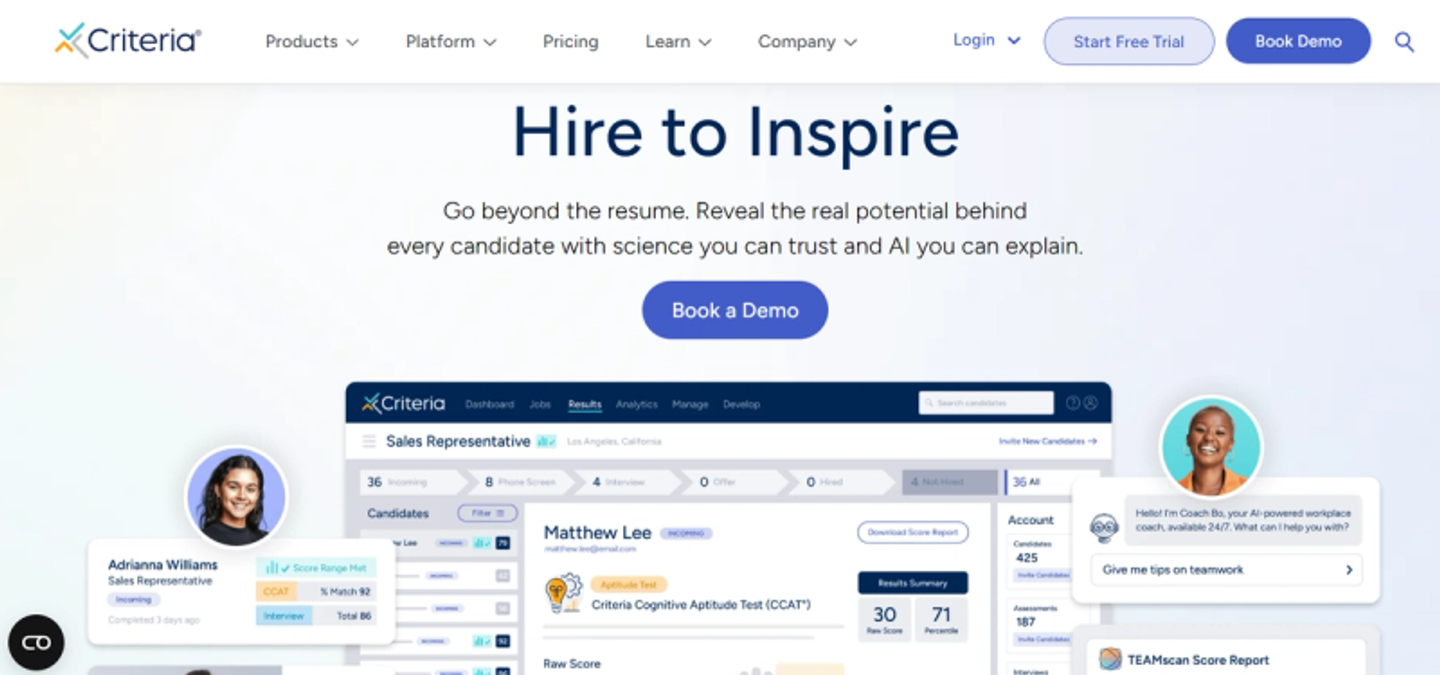
Criteria focuses on scientifically validated psychometric tests backed by industrial-organizational psychology research. The platform employs psychologists to develop assessments and regularly runs validation studies. This validation process provides legal defensibility and reduces bias risk compared to crowdsourced tests. Results come with detailed interpretation guides and adverse impact analysis.
The test library includes cognitive aptitude tests, personality assessments, emotional intelligence measures, and behavioral assessments for specific roles. The trade-off for this validation is rigidity. You can't customize validated tests without invalidating the research, so you're choosing from their library and using tests as designed.
Criteria doesn't include video interviews or coding assessments. It's strongest for evaluating cognitive ability and personality fit through psychometric testing, not technical skills or communication style. Many teams use it alongside other assessment tools for comprehensive candidate screening.
Key Features:
- Scientifically validated assessments
- Cognitive aptitude tests
- Personality and emotional intelligence assessments
- Adverse impact analysis
- Legal defensibility
- Detailed interpretation guides
Pros:
- Strong legal backing
- Validated by IO psychologists
- Reduces discrimination risk
- Detailed, useful reports
Cons:
- Less flexible than build-your-own platforms
- Higher pricing
- Limited technical assessments
- Can't customize validated tests
Pricing:
- Not public, contact for quote
7. iMocha
iMocha
Best for: Enterprise skill benchmarking across industries
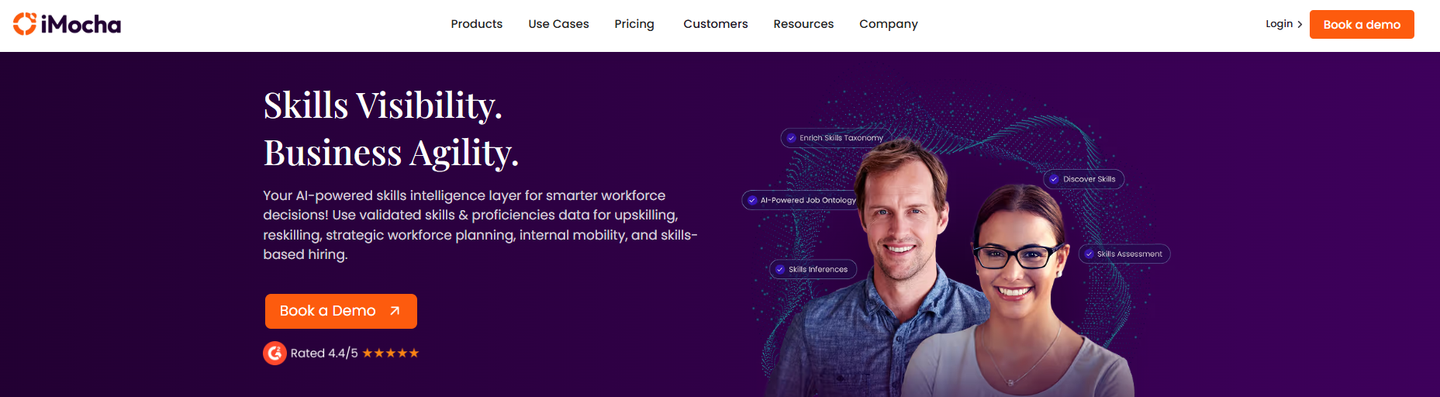
iMocha goes deep on assessments. The library includes more than 2,500 tests across technical skills, cognitive ability, and domain-specific knowledge. If you're hiring across departments or regions, that range helps. You can benchmark candidates against industry standards or your own internal top performers, which makes candidate evaluations more grounded than simple pass or fail scores.
The platform leans heavily into data. You get AI proctoring, detailed analytics dashboards, custom branding, and layered reporting. There's even a learning component built in, so candidates can upskill before or after assessments if that fits your hiring model. Integrations are built for large environments, with connections to major ATS and HR systems, and it supports multi-phase assessment flows for more complex recruiting setups.
The trade-off is complexity. iMocha isn't something you spin up in an afternoon. Setup can take weeks, often with direct involvement from their team to configure workflows and integrations properly. It makes sense for enterprises with dedicated HR tech resources and steady hiring volume. For smaller teams or short-term campaigns, it can feel heavier than necessary.
Key Features:
- 2,500+ skills assessments
- Role-based benchmarking
- AI-powered proctoring
- Custom branding and white-label options
- Detailed analytics dashboards
- Learning management integration
- Enterprise-grade integrations
Pros:
- Extensive test library
- Strong benchmarking capabilities
- Comprehensive analytics
- Good for internal mobility programs
- Enterprise integrations
Cons:
- Expensive enterprise pricing
- Long implementation timeline
- Requires dedicated admin
- Overkill for small teams
Pricing:
- Free Trial: 10 test attempts, 3 ready tests, 2 users
- Basic: $999/yr with 100 test attempts
- Pro: $3,199/yr with 300 test attempts
- Enterprise: Custom
8. Codility
Codility
Best for: Advanced coding evaluations with plagiarism detection
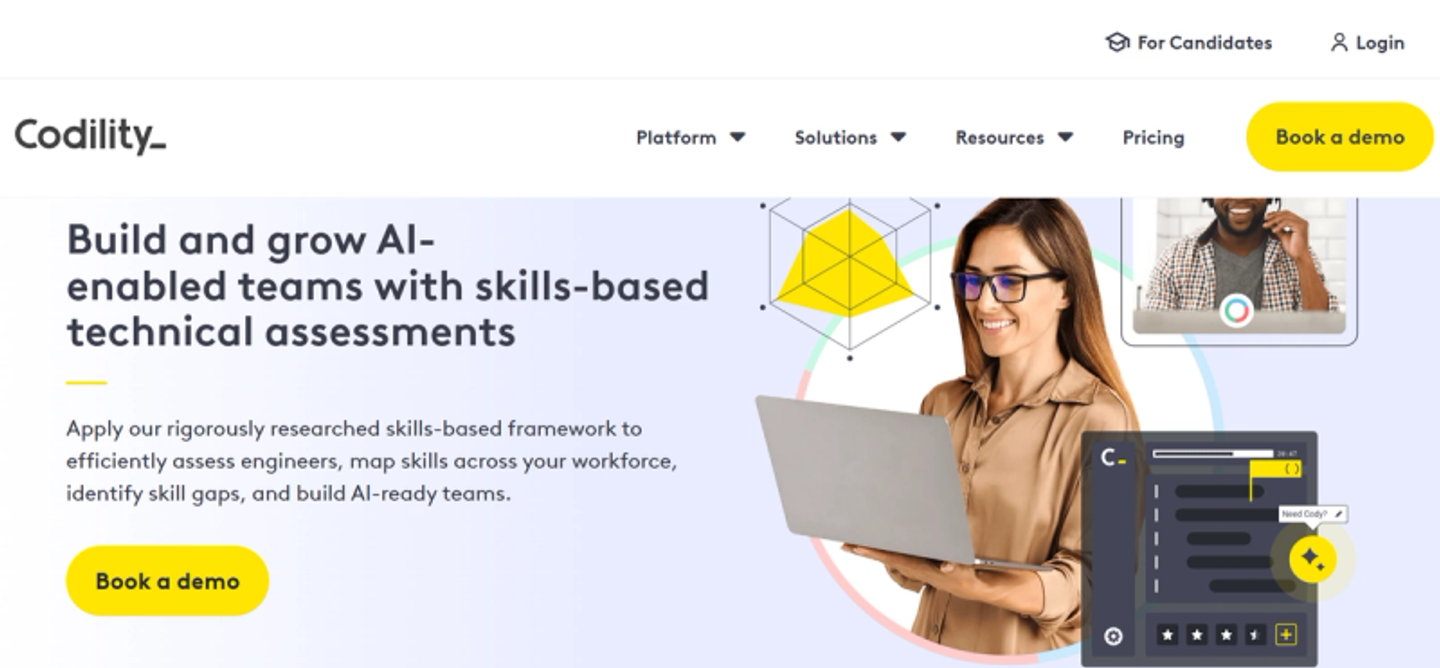
Codility provides in-depth coding assessments focused on software engineering candidates. The platform supports multiple programming languages and includes a library of real-world problems that test algorithmic thinking, code quality, and problem-solving approach. What sets Codility apart is sophisticated plagiarism detection that analyzes coding patterns and approach similarities.
Codility includes features for remote pair programming interviews, take-home project evaluations, and time-limited coding challenges. The platform provides detailed candidate reports showing performance metrics, code quality scores, and comparisons against benchmarks.
Like HackerRank, Codility is not useful outside technical hiring. The platform is purpose-built for evaluating software engineers and similar technical roles. If you need to assess non-technical positions, you'll need a separate tool.
Key Features:
- Coding assessments in multiple languages
- Sophisticated plagiarism detection
- Remote pair programming
- Take-home project evaluations
- Code quality analysis
- Performance benchmarking
Pros:
- Advanced plagiarism detection
- Detailed code quality metrics
- Good for senior engineer hiring
- Real-world problem sets
Cons:
- Only useful for technical roles
- Enterprise pricing
- No support for non-technical screening
Pricing:
- Starter: $1200/annually
- Scale: $600/monthly
Frequently Asked Questions
Why switch from Testlify?
Teams usually leave Testlify for one of three reasons. First, they need better bulk hiring tools. Testlify handles individual candidates fine but gets clunky when you're screening hundreds at once.
Second, they want video interviews integrated with skills testing instead of using separate tools. Third, they find the pricing doesn't scale well once volume increases or they need features locked behind higher tiers.
Which alternative is best for bulk hiring?
TestTrick handles volume well. TestTrick combines skills testing and video screening with bulk invite features and automated shortlisting. For pure technical hiring at scale, HackerRank or Codility work better. The choice depends on whether you need video features and how technical your roles are.
Are there cheaper Testlify alternatives?
TestTrick starts at $49/month for 50 candidates, which is more affordable than most alternatives. Most other options either cost more or require custom enterprise pricing. Be careful with platforms that charge per candidate, as costs can spike unpredictably during high-volume hiring.
Conclusion
Choosing between assessment platforms isn't simple. Most promise the same things on paper. The real differences show up when you're running live candidates and trying to move fast without losing quality.
If you want one platform that combines skills assessments and video interviews without locking you into a rigid workflow,TestTrick is worth a look. It scales for bulk screening, keeps pricing predictable, and gives hiring managers clear performance data.
Start a free TestTrick trial and run a real hiring campaign through it. That's the quickest way to see if it fits your process.
Build a Hiring-Ready Assessment
Create role-specific, anti-cheat assessments and shortlist candidates on evidence, not guesswork.
Start for freeBy Tooba Noman
August 7, 2026
12 min read
Build a Hiring-Ready Assessment
Create role-specific, anti-cheat assessments and shortlist candidates on evidence, not guesswork.
Start for free