Top Applicant Tracking Systems in 2026
Explore the top applicant tracking systems in 2026, compare features, pricing, and capabilities to improve your recruitment process and candidate experience.

By Tooba Noman
February 19, 2026
15 min read
An applicant tracking system (ATS) is recruitment software that helps HR teams manage job postings, resume parsing, candidate tracking, and the complete hiring process in one place.
The demand for applicant tracking has grown as remote hiring increases and application volumes continue to rise. The global applicant tracking system market size was estimated at USD 2.14 billion in 2021 and is anticipated to reach USD 3.71 billion by 2030, reflecting steady adoption across HR teams and talent acquisition functions as companies invest in better recruitment software and automation.
In 2026, choosing from the best applicant tracking systems is about more than posting on job boards. It is about workflow automation, candidate communication, integration capabilities, and stronger candidate screening.
In this guide, we will compare the top applicant tracking systems, explain what to look for, and provide a strategic recommendation to improve candidate evaluation.
What Is an Applicant Tracking System?
An applicant tracking system (ATS) is recruitment software that helps companies manage the entire hiring process within a single, structured system. ATS platforms centralize candidate profiles, organize application files within a searchable candidate database, and streamline candidate management from job postings through final offer.
Core Functions of an Applicant Tracking System
Resume parsing: Automatically extracts data from resumes and stores it in a structured profile database. This improves candidate matching and reduces manual resume auditing.
Candidate database: Maintains a searchable candidate pool with candidate profiles, application files, and communication history for long-term Talent Relationship Management.
Pipeline management: Tracks the candidate pipeline across hiring stages, manages application volumes, and supports structured Talent Pipelines for better candidate evaluation.
Interview scheduling: Automates interview scheduling, supports candidate self-scheduling, and improves candidate communication and engagement.
Reporting and analytics: Provides advanced analytics on hiring workflow performance, candidate tracking, job postings performance, and overall recruitment process efficiency.
How We Evaluated the Top Applicant Tracking Systems
To identify the top applicant tracking systems in 2026, we used a structured evaluation framework focused on practical hiring needs. The goal was simple: assess how well each applicant tracking system supports the full recruitment process, from candidate sourcing to final candidate evaluation.
1. Core ATS Features
We reviewed essential applicant tracking capabilities, including resume parsing, candidate database management, job postings distribution across job boards, candidate tracking, and hiring workflow control. We also assessed how well each system manages candidate profiles, application files, and structured candidate pipeline movement.
2. Customization
We examined how flexible each applicant tracking system is in adapting hiring stages, job description templates, structured interview kits, and candidate communication workflows. Customizing the hiring workflow configuration is important for HR teams with diverse recruitment process requirements.
3. Integration Ecosystem
We analyzed integration capabilities with recruitment tools, including background check providers, onboarding tools, email integration systems, recruitment marketing platforms, and candidate engagement tools. Strong integration capabilities reduce reliance on Excel sheets and disconnected systems.
4. Reporting Capabilities
Advanced analytics and reporting were evaluated based on visibility into application volumes, Talent Pipelines, candidate matching accuracy, and overall hiring process efficiency. We looked for clear dashboards that support data-driven talent acquisition decisions.
5. Automation Level
We assessed automation features, including automated first-round screening, automated outreach campaigns, candidate self-scheduling, AI-powered candidate recommendations, and communication management. We also reviewed whether AI-powered features, such as AI-powered candidate scoring or predictive hiring insights, are included and how they are positioned.
6. Pricing Transparency
We compared pricing structures to determine whether plans are clearly defined, scalable for SMBs, or structured for enterprise-level applicant tracking needs.
7. Suitability by Company Size
Each platform was reviewed for fit across startups, SMBs, enterprises, and recruitment agencies. Hiring complexity, candidate pool size, and Talent Relationship Management needs vary significantly by organization size.
8. Screening & Assessment Capabilities
Most ATS platforms focus on candidate management and candidate tracking. We carefully examined built-in candidate screening and candidate evaluation tools, including assessments, video interviews, and structured evaluation features. This is important because many HR teams require deeper skill validation beyond resume parsing, which is where assessment platforms like TestTrick complement applicant tracking systems.
Top Applicant Tracking Systems in 2026
1. Greenhouse
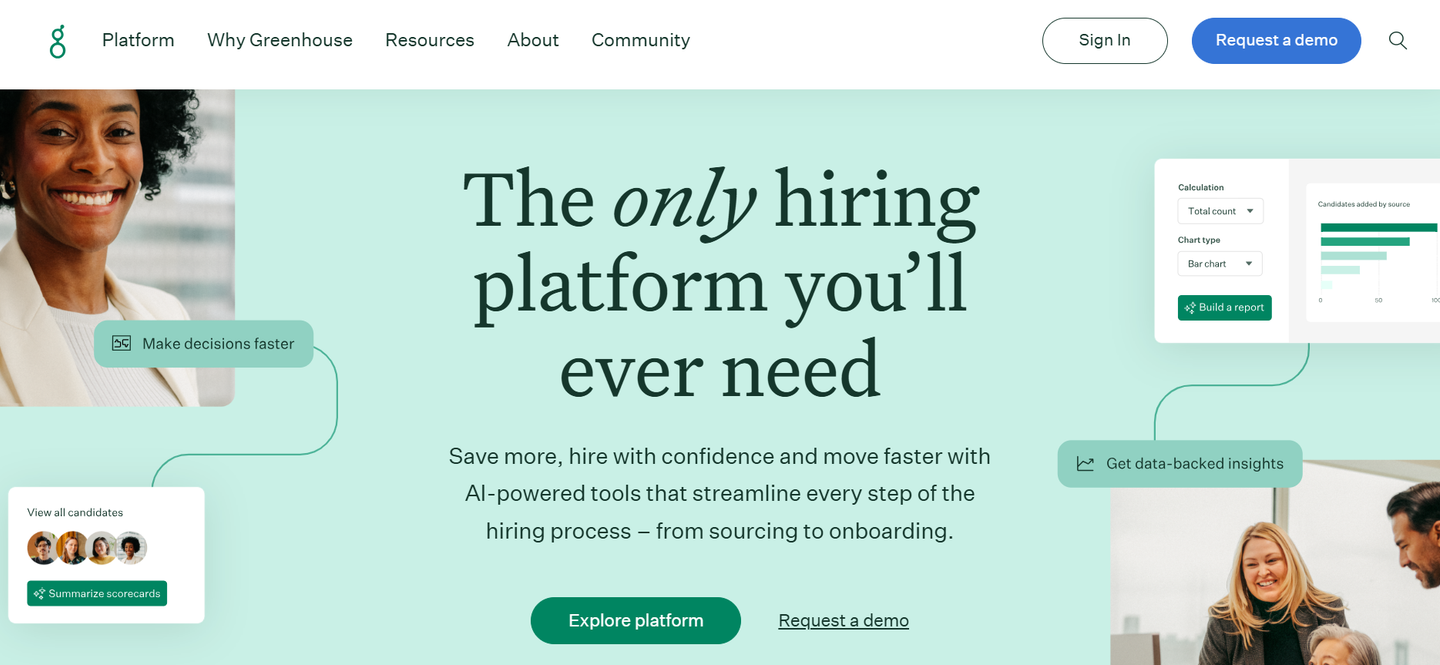
Greenhouse website
Best for: structured hiring workflows for growing and enterprise Talent Acquisition teams.
Key features of Greenhouse
- Resume parsing and resume auditing to turn application files into searchable candidate profiles
- Candidate database and profile database to manage a long-term candidate pool
- Candidate pipeline and Talent Pipelines to move candidates through each hiring process stage
- Interview scheduling with structured interview kits and scorecards
- Candidate communication and email integration for communication management across the HR team
- Reporting and advanced analytics for application volumes and hiring workflow performance
- Integration capabilities with many recruitment tools and job boards (plus career page workflows)
Pricing of Greenhouse
Greenhouse pricing is custom. Plans are listed as Core, Plus, and Pro, with pricing based on hiring needs.
Strengths of Greenhouse
- Strong structure for candidate tracking, candidate management, and candidate evaluation using consistent stages
- Good fit for employer branding workflows tied to job postings and the career page
- Clear pipeline management for recruiters handling higher application volumes
Limitations of Greenhouse
- Built-in candidate screening varies by plan; deeper screening (such as skill assessments) often needs separate tools
- Pricing is quote-based, so SMBs may need to confirm fit early
Ideal company size: mid-market to enterprise.
2. Lever
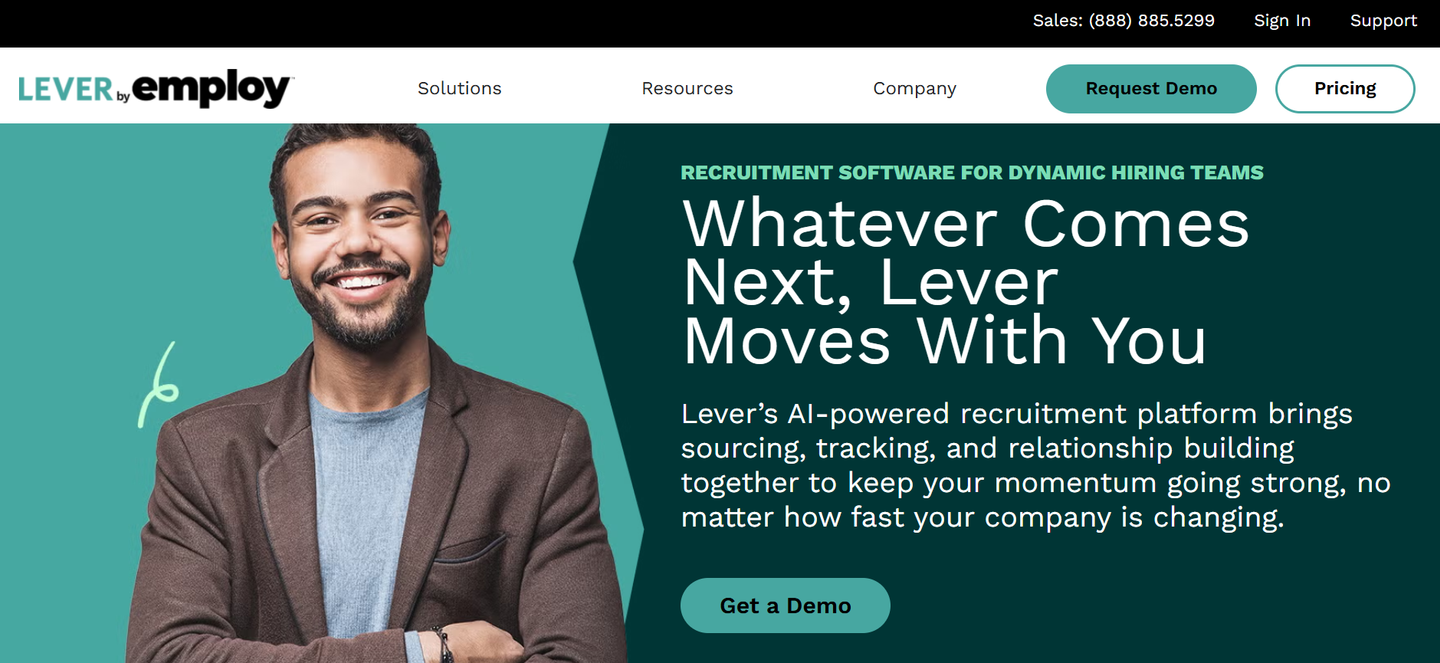
Lever's website
Best for: teams that want ATS + Talent relationship management in one workflow.
Key features of Lever
- Applicant tracking + candidate relationship management (CRM) for Talent Relationship Management
- Candidate database to manage candidate profiles across roles and reopen warm candidate sourcing leads
- Candidate pipeline management for candidate tracking and candidate engagement tools
- Candidate communication, email integration, and communication management for recruiters and hiring managers
- Reporting and analytics to monitor the recruitment process and hiring process outcomes
- Integration capabilities across common recruitment tools and HR systems
Pricing of Lever
Lever pricing is quote-based (no fixed public pricing). The pricing page positions it as a flexible subscription model based on team and hiring needs.
Strengths of Lever
- Strong fit for maintaining a candidate pool over time
- Helpful for candidate engagement and consistent candidate communication across the hiring workflow
- Good when your HR team wants ATS platforms plus CRM-style candidate management in one place
Limitations of Lever
- Built-in candidate screening is not always the main focus; many teams still use separate assessment tools
- Public pricing transparency is limited because costs require a quote
Ideal company size: SMB to enterprise (especially teams hiring continuously).
3. Workable
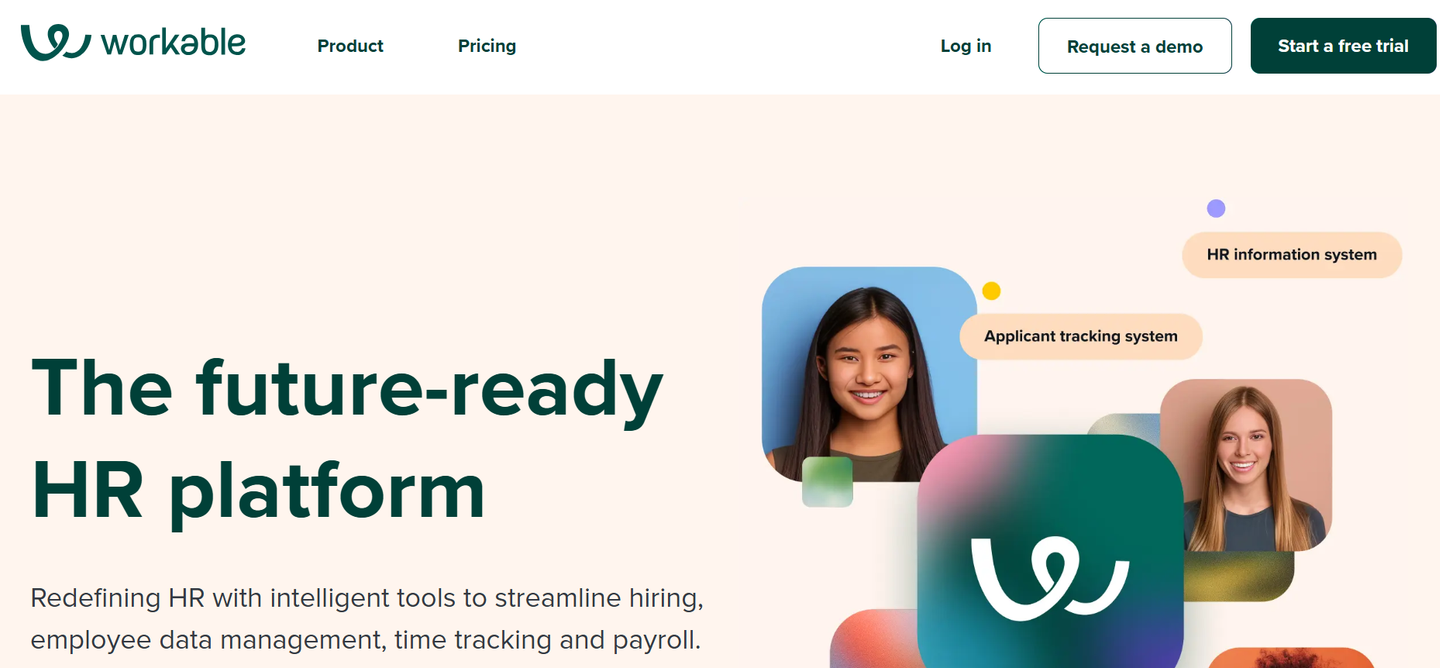
Workable's website
Best for: small to mid-sized companies that want simple applicant tracking with built-in sourcing tools.
Key features of Workable
- Resume parsing to convert application files into structured candidate profiles
- Candidate database and searchable candidate pool
- Job postings distribution across multiple job boards from one dashboard
- AI-powered candidate recommendations and candidate matching
- Interview scheduling with candidate self-scheduling options
- Candidate communication tools with email integration
- Reporting dashboards to track application volumes and hiring workflow performance
- Career page builder to support employer branding and recruitment marketing
Pricing of Workable
Workable offers tiered subscription plans, with two main plans:
- Standard: $299/mo
- Premier: $599/mo
Strengths of Workable
- User-friendly interfaces suitable for HR teams without technical setup
- Good balance between applicant tracking and candidate sourcing tools
- Built-in AI-powered features to assist with automated first-round screening
Limitations of Workable
- Deep candidate screening and structured candidate evaluation often require external recruitment tools
- Advanced analytics and Talent Relationship Management capabilities are more limited compared to enterprise ATS platforms
Ideal company size: startups and SMBs with moderate hiring needs.
4. BambooHR
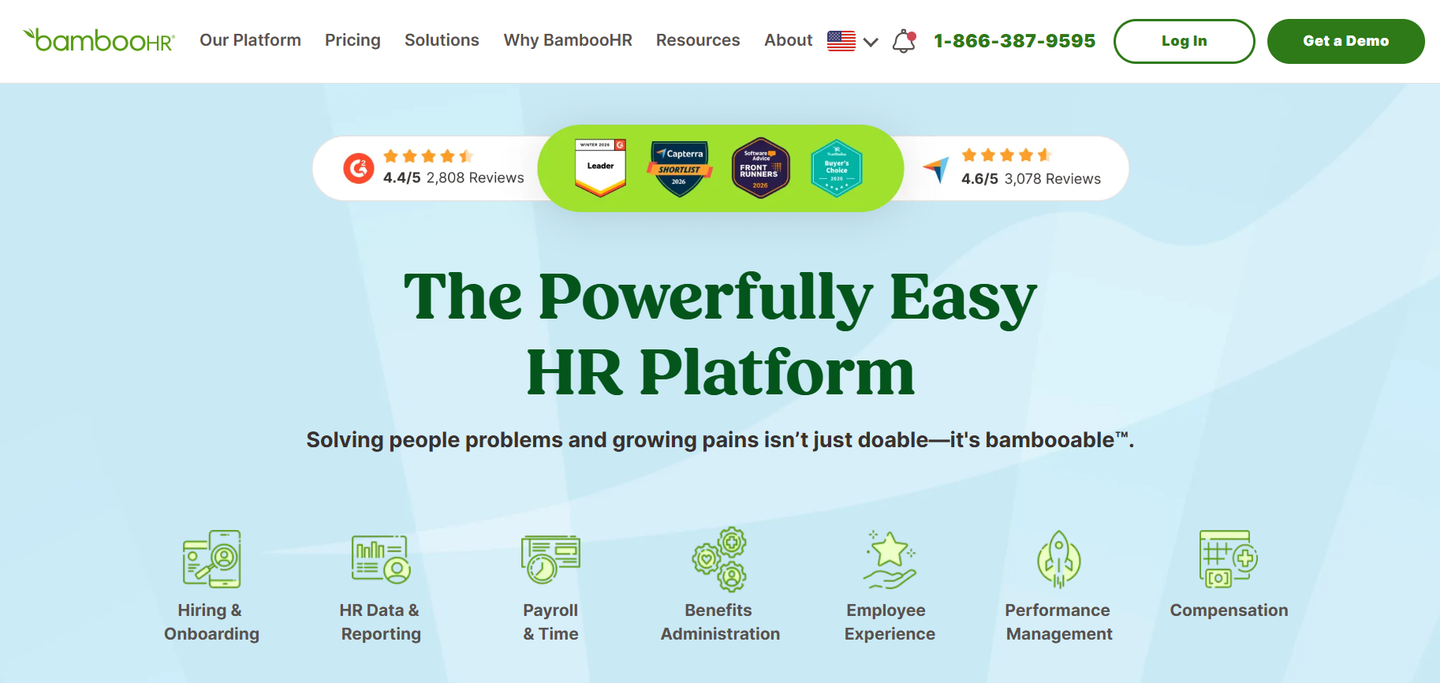
BambooHR's website
Best for: companies that want applicant tracking integrated with HR management and onboarding tools.
Key features of BambooHR
- Applicant tracking system with resume parsing and candidate tracking
- Centralized candidate database and profile database
- Hiring workflow management for structured candidate pipeline movement
- Interview scheduling and communication management
- Onboarding tools connected to the recruitment process
- Reporting features for hiring process visibility
- Integration capabilities with background check providers and payroll systems
Pricing of BambooHR
BambooHR pricing plans are as follows:
- Core: $10 per employee/month
- Pro: $17 per employee/month
- Elite: $25 per employee/month
Strengths of BambooHR
- Combines recruitment software with HRIS functionality
- Useful for HR teams that want candidate management and onboarding tools in one system
- Clean interface and mobile accessibility for hiring managers
Limitations of BambooHR
- Built-in candidate screening and candidate evaluation depth is limited
- AI-powered candidate scoring and predictive hiring insights are not the core focus
Ideal company size: SMB to mid-sized organizations seeking HR + applicant tracking in one system.
5. Ashby
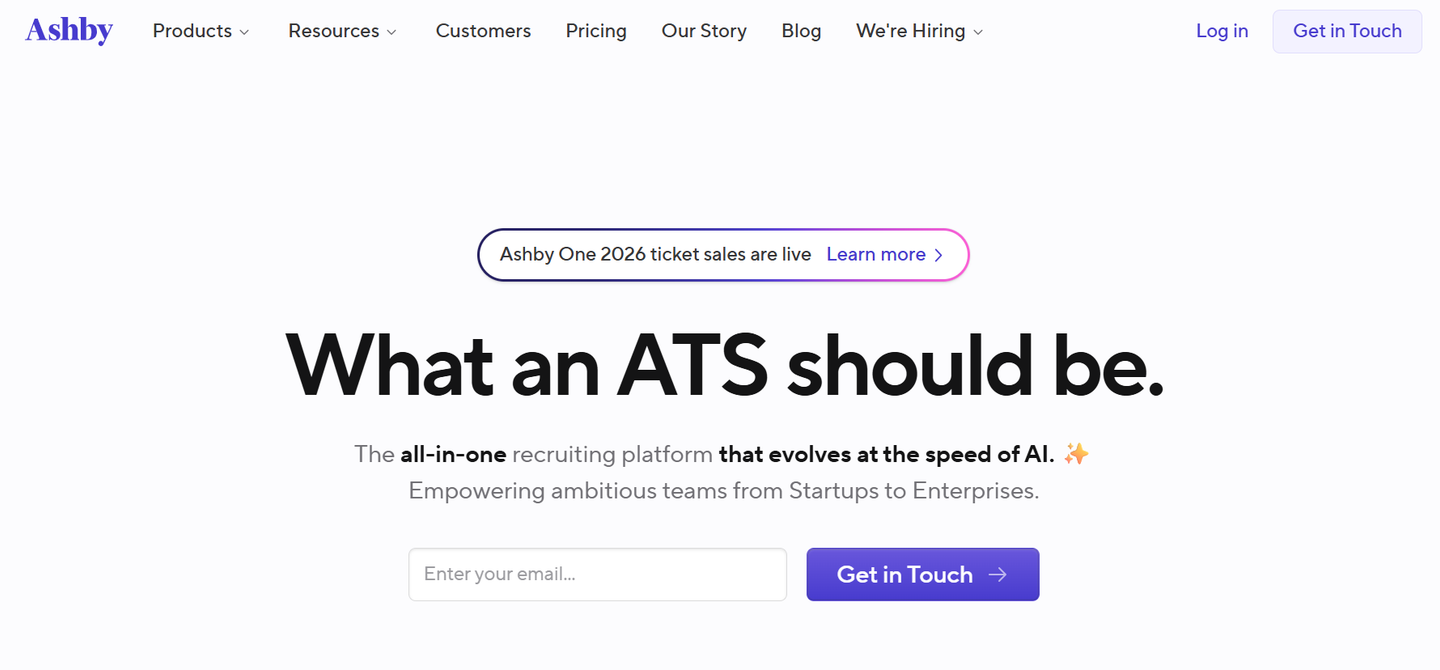
Ashby's website
Best for: data-focused Talent Acquisition teams that want detailed reporting inside their applicant tracking system.
Key features of Ashby
- Applicant tracking with resume parsing and structured candidate tracking
- Advanced analytics dashboards with deep hiring process reporting
- Candidate pipeline management and structured Talent Pipelines
- Candidate database with searchable candidate profiles
- Automated outreach campaigns and communication management
- Interview scheduling with structured interview kits
- Integration capabilities with HR systems and recruitment tools
Pricing of Ashby
Ashby offers different custom pricing plans. However, their main All-in-One plan starts at $300/mo for 1-10 employees.
Strengths of Ashby
- Strong advanced analytics for tracking application volumes and candidate pipeline movement
- Good structure for consistent candidate evaluation using defined hiring workflow stages
- Helpful for teams that rely heavily on reporting and data visibility
Limitations of Ashby
- Built-in candidate screening depth is limited compared to specialized assessment platforms
- Pricing requires direct sales consultation
Ideal company size: mid-market to enterprise.
6. iCIMS
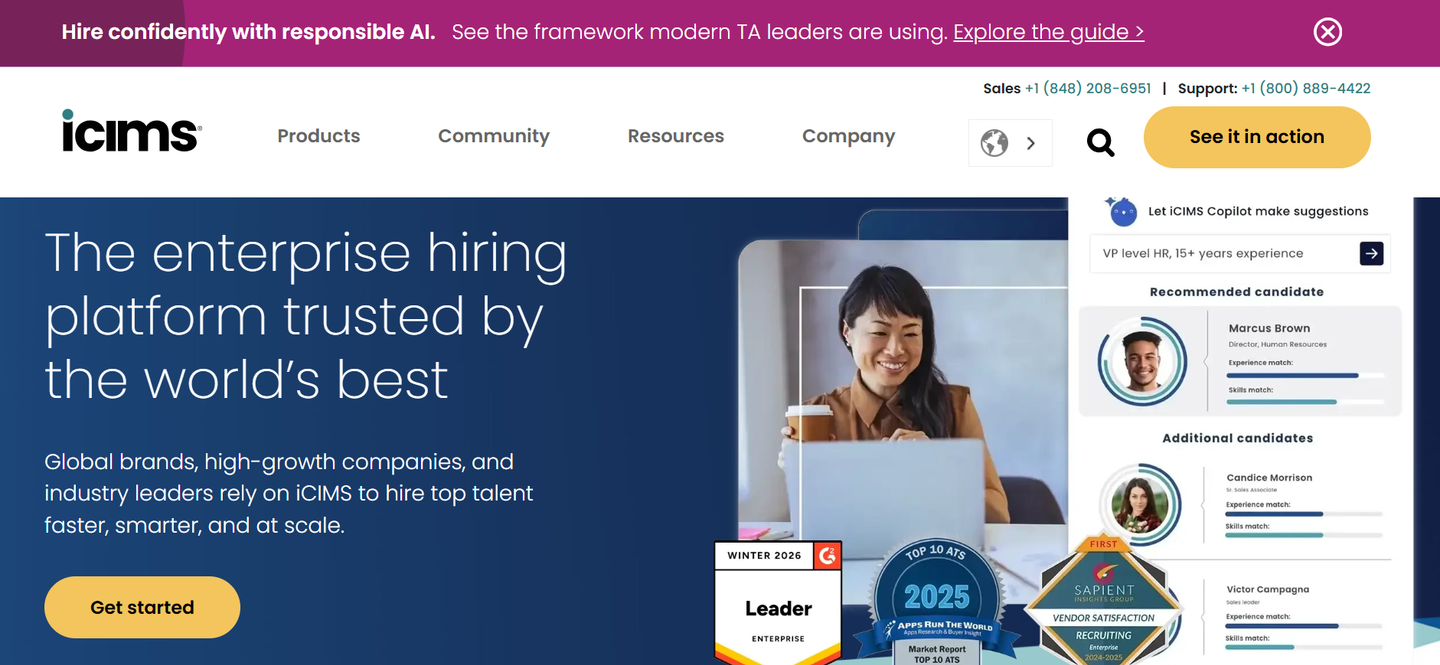
iCIMS's website
Best for: enterprise organizations with large hiring volumes and complex Talent Acquisition operations.
Key features of iCIMS
- Enterprise-grade applicant tracking system with resume parsing
- Large-scale candidate database and profile database
- Recruitment marketing tools and career page management
- Talent Relationship Management and candidate engagement tools
- Integration capabilities with background check services and onboarding tools
- Advanced analytics for monitoring hiring workflow and candidate tracking
- Candidate communication tools with email integration
Pricing of iCIMS
iCIMS follows a custom enterprise pricing model. Pricing is provided via consultation based on hiring scale and modules selected.
Strengths of iCIMS
- Built for managing high application volumes across multiple departments
- Strong recruitment marketing and candidate sourcing support
- Suitable for global hiring teams requiring structured hiring workflow control
Limitations of iCIMS
- Setup and implementation can be complex for smaller HR teams
- Built-in candidate evaluation and structured skill assessments often require third-party recruitment tools
Ideal company size: enterprise organizations and global companies.
7. Zoho Recruit
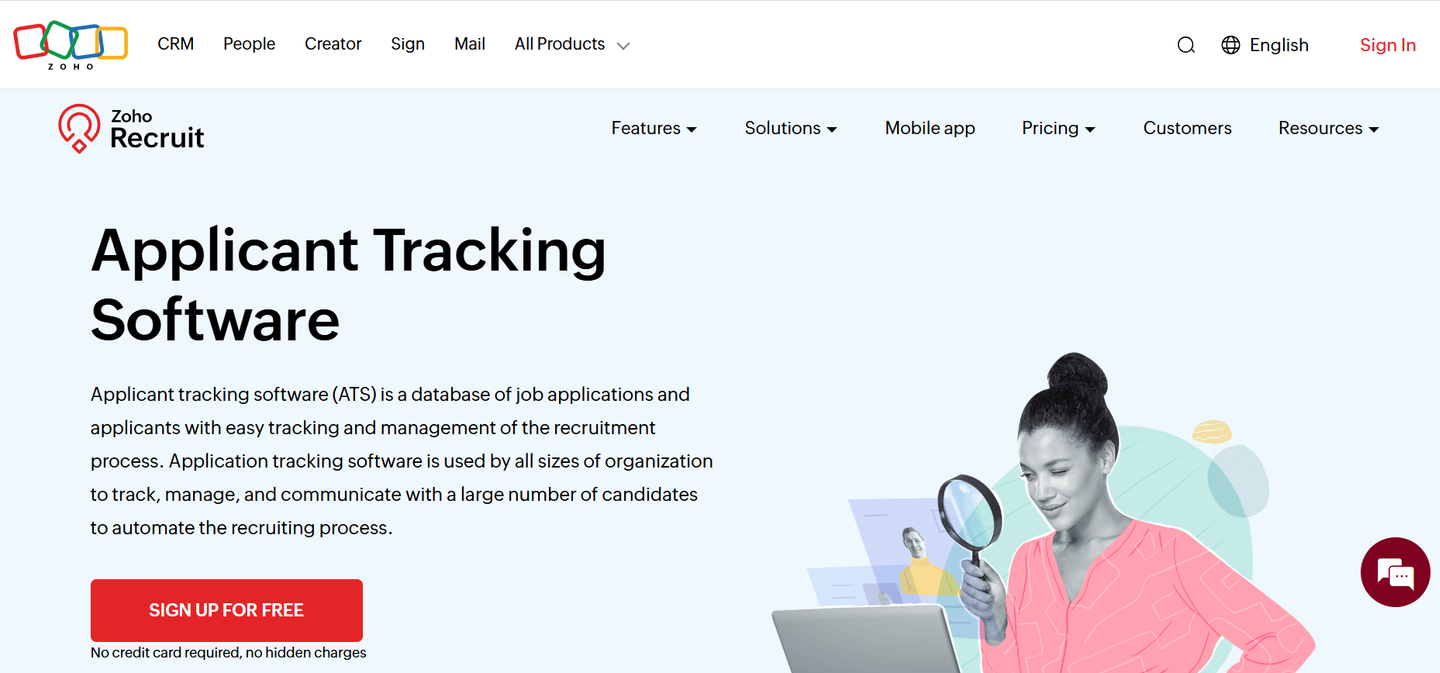
Zoho Recruit's website
Best for: recruitment agencies and small to mid-sized businesses that want flexible applicant tracking at lower cost tiers.
Key features of Zoho Recruit
- Resume parsing and candidate tracking
- Candidate database and profile database management
- Candidate submittals workflow for recruitment agencies
- Job postings distribution to job boards
- Candidate communication and communication management tools
- Email integration and mobile accessibility
- Reporting dashboards for tracking hiring process metrics
- Integration capabilities with Zoho ecosystem and external recruitment tools
Pricing of Zoho Recruit
Zoho Recruit offers the following pricing plans:
- Free Plan: for 1 active job
- Standard Plan: $25 per recruiter/month
- Enterprise Plan: $50 per recruiter/month
Strengths of Zoho Recruit
- Cost-friendly option for agencies and SMBs
- Useful for managing candidate pool and candidate sourcing activities
- Flexible customization of hiring workflow stages
Limitations of Zoho Recruit
- Advanced analytics and predictive hiring insights are limited compared to enterprise ATS platforms
- Deep candidate screening and structured candidate evaluation often require separate assessment tools
Ideal company size: recruitment agencies, startups, and SMBs.
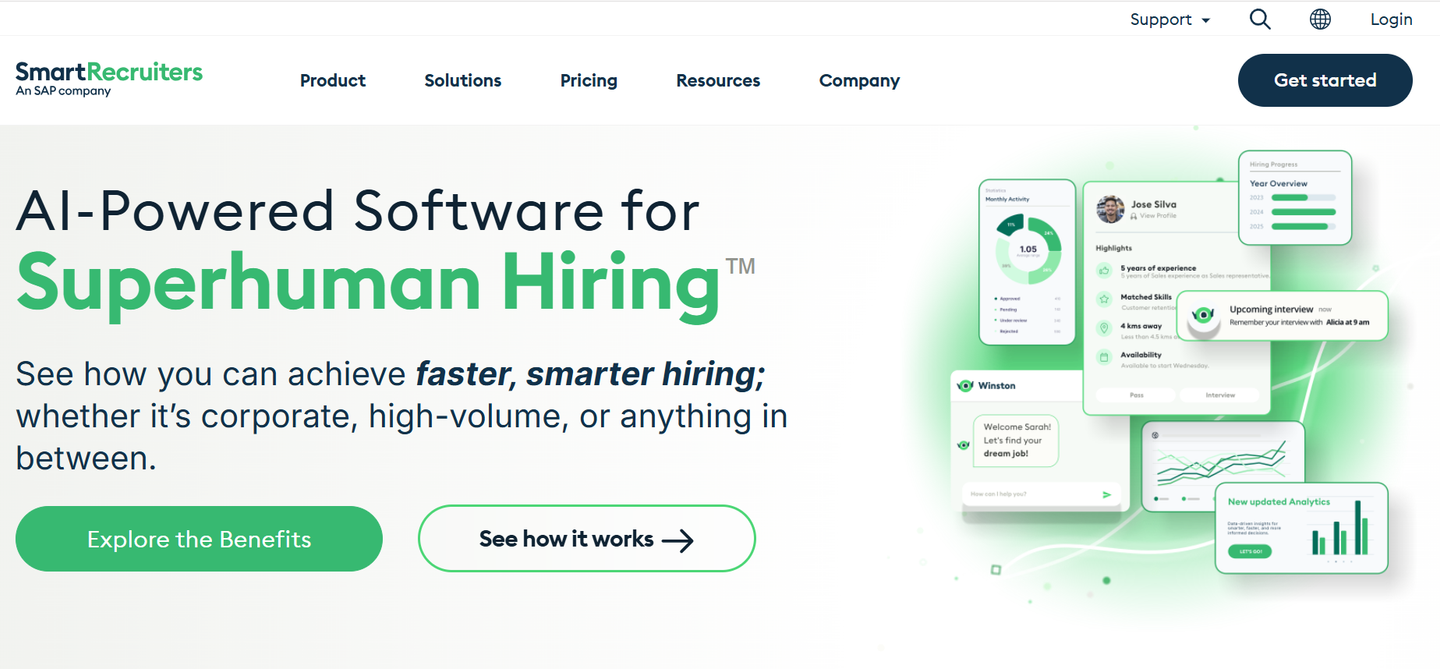
8. SmartRecruiters
SmartRecruiters' website
Best for: enterprise and global hiring teams that need scalable applicant tracking and recruitment marketing.
Key features of SmartRecruiters
- Enterprise-grade applicant tracking system with resume parsing
- Centralized candidate database and searchable candidate profiles
- Candidate pipeline management with structured hiring workflow stages
- Recruitment marketing tools and branded career page management
- Candidate engagement tools and communication management
- Interview scheduling and collaborative hiring features
- Advanced analytics dashboards for tracking application volumes and hiring process performance
- Broad integration capabilities with HR systems and recruitment tools
Pricing of SmartRecruiters
SmartRecruiters uses custom, quote-based pricing based on company size, hiring volume, and selected modules.
Strengths of SmartRecruiters
- Designed for high-volume candidate tracking and global talent acquisition
- Strong recruitment marketing and employer branding tools
- Extensive integration ecosystem for enterprise HR tech stacks
Limitations of SmartRecruiters
- Pricing transparency is limited due to quote-based structure
- Implementation may require onboarding time for smaller HR teams
- Built-in candidate screening depth may require external assessment platforms for structured candidate evaluation
Ideal company size: mid-market to enterprise, especially multi-location organizations.
9. JazzHR
JazzHR's website
Best for: small businesses seeking affordable applicant tracking with structured hiring workflows.
Key features of JazzHR
- Applicant tracking system with resume parsing
- Candidate tracking and candidate database management
- Customizable hiring workflow and candidate pipeline stages
- Job postings distribution across job boards
- Interview scheduling and candidate communication tools
- Reporting dashboards for recruitment process visibility
- Integration capabilities with HR and background check tools
Pricing of JazzHR
JazzHR offers the following subscription plans:
- Hero: $110/month
- Plus: $350/month
- Pro: Custom
Strengths of JazzHR
- Budget-friendly ATS platform for SMBs
- Easy setup for structured candidate management
- Flexible hiring pipeline configuration
Limitations of JazzHR
- Advanced analytics and AI-powered candidate scoring are limited
- Not designed for large enterprise-level Talent Pipelines
- Deep candidate screening often requires separate assessment tools
Ideal company size: startups and SMBs.
10. Recruitee
Recruitee's website
Best for: collaborative hiring teams that prioritize usability and employer branding.
Key features of Recruitee
- Applicant tracking with resume parsing and structured candidate tracking
- Candidate database and talent pool management
- Collaborative hiring tools with shared evaluation scorecards
- Candidate pipeline management and workflow automation
- Career page builder for employer branding
- Reporting and analytics dashboards
- Integration capabilities with HR systems and recruitment tools
Pricing of Recruitee
Recruitee offers tiered pricing plans based on hiring needs and feature access.
Strengths of Recruitee
- Strong collaborative hiring workflow for candidate evaluation
- Clean, user-friendly interface for HR teams
- Good balance between applicant tracking and candidate engagement
Limitations of Recruitee
- Advanced analytics features are less robust than enterprise ATS platforms
- AI-powered candidate matching capabilities are more limited compared to larger competitors
Ideal company size: SMB to mid-market companies.
ATS Feature Comparison Table
| ATS | Resume parsing | Workflow automation | Integrations | Reporting | Built-in assessments |
|---|---|---|---|---|---|
| Greenhouse | Yes – candidate profiles, resume parsing, job description matching | Yes – hiring workflow, interview scheduling, candidate tracking | 300+ integrations including HR tools, email integration, job boards | Advanced analytics & dashboards | Limited – basic screening, coding/skills via third-party |
| Lever | Yes – resume parsing, application file management | Yes – candidate pipeline, automated outreach campaigns | Multiple integrations: email, calendar, recruitment tools | Analytics, reporting dashboards | Limited – screening only |
| Workable | Yes – resume parsing, candidate database | Yes – workflow automation, candidate submittals | Integrations with job boards, email, HR software | Standard reporting | Basic screening assessments |
| BambooHR | Yes – resume parsing, candidate profiles | Yes – workflow management | HRIS integrations, job boards | Standard reporting | Limited built-in assessments |
| Ashby | Yes – resume parsing & candidate matching | Yes – workflow automation & candidate engagement tools | Integrations with email, calendar, HRIS | Reporting dashboards | Basic assessments |
| iCIMS | Yes – resume parsing, candidate tracking | Yes – workflow automation, hiring workflow | Wide integration ecosystem | Advanced reporting | Limited built-in assessments |
| Zoho Recruit | Yes – resume parsing, candidate profiles | Yes – candidate tracking & hiring workflow automation | 50+ integrations including email & social media profile enrichment | Standard reports & dashboards | Includes assessments in Standard plan |
| SmartRecruiters | Yes – candidate resume parsing | Yes – workflow automation, candidate engagement | Multiple integrations with HR software & job boards | Analytics dashboards | Limited assessments; mostly screening |
| JazzHR | Yes – resume parsing | Yes – workflow automation & task helpers | Integrations with email & job boards | Reporting included | Basic assessments |
| Recruitee | Yes – resume parsing, candidate database | Yes – workflow automation, candidate communication | Integrations with email, calendars, job boards | Standard reporting | Limited assessments |
Note:
- Most ATS platforms offer limited or basic built-in assessments; advanced skill validation usually requires external assessment tools like TestTrick.
- Pricing transparency varies, but all listed platforms provide clear tiered or subscription options.
Common limitations of applicant tracking systems
While applicant tracking systems (ATS) help manage the recruitment process, they have some limitations recruiters should be aware of:
- Resume keyword filtering does not measure skill: ATS platforms rely on parsing resumes, but candidate skills, practical knowledge, and role-specific expertise may be missed.
- High application volume ≠ better screening: Managing large candidate pools can be overwhelming, and workflow automation alone cannot guarantee quality hires.
- Interview bias still exists: Scheduling and candidate evaluation may still be influenced by subjective judgment, even with interview scheduling and structured interview kits.
- Coding and skills tests often outsourced: Built-in assessments in ATS platforms are usually limited; coding or role-based tests are handled externally.
- Limited anti-cheating controls: Most ATS platforms do not offer screen recording, plagiarism detection, or browser lockdown for secure candidate evaluation.
These limitations highlight why combining an ATS with a skills assessment platform like TestTrick ensures a more accurate evaluation of candidates’ abilities, improving candidate screening and hiring workflow while maintaining a strong candidate experience.
Why ATS Alone is not Enough in 2026
While top applicant tracking platforms manage resumes, candidate pipelines, and interview scheduling, modern hiring also requires skill validation, role-based assessments, coding auto-grading, and structured evaluation before interviews. Resume parsing and workflow automation alone cannot measure real candidate performance.
To truly assess candidates’ abilities and improve hiring outcomes, organizations need an assessment layer, which is where TestTrick’s pre-built and customizable tests complement your ATS effectively.
How Testtrick Complements Applicant Tracking Systems
While your ATS platform handles resume parsing, candidate database management, interview scheduling, and workflow automation, it cannot fully measure a candidate’s skills or performance. TestTrick bridges this gap with pre-built and customizable assessments designed to evaluate real abilities before interviews.
Key features include:
- Coding assessments in 12+ programming languages with auto-grading and code playback
- Anti-cheating controls like plagiarism detection, screen recording, and browser lockdown
- One-way video interviews for flexible candidate evaluation
- Personality and cognitive assessments to gauge workplace behavior and problem-solving
- Situational judgment tests for role-specific scenarios
- Candidate performance reports to help your HR team make data-driven decisions
- Bulk invite tool for sending assessments to multiple candidates efficiently
- Job application form builder to streamline candidate profiles and application files
- Extensive test library covering technical, soft skills, and domain-specific assessments
Use your ATS to manage applicants and TestTrick to validate real skills, improving candidate evaluation, screening, and hiring workflow.
How to Choose the Best Applicant Tracking System for Your Company
Choosing the right applicant tracking system depends on your company type, hiring workflow, and recruitment needs.
By company type:
- Startups: Startups should focus on candidate sourcing, job postings, and candidate database management. Simple resume parsing and candidate communication tools are key.
- SMBs: Need workflow automation, interview scheduling, and basic candidate evaluation tools. Integration with job boards and email management helps scale recruitment.
- Enterprise: Require advanced reporting, automation, and candidate engagement tools. Compliance tracking, structured interview kits, and candidate tracking are essential.
- Agencies: Must manage high application volumes, candidate pipelines, and multiple clients. Candidate profiles, candidate submittals, and recruitment marketing features are useful.
- Technical hiring teams: Benefit from coding assessments, candidate screening, and structured evaluation. Integration with recruitment software and video interviews supports technical roles.
Checklist for selecting an ATS:
- Hiring volume – Can the ATS handle your expected application files and candidate pool?
- Role complexity – Are role-based assessments and candidate matching supported?
- Compliance requirements – Does the system support background checks and reporting standards?
- Need for structured skill assessment – Can you integrate TestTrick assessments for coding, cognitive, or personality evaluation?
- Reporting requirements – Are advanced analytics, KPIs, and candidate performance reports available?
- Budget predictability – Evaluate pricing transparency and total cost per recruiter or per job posting.
Selecting an ATS platform that aligns with your company type ensures efficient candidate tracking, management, and onboarding, while pairing with TestTrick strengthens candidate evaluation before interviews.
Final Verdict
In 2026, choosing the right applicant tracking system goes beyond simple resume parsing. Automation in your hiring workflow saves time, while data-driven reporting helps your HR team make informed decisions.
Most importantly, skill validation and structured assessments determine the quality of hire. Relying solely on candidate profiles and resume screening is no longer enough, as it may miss true candidate potential. Integrating candidate evaluation tools and assessment-based screening ensures better candidate matching and improves candidate experience.
If you are exploring the top applicant tracking systems, pair your ATS with TestTrick to measure real candidate skills before interviews, giving your recruitment process a performance-focused edge.
Frequently Asked Questions
1. What is the best applicant tracking system in 2026?
The best applicant tracking system in 2026 depends on your company’s size, hiring volume, and recruitment needs. Look for ATS platforms offering resume parsing, candidate tracking, interview scheduling, and integration capabilities.
2. What features should an ATS include?
An effective ATS should include resume parsing, candidate database management, pipeline management, interview scheduling, reporting, integration with job boards, candidate engagement tools, and onboarding tools to support the entire hiring process.
3. Do applicant tracking systems include skill assessments?
Most ATS platforms offer limited or basic candidate screening and assessments. For structured skill validation, tools like TestTrick complement ATS by providing coding tests, situational judgment tests, and performance-based candidate evaluation.
4. Is an ATS suitable for small businesses?
Yes, small businesses can benefit from an ATS to manage candidate profiles, job postings, and communication management efficiently. Scalable platforms support growing Talent Acquisition needs without overcomplicating the hiring workflow.
5. What is the difference between ATS and recruitment software?
An ATS focuses on applicant tracking, resume parsing, candidate pipeline management, and interview scheduling, while broader recruitment software may include recruitment marketing, talent relationship management, and advanced analytics for strategic hiring.
6. Can ATS platforms improve candidate experience?
Yes, ATS platforms enhance candidate experience by enabling structured communication, transparent job postings, candidate engagement tools, career page integration, and timely updates throughout the hiring process.
Build a Hiring-Ready Assessment
Create role-specific, anti-cheat assessments and shortlist candidates on evidence, not guesswork.
Start for freeBy Tooba Noman
February 19, 2026
15 min read
Build a Hiring-Ready Assessment
Create role-specific, anti-cheat assessments and shortlist candidates on evidence, not guesswork.
Start for free