TestTrick vs. iMocha: Pricing and Features Compared
Compare iMocha pricing with TestTrick. See plans, assessment features, coding tests, and best-fit use cases to choose the right skills assessment platform.

By Tooba Noman
January 16, 2026
11 min read
Hiring teams are dealing with more applicants than ever, yet interview time has not increased. Many recruiters still spend hours reviewing résumés, only to find that shortlisted candidates cannot meet job requirements once testing begins.
That gap is why teams compare TestTrick and iMocha.
Both platforms sit in the skills assessment and candidate evaluation space. Both support coding challenges, structured screening, and large test libraries. And both aim to help teams move away from résumé-first decisions.
The difference usually comes down to iMocha pricing expectations, feature depth, and how each assessment platform fits real hiring workflows. There is also a growing shift toward structured, skills-first screening. Recruiters want clear benchmarks, role-based tests, and hiring-ready reports before interviews start.
This article explains iMocha pricing, feature coverage, and best-fit use cases, so you can choose the platform that matches your hiring goals, team size, and budget planning needs.
Quick Verdict: Who Should Choose Which Tool
Recruiters usually compare TestTrick and iMocha when they want a skills assessment platform that replaces résumé-heavy screening with structured, job-focused testing. The right choice depends on whether your priority is hiring execution or organization-wide skills intelligence.
Choose TestTrick if you:
- want published pricing and predictable costs instead of demo-only iMocha pricing discussions
- need role-based assessments for technical and non-technical job roles, including IT skills, customer support, sales, marketing, admin, and finance
- run structured candidate evaluation using skill-based assessments, pre-employment tests, and clear pass/fail or benchmarked results
- rely on coding challenges, coding simulators, and coding questions to measure candidate performance
- want easy-to-assess hiring-ready reports focused on candidate performance, skills competency reports, and role fit
TestTrick is designed for teams that want an assessment platform built for recruiters, technical recruiters, and hiring managers who need fast screening, clear benchmarks, and transparent pricing.
Choose iMocha if you:
- are evaluating skills at scale across large workforces, not only hiring pipelines
- need skills benchmarking, skills intelligence, and talent analytics across multiple roles and departments
- want visibility into skills gaps, performance tracking, and strategic workforce planning
- prefer an enterprise-led rollout that supports customized workflows, extended integrations, and HR software ecosystems
- plan to use the platform for both candidate evaluation and internal skill measurement
iMocha is often selected when iMocha pricing aligns with long-term talent intelligence tools, organizational skill mapping, and enterprise reporting needs.
iMocha Pricing Vs Testtrick: How Each Platform Structures Costs
Pricing is a key reason teams compare TestTrick vs iMocha, especially around iMocha pricing transparency and how each platform charges for candidate evaluation, skills libraries, and assessment volume.
TestTrick pricing model
TestTrick lists its plans publicly, making it easier for hiring teams to estimate costs before buying. Plans are based on candidate credits and user seats, not locked features. This allows recruiters to plan budgets for skills assessment and candidate evaluation up front instead of waiting for a sales quote.
TestTrick’s plans are as follows:
| Plan | Billing | Candidate credits/year | User limits |
|---|---|---|---|
| Starter | $35/mo (billed yearly) | 600 credits | 3 users |
| Basic | $65/mo (billed yearly) | 1200 credits | 1200 credits5 users |
| Business | $75/mo (billed yearly) | 1800 credits | 7 users |
| Enterprise | Custom | Custom credits | Custom users |
All plans include ATS integrations, unlimited assessments, access to the Test Library, custom questions, and account support.
TestTrick pricing works well for teams that want predictability in candidate invites and clear cost planning for pre-employment tests, coding challenges, async video interviews, cognitive tests, and situational judgment tests.
iMocha pricing model
Unlike TestTrick, iMocha does not publish fixed pricing tiers publicly. The only way to know iMocha pricing is through a demo or sales conversation.
Pricing is typically customized based on factors such as:
- number of assessments you need
- how many job roles are covered
- enterprise-level features like skills intelligence, talent analytics, and strategic workforce planning
- support, onboarding, and integration requirements
As iMocha pricing depends on scope and enterprise needs, there are no standard monthly or annual tiers to compare side by side. This means budget planning may take longer and often requires sales discussion before you can estimate costs.
In contrast, TestTrick’s published pricing offers clarity and helps teams align costs with hiring goals early in the evaluation process.
Assessment Library And Role Coverage
When teams compare TestTrick vs iMocha, they are not only comparing iMocha pricing. They are also looking closely at assessment variety, skills library depth, and how well each platform supports different job roles.
This section explains how both platforms handle test libraries, question banks, and role coverage for skills-first hiring.
TestTrick: Hiring-Focused Assessment Library
TestTrick offers a structured test library built specifically for candidate evaluation and pre-employment tests. It supports both pre-built and custom assessments, allowing recruiters to combine tests from the question bank or design role-specific flows.
Coverage includes:
- IT skills and multiple coding languages
- customer support and call center roles
- sales, marketing, and admin hiring
- finance, accounting, and operations roles
- language tests and communication screening
- situational judgment tests
- cognitive tests and cognitive ability tests
- behavioral assessments and psychometric tests
This assessment platform is designed around job roles, not generic quizzes. Recruiters use TestTrick for skill-based hiring that reflects actual job requirements and compares candidate performance using structured benchmarks.
iMocha: Skills Library with Skills Intelligence Focus
iMocha maintains a broad skills library with a strong emphasis on:
- coding questions and technical skills
- IT skills coverage across stacks
- enterprise role frameworks
- standardized skill proficiency mapping
iMocha positions its library as part of a wider skills intelligence and talent assessment platform.
Alongside hiring, its assessment content is commonly used for:
- identifying skills gaps
- workforce skill audits
- internal mobility planning
- upskilling and reskilling programs
This is where iMocha pricing often connects to skills insights, talent analytics, and organization-wide role mapping, not just hiring workflows.
Key differences in library use
TestTrick’s library is built around recruitment decisions. It supports fast setup for candidate screening, structured hiring, and role-based pass/fail evaluation.
iMocha’s library is often used as part of a broader talent intelligence tools stack, where hiring is one part of a longer skills measurement process.
If you are mainly comparing platforms for hiring outcomes, TestTrick’s test library aligns closely with recruiter needs. If your organization is comparing platforms for skills intelligence programs, iMocha pricing and scope usually reflect that wider usage.
Technical Skills Testing In Testtrick vs iMocha
For many hiring teams, coding tests are where the real differences show up.
Both TestTrick and iMocha support technical screening, but they are built around different hiring goals. One centers on recruiter-led decision making. The other often supports wider technical skill measurement across teams.
Here is how they differ in coding languages, evaluation style, and reporting depth.
TestTrick Coding Assessments
TestTrick supports multiple coding languages and technical formats, including:
- coding challenges and coding questions
- coding simulators for hands-on problem solving
- SQL command tasks
- live HTML and CSS simulation
- test-case scoring and automated evaluation
TestTrick’s coding assessments are built for technical recruiters who need hiring-ready results. Reports focus on candidate performance, coding accuracy, and problem-solving approach, helping teams make clear interview and shortlisting decisions.
These coding tests are part of a hiring workflow, not an internal upskilling and reskilling system.
iMocha Coding Assessments
iMocha places strong emphasis on:
- large-scale IT skills coverage
- technical skill benchmarking
- enterprise coding assessments
- skills competency reports
Its coding modules are widely used by enterprises to:
- measure developer proficiency
- identify skills gaps
- support workforce skill analysis
This dual use for hiring and internal assessment is often reflected in iMocha pricing and enterprise deployments.
Key differences are
TestTrick’s coding environment supports practical hiring assessments and recruiter-focused reporting. iMocha’s coding environment is often selected when organizations want technical benchmarking and broader talent analytics alongside hiring.
Psychometric and Cognitive Assessments
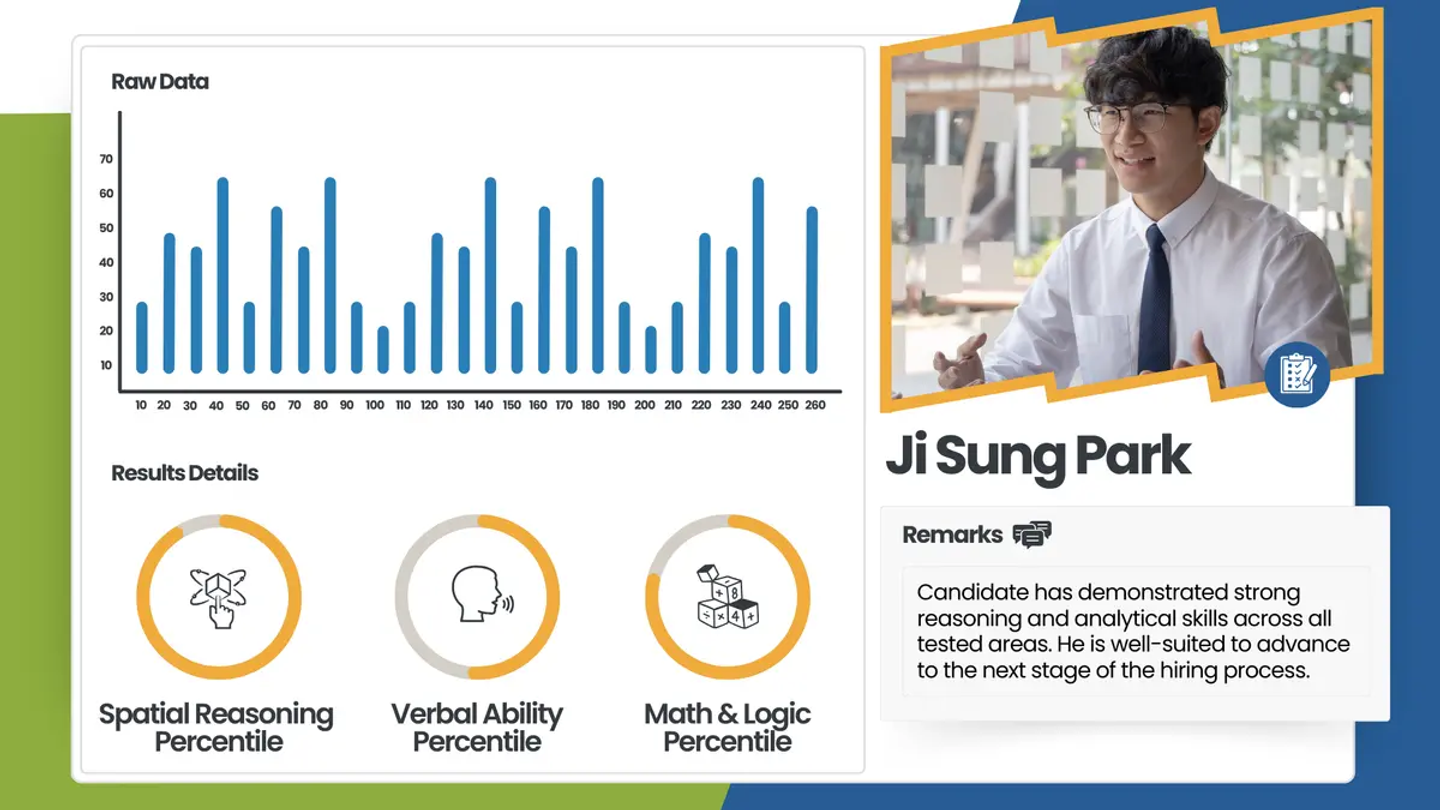
Cognitive ability tests in TestTrick
Skills tests show what a candidate can do. Psychometric and cognitive assessments help hiring teams understand how a candidate thinks, reacts, and works with others.
This layer is often important when recruiters are comparing TestTrick vs iMocha and reviewing iMocha pricing alongside feature depth.
Testtrick: Behavioral and Cognitive Signals for Hiring
TestTrick includes psychometric and cognitive assessments that support hiring teams when skills alone are not enough.
These assessments are used to evaluate problem-solving approach, attention patterns, decision-making style, and workplace behavior before interviews. Recruiters often use them alongside coding challenges, situational judgment tests, and role-based skills assessment results to understand how a candidate may fit into a team or work environment.
Inside TestTrick, these cognitive and behavioral assessments act as supporting signals, not stand-alone hiring decisions. They help add structure to areas that are usually judged subjectively, such as communication style, reasoning ability, and response patterns.
This makes them useful for team fit review, behavioral alignment, and early screening, especially in high-volume or remote hiring.
iMocha: Skills-First, Analytics-Driven Emphasis
iMocha’s public positioning centers more on:
- skill proficiency measurement
- skills intelligence programs
- performance tracking
- talent analytics and skills insights
Psychometric or cognitive coverage may exist within iMocha’s assessment platform, but it is not its core narrative.
Most enterprise use cases for iMocha focus on skills competency reports, visibility into skills gaps, and organizational talent intelligence tools, rather than behavioral assessments for hiring alone. Because of this broader analytical focus, iMocha pricing discussions often center more on the scope of skills data and reporting depth than on psychometric screening features.
Practical difference for hiring teams
TestTrick’s psychometric and cognitive assessments are built to support recruiter decisions. They sit alongside coding, language, and pre-employment tests to give hiring teams a clearer overall picture.
iMocha is often selected when organizations want skills-focused measurement frameworks where behavioral data is secondary to technical and proficiency analytics.
Integrity, Proctoring, and Test Controls
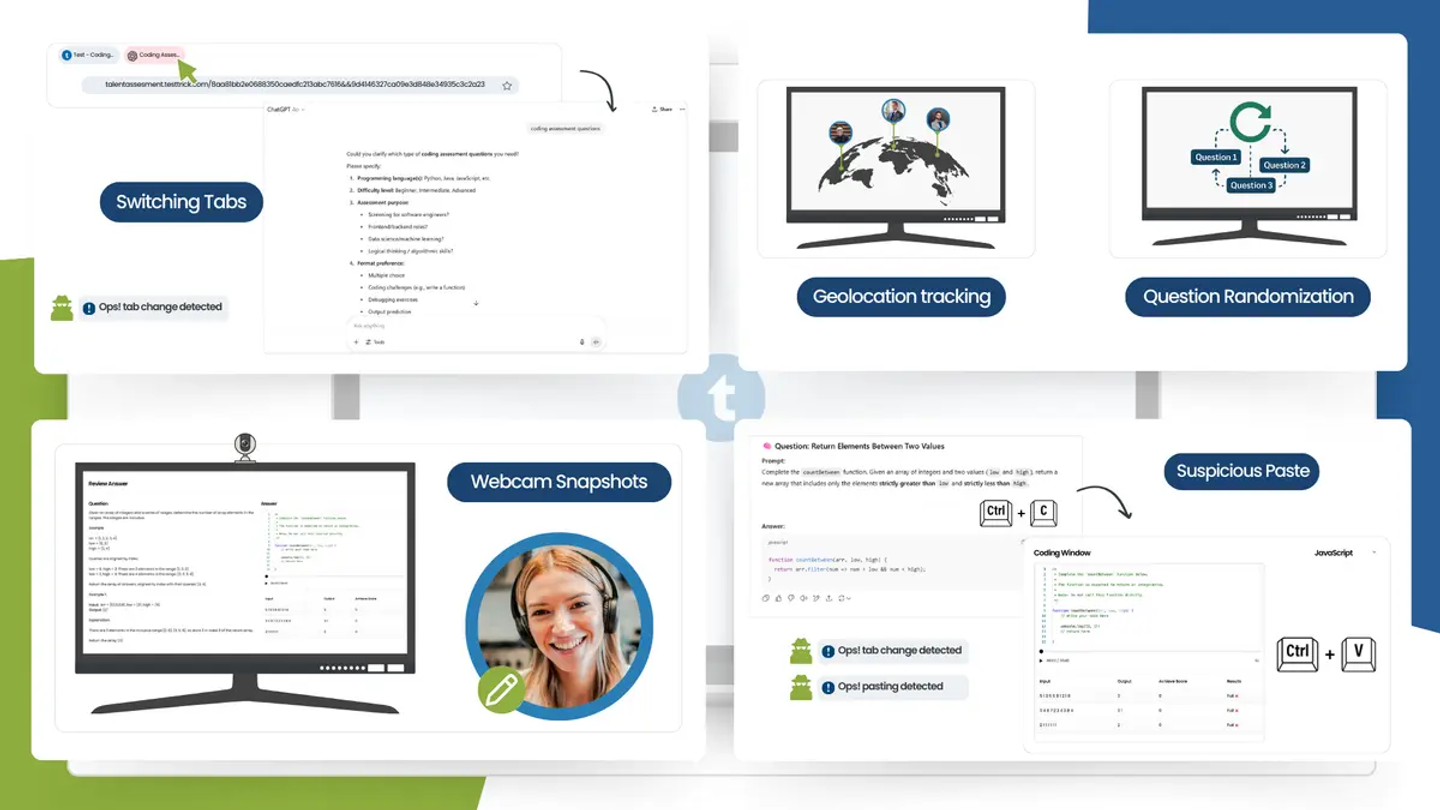
Anti-cheat features and test controls in TestTrick
When hiring happens remotely, test integrity becomes a serious concern.
Hiring managers want confidence that a candidate's performance reflects their actual ability, not outside help. This is one of the areas teams closely review when evaluating TestTrick vs. iMocha and discussing iMocha pricing.
TestTrick is built around browser-level controls and assessment-integrity checks to support remote candidate evaluation and pre-employment testing. Its proctoring features are designed for high-volume and unsupervised testing environments, where recruiters need consistent candidate experience, reliable screening, and protection against misuse. These controls help maintain fairness across skill-based assessments, coding challenges, cognitive tests, and video interviews, while keeping hiring workflows manageable for technical recruiters and HR teams.
iMocha positions its assessment platform with enterprise-grade test security. Proctoring features and integrity controls are typically explained during demos and onboarding discussions. This approach aligns with organizations that conduct assessments in more controlled environments or across structured enterprise programs, where security policies and deployment models are often customized.
The practical difference is context.
TestTrick’s integrity and proctoring features are framed around everyday recruitment use, remote screening, and ongoing hiring cycles. iMocha’s security positioning often connects to enterprise assessment programs, where controls are shaped during rollout and reflected in iMocha pricing conversations.
Reporting, Insights, and Decision-Making
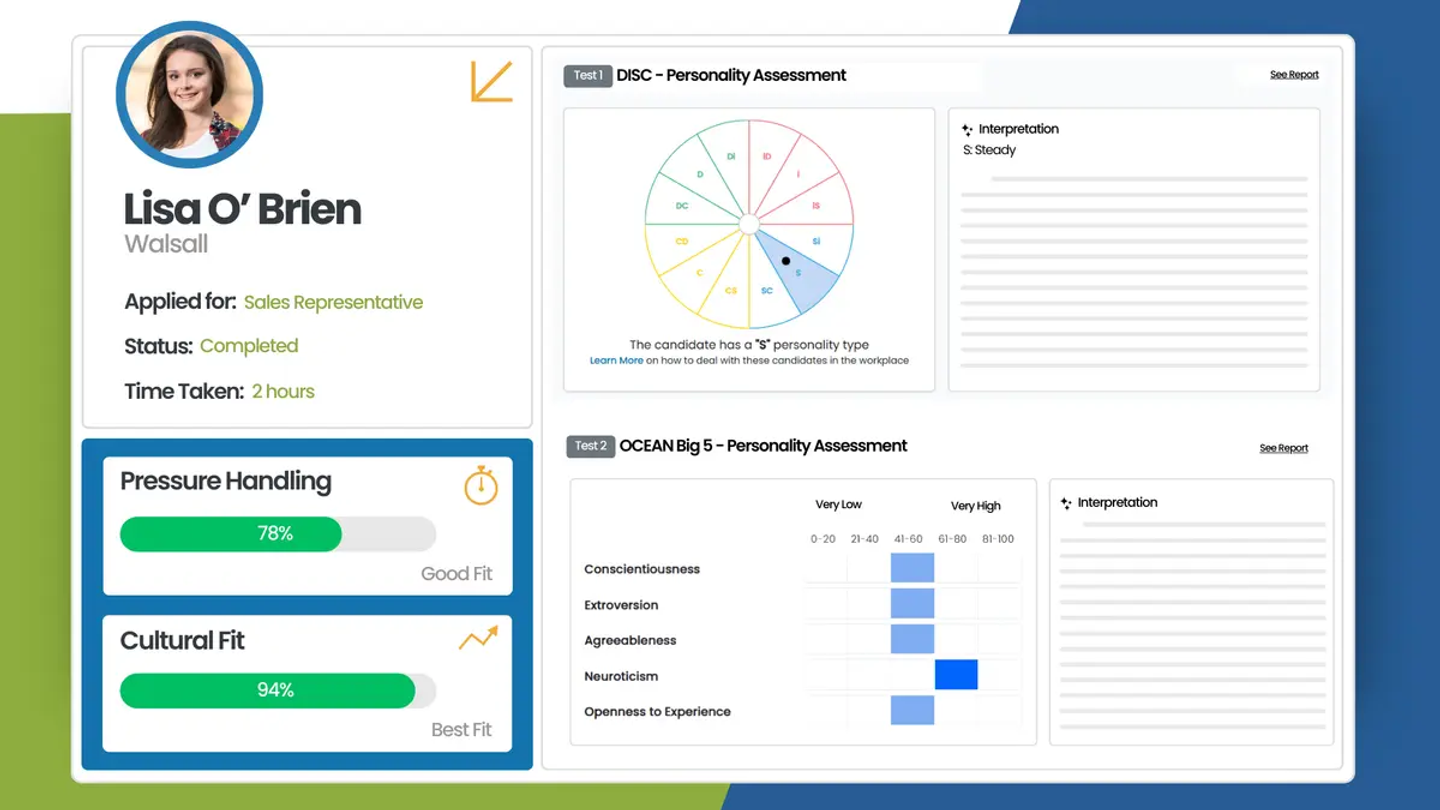
Reports and Insights in TestTrick
Reporting is where assessment data turns into hiring action.
TestTrick’s reporting is built around candidate evaluation and hiring decisions. Recruiters and hiring managers see candidate-focused reports that highlight pass/fail outcomes, role benchmarks, and skill-based assessment results. These reports focus on candidate performance, role fit, and screening outcomes, making them useful for shortlisting, interview planning, and final hiring discussions.
iMocha takes a broader approach to reporting. Its platform emphasizes skills intelligence dashboards, skills insights, and talent analytics across teams and departments. These views support not only hiring but also upskilling and reskilling programs, performance tracking, and strategic workforce planning.
The difference lies in intent: TestTrick reports help teams decide whom to hire. iMocha dashboards often help organizations analyze how skills are distributed and where gaps exist.
Integrations and Workflow Fit
How easily an assessment platform fits into existing hiring systems often affects adoption more than features.
TestTrick supports ATS integrations and is structured to plug directly into recruitment workflows. Hiring teams use it to send assessments, manage candidate evaluations, and review results without changing their existing hiring process. TestTrick’s setup is typically light, which suits teams that want to start screening without long onboarding cycles.
iMocha places a stronger emphasis on enterprise integrations. It is commonly used by organizations running complex HR software environments, where assessments integrate with multiple internal systems. This type of deployment may involve onboarding support and configuration so the platform aligns with broader HR operations.
The distinction comes down to workflow depth. TestTrick fits recruiter-led hiring flows. iMocha is often selected when assessment data needs to sit within the broader enterprise HR stack.
Best-Fit Use Cases: Where Each Platform Makes More Sense
Choosing between TestTrick and iMocha usually depends less on features and more on how your organization hires and what you expect from assessment data.
Below is a practical breakdown of where each platform fits best.
When TestTrick is the better fit
TestTrick is designed for teams whose primary goal is structured hiring and candidate screening. It is commonly used for:
- pre-employment tests and early-stage candidate evaluation
- high-volume hiring where fast shortlisting matters
- technical recruiters running coding challenges and coding simulators
- software companies screen developers across coding languages
- customer support, sales, marketing, admin, and finance hiring
- combining skills assessment with psychometric tests and cognitive ability tests
- Startup teams that want visible pricing instead of demo-only iMocha pricing discussions
- recruiters who need hiring-ready reports, pass/fail outcomes, and role benchmarks
TestTrick works best when the platform’s job is to answer one main question: “Who should we move forward with?”
When iMocha is the better fit
iMocha is often selected when organizations are building broader skills measurement programs. It fits best for:
- enterprise teams mapping skills across departments
- organizations running skills intelligence initiatives
- companies focused on skills gaps analysis and workforce planning
- HR teams building long-term talent analytics frameworks
- internal programs tied to upskilling and reskilling
- large technical organizations tracking IT skills at scale
- businesses investing in skills competency reports and talent intelligence tools
In these environments, iMocha pricing is usually evaluated as part of a wider HR software and talent analytics strategy, not only a hiring tool.
Frequently Asked Questions
1. Is iMocha more expensive than TestTrick?
iMocha pricing is demo-based and customized, so direct cost comparisons are not public. TestTrick publishes pricing plans, allowing recruiters to estimate skills assessment and candidate evaluation costs upfront without waiting for enterprise sales discussions.
2. Does TestTrick offer enterprise plans?
Yes. TestTrick offers an Enterprise plan for large hiring teams. It supports higher assessment volumes, custom candidate credits, ATS integrations, advanced reporting, and structured workflows for organizations running high-volume or multi-department candidate evaluation programs.
3. Which platform is better for coding assessments?
TestTrick is better suited for recruiter-led coding assessments, offering coding challenges, coding simulators, SQL command tasks, test-case scoring, and hiring-focused reports. iMocha is more commonly used for enterprise technical benchmarking and long-term IT skills measurement.
4. Can iMocha be used only for hiring?
No. iMocha is positioned beyond hiring. It is often used for skills intelligence, talent analytics, skills gaps analysis, and workforce programs such as upskilling and reskilling, alongside technical hiring and candidate evaluation workflows.
5. Does TestTrick include personality tests?
Yes. TestTrick includes psychometric, behavioral, and cognitive ability assessments. These are used alongside skill-based assessments to support team-fit reviews, communication screenings, and structured candidate evaluations before live interviews.
6. Which tool is easier to start with for small teams?
TestTrick is easier for small teams because pricing is public, setup is recruitment-focused, and assessments can be launched quickly. iMocha pricing and onboarding are usually structured for enterprise deployments and extended HR software environments.
Build a Hiring-Ready Assessment
Create role-specific, anti-cheat assessments and shortlist candidates on evidence, not guesswork.
Start for freeBy Tooba Noman
January 16, 2026
11 min read
Build a Hiring-Ready Assessment
Create role-specific, anti-cheat assessments and shortlist candidates on evidence, not guesswork.
Start for free