9 Best Vervoe Alternatives for Recruiters in 2026
Compare the 9 best Vervoe alternatives for 2026, with features, pricing, honest pros and cons, and how to pick the right one for the roles you hire.

By Tooba Noman
August 24, 2026
12 min read
Vervoe made AI-graded skills testing feel almost effortless: candidates do the work, the AI scores it, and you get a ranked shortlist without wading through resumes.
For plenty of teams that is enough. For others, custom-only pricing makes budgeting a guessing game, the AI scores need more of a human pass than expected, or building simulations eats more setup time than you have.
This guide breaks down nine of the best Vervoe alternatives for 2026: what each does well, where it falls short, and who it is for.
If pricing clarity, grading confidence, or lighter setup is your sticking point — or you're comparing options for talent assessment software more broadly — the tools below help.
TL;DR – Key Takeaways!
- The best alternative comes down to the roles you hire for, not the longest feature list.
- Technical hiring rewards a developer-focused tool; many-role screening rewards breadth.
- AI grading is only as useful as its accuracy and how easily you can audit a score.
- Watch how a tool charges: custom-only and annual plans climb fast at volume.
- For skills, psychometrics, and AI video in one proctored flow with flat pricing, TestTrick is the standout pick.
Comparison table
| Tool | Best for | Key strength | Watch-out | Pricing |
|---|---|---|---|---|
| TestTrick | All-in-one screening with auditable AI scoring | Skills, psychometrics, and AI video in one proctored sitting; every AI score returns a justification and transcript | Newer, so fewer third-party reviews | From $35/mo, billed annually; free trial |
| Harver | High-volume screening with heavy assessment science | Validated, realistic job previews built on I/O psychology, plus workflow automation | Involved setup; heavier than small teams need | Custom / quote-based |
| HackerRank | Engineering-heavy pipelines | Rigorous coding evaluation with global benchmarking; familiar format keeps developer drop-off low | Plagiarism and AI-detection flags hard to interpret | $99 per month |
| Codility | Enterprise engineering teams needing anti-cheating rigor | Hard-to-game screening plus CodeLive real-time interviews from one task library | Coding environment lacks a debugging pane and code completion | $1200 starter annual plan |
| TestGorilla | High-volume generalist hiring | Wide library with auto-scoring and ranking; full workflow trialable on a free plan | Test creation and editing can feel rigid | Free plan; paid tiers not listed in article |
| iMocha | Enterprises needing workforce-wide skills intelligence | 2,500+ tests with competency scoring and skills-gap mapping beyond hiring | Dated interface; assessment building less straightforward | Custom pricing |
| Testlify | Small and mid-sized teams wanting low, published pricing | 3,500+ tests plus conversational AI interviews at a low per-user price | Limited flexibility for highly customized niche tests | From $139/month |
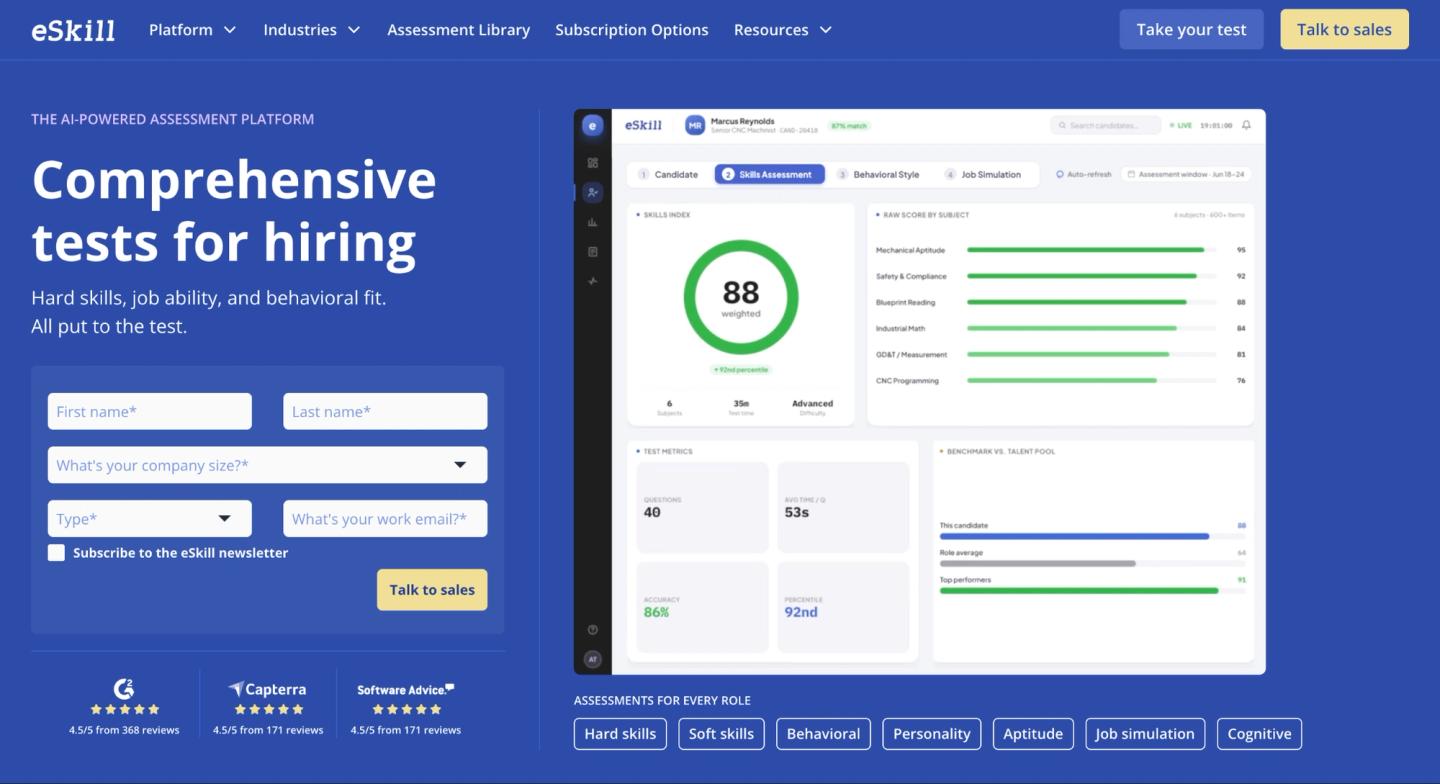
| eSkill | High-volume operational and clerical hiring | Question-level builder from a deep, human-validated hard-skill bank | Dated reporting workflows; some features are paid add-ons | Custom pricing |
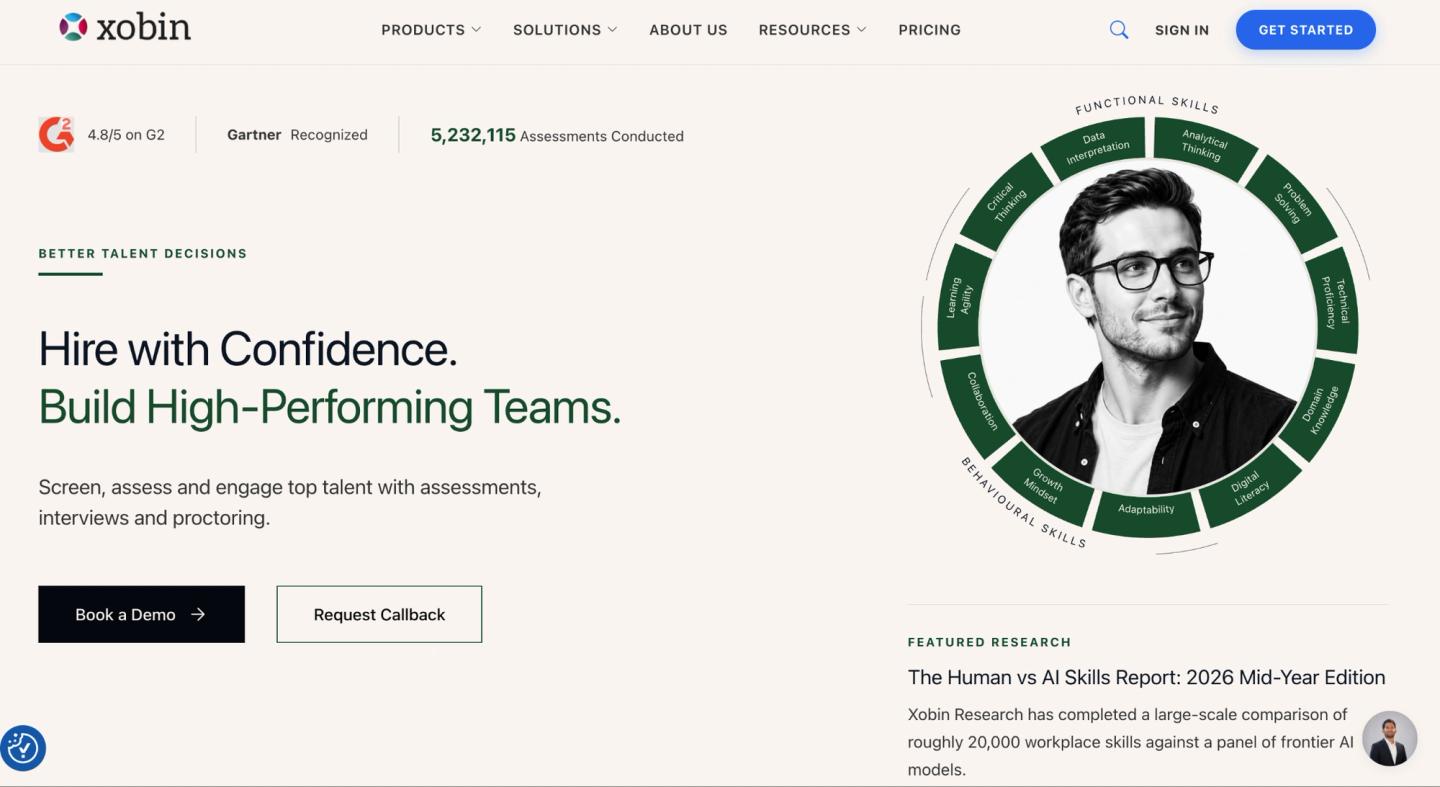
| Xobin | Startups and mid-market wanting testing plus built-in ATS | Skills tests, psychometrics, video, and ATS in one platform; unlimited invites | Question bank could go deeper on advanced concepts | Custom pricing |
Why consider a Vervoe alternative?
Vervoe earns a solid 4.6/5 on G2, so this is not about a broken product, but about fit and a few gripes that surface once teams live with it:
- AI grading accuracy: Reviewers put the scoring model around 71 to 78 percent accurate even after training, so scores still need a human pass.
- Pricing transparency: Vervoe's current public pricing page does not display standard self-serve subscription prices, with customers directed to contact sales for pricing.
- Reporting depth: In head-to-head G2 comparisons, reviewers flag reporting and analytics as a weak spot.
- Setup and drop-off: Building strong simulations takes real upfront effort, and longer multi-step assessments can lose good candidates.
If pricing clarity, grading confidence, or lighter setup is your sticking point, the tools below help.
How this list was evaluated and selected
I looked at more than a dozen platforms the way a recruiter uses them, not how a demo shows them off, reading G2 and Capterra reviews, then put each against four questions:
My big question
What I looked for
1. Can I open up the AI score?
Grading that shows its work, a justification and transcript you can check, with a human able to override, not a number to take on trust.
2. Do I know the price before a call?
Published pricing or a clear per-candidate model, so a quote-only wall does not turn budgeting into guesswork.
3. Will strong candidates finish?
Short, mobile-friendly assessments and quick setup, since long multi-step tests are where good applicants drop off.
4. Does it go deep where I hire?
Real depth for technical, high-volume, or enterprise roles, with reporting past pass or fail and clean ATS integration.
The best Vervoe alternatives to try
1. TestTrick
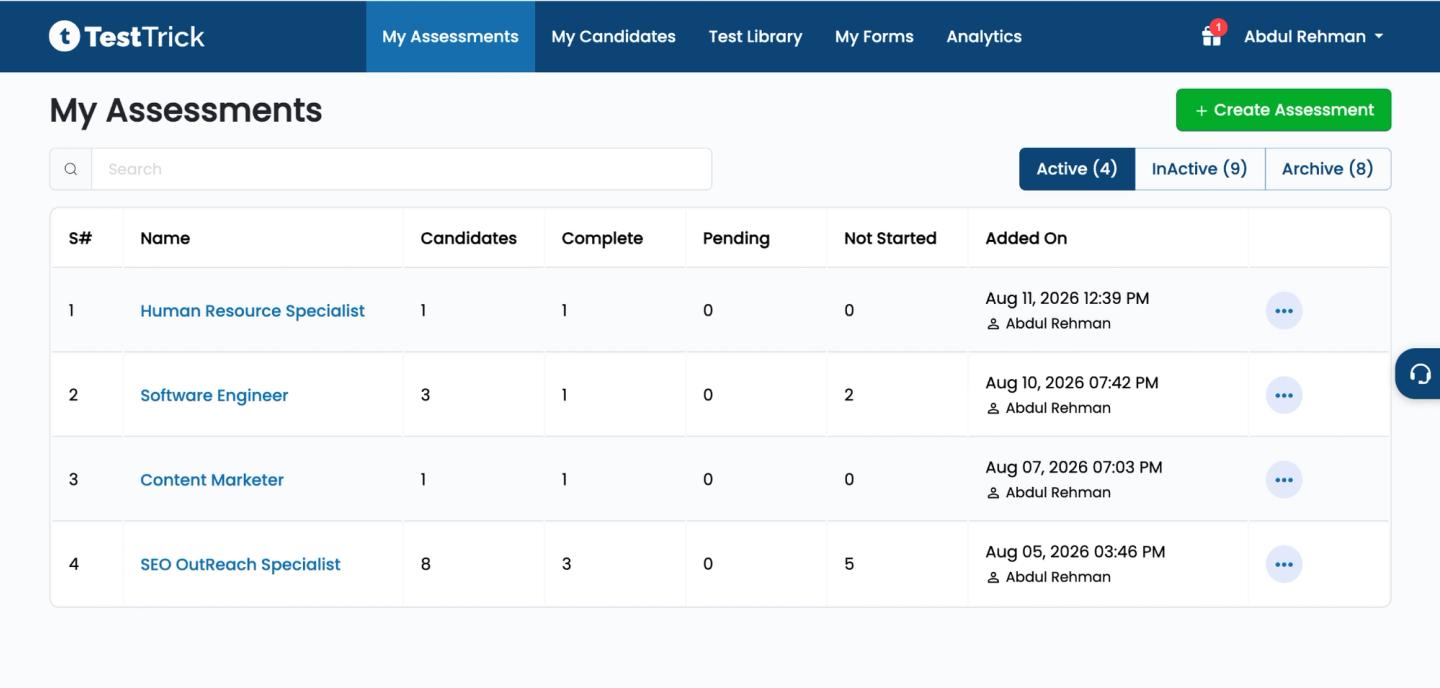
TestTrick
Best for: Teams that want auditable AI scoring, transparent pricing, and skills, psychometrics, and video in one proctored sitting.
TestTrick addresses two common concerns buyers may have with Vervoe: limited public pricing visibility and the desire for greater visibility into how AI-generated scores are produced. Pricing here is published and flat, tied to how many candidates you assess rather than which features you unlock. And every AI-scored answer returns the score, a written justification, and a transcript, so you can see why a candidate landed where they did.
It is also genuinely all-in-one. An assessment is a stack of tests, so you can pair a coding challenge, a cognitive test, and a DISC, OCEAN, or MBTI profile, then add an AI-scored video interview to the same invite. The library runs past 500 built-in tests across technical, cognitive, language, situational-judgment, and personality domains; if nothing fits, you build your own or have TestTrick’s team do it.
Key features
- Auditable AI video scoring: Every graded answer returns a score, written justification, transcript, and summary.
- One assessment, seven question types: Coding, Google Sheets, MCQ, fill-in-the-blanks, essay, file upload, and video, plus DISC, OCEAN, and MBTI profiles.
- Code playback: Replay how a candidate built a solution line by line across 15+ languages, not just the final result.
- Layered proctoring: Camera and screen snapshots, copy-paste blocking, dual-monitor detection, and tab monitoring, with violations flagged.
Pros
- Published, flat pricing with every feature on every plan, so budgeting does not hinge on a sales call.
- A full first round runs in one proctored sitting, with AI grades you can actually audit.
Cons
- Newer than some names here, so there are fewer third-party reviews to comb through, though the ones it has are strong.
Pricing: From $35/month, billed annually, with a free trial.
2. Harver
Harver
Best for: High-volume teams that want Vervoe-style realistic assessments with heavier science and workflow automation behind them.
Harver comes at simulations from the enterprise end of the market. Instead of leaning on resumes, it puts candidates through realistic job previews and situational tasks that mirror the day-to-day of the role, so you see how someone would actually handle the work. The test design draws on decades of I/O psychology, which gives the scoring more validation than most tools can claim.
It shines when you are screening large applicant pools for customer service, retail, hospitality, or graduate roles, and it pairs assessments with video interviews and scheduling in one place. It is a bigger commitment than a lightweight test builder, but the trade is depth and defensibility.
Key features
- Realistic job previews: Candidates work through situational tasks that mirror the role, so you evaluate behavior rather than recall.
- Validated assessment library: Aptitude, personality, and skills tests grounded in I/O psychology and cognitive science.
- Built for volume: AI candidate scoring, automated workflows, video interviews, and scheduling for high-applicant hiring.
Pros
- Realistic, validated assessments that map to the actual role, with strong candidate engagement and automation for screening large pools at scale.
Cons
- Setup and configuration can be involved, and the platform is geared to high-volume hiring, so it can feel heavier than smaller teams need.
Pricing: Custom and quote-based. Harver does not publish public tiers, so pricing is arranged directly with their sales team.
3. HackerRank
HackerRank
Best for: Engineering-heavy pipelines where Vervoe's all-purpose AI scoring is not rigorous enough for real coding evaluation.
HackerRank is built for developers from the ground up, and the depth shows. You can run take-home screens, live interviews, and even certifications inside one funnel, then benchmark every candidate against a global developer pool so a passing score actually carries weight.
Coverage runs well past algorithm puzzles into front-end frameworks, SQL, DevOps, and data roles. There is a quieter advantage too: most engineers have already sat a HackerRank test, so the format rarely trips them up and drop-off stays low. For non-technical positions, it is far more firepower than you need.
Key features
- Role-based CodeScreen assessments: Take-home tests built around real frameworks and project-style problems across front-end, back-end, SQL, DevOps, and data roles, not just puzzles.
- Benchmarking and skill analytics: Score candidates against a large global developer pool with percentile benchmarks and detailed skill reporting.
- Deep ATS and workflow fit: Native integrations with Greenhouse, Lever, Workday, and SAP SuccessFactors, plus AI-assisted interviewing and developer certifications.
Pros
- Rigorous, engineering-grade evaluation with benchmarking that scales to large pipelines, plus brand familiarity that keeps developer drop-off low.
Cons
- Reviewers note its plagiarism and AI-detection flags can be hard to interpret, since the signals behind them are not always clearly explained.
4. Codility
Codility
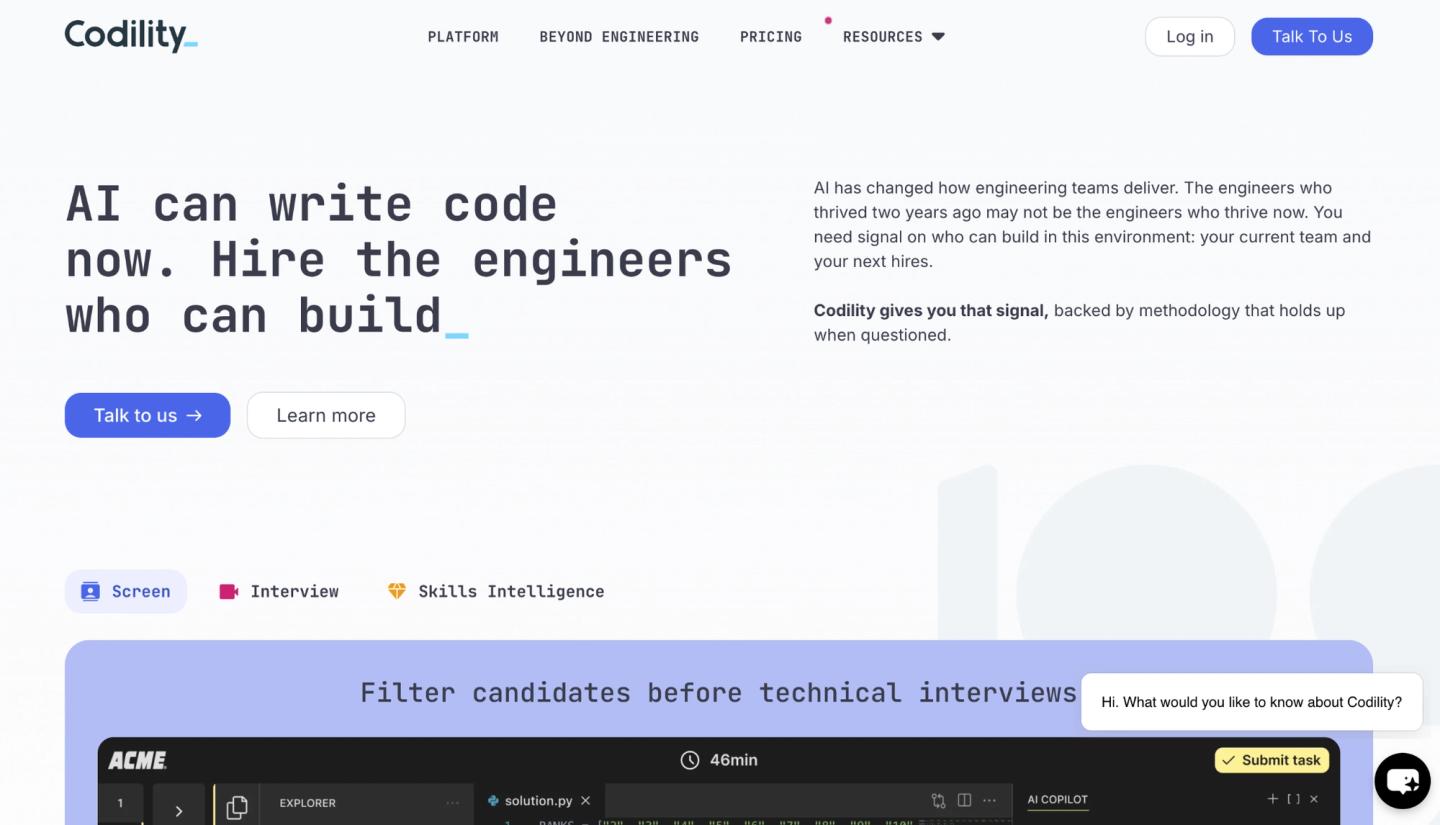
Best for: Enterprise engineering teams that need hard-to-game technical screening plus a serious live-interview tool in one place.
Codility is a purpose-built technical screener that enterprises lean on precisely because its evaluation holds up under scrutiny. It runs two products: take-home tests for early screening and CodeLive for real-time interviews, both pulling from the same task library.
Where it separates from the pack is integrity. Similarity checks, behavioral signals, plagiarism detection, and risk scoring make a result hard to fake, which matters when you are hiring at volume.
Key features
- CodeLive interviews: Real-time collaborative coding sessions with playback, so panels can run and review interviews without a separate tool.
- Enterprise reporting and benchmarking: Percentile scoring, task-level breakdowns, and analytics that let hiring managers compare candidates objectively.
- ATS and workflow integrations: Connects with Greenhouse, Lever, Workday, and similar systems so results flow into your existing pipeline.
Pros
- Rigorous, hard-to-game technical assessments with a polished live-coding experience and clean reporting that scales to enterprise pipelines.
Cons
- Reviewers note the coding environment lacks a debugging pane and code completion, and unit testing before submitting is limited, which some engineers feel tips tasks toward puzzle-solving over real-world work.
5. TestGorilla
TestGorilla
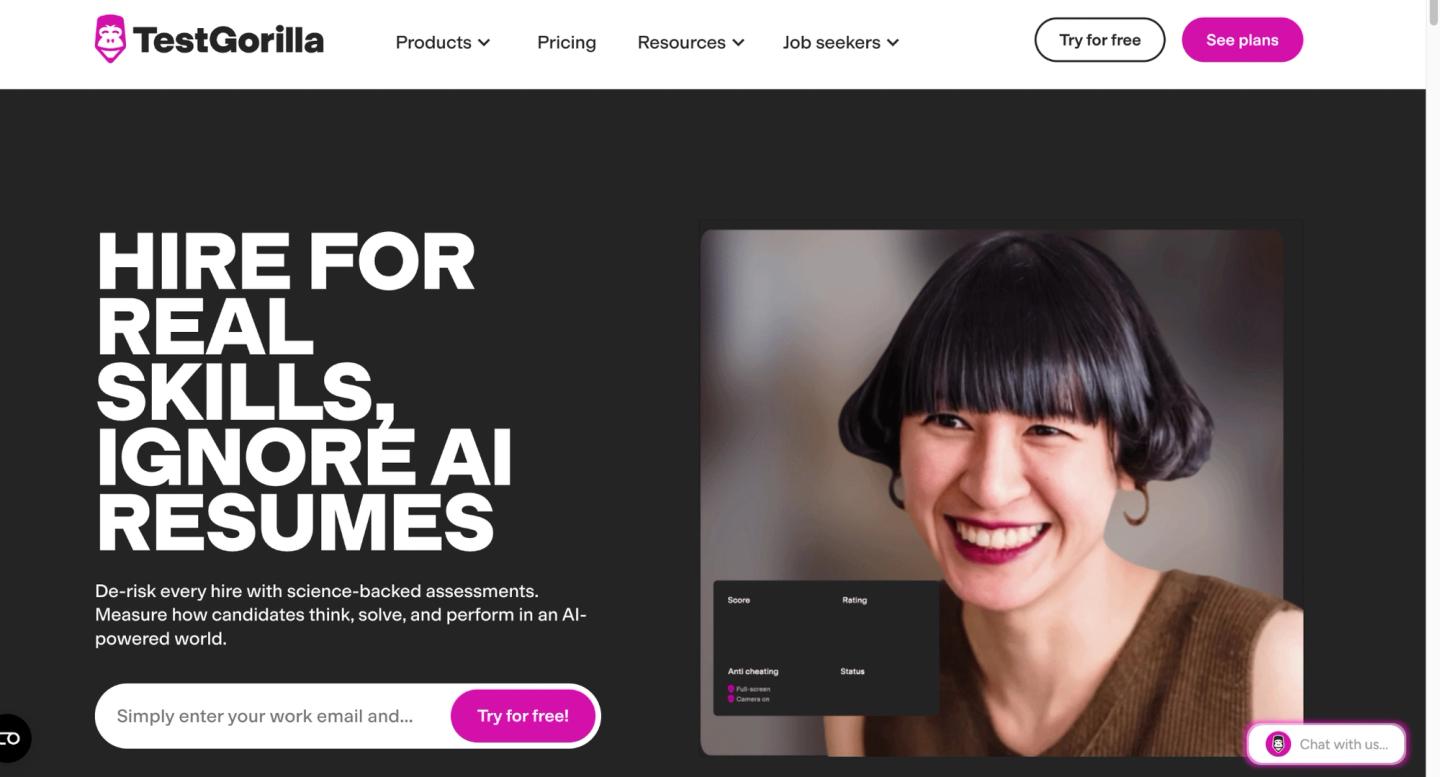
Best for: High-volume generalist hiring where you want a wide test library and a free way to trial the full workflow before spending a cent.
Vervoe keeps its pricing behind a sales call. TestGorilla does the opposite: you can create an account, browse the library, and run a real assessment before anyone asks for a budget.
You bundle several short tests into one assessment, layer in one-way video questions, and let auto-scoring rank your applicants for you. The library leans wide rather than deep, which is ideal for high-volume screening across common roles but starts to show its limits on senior or highly specialized hires.
Key features
- Multi-test assessments: Bundle several tests into one assessment across cognitive ability, personality, role skills, and language, then auto-rank candidates by score.
- Anti-cheating controls: Webcam snapshots, full-screen and IP monitoring, and question randomization that flag candidates who leave the test environment.
- Custom questions and branding: Add your own multiple-choice, coding, video, or file-upload questions and put your brand on the candidate experience.
Pros
- A broad, battle-tested library plus auto-scoring and candidate ranking that make high-volume screening fast, all trialable on a free plan before you commit a budget.
Cons
- Reviewers report that test creation and editing can feel rigid, with limited fine-grained control over questions and scoring compared to more customizable tools
6. iMocha
iMocha
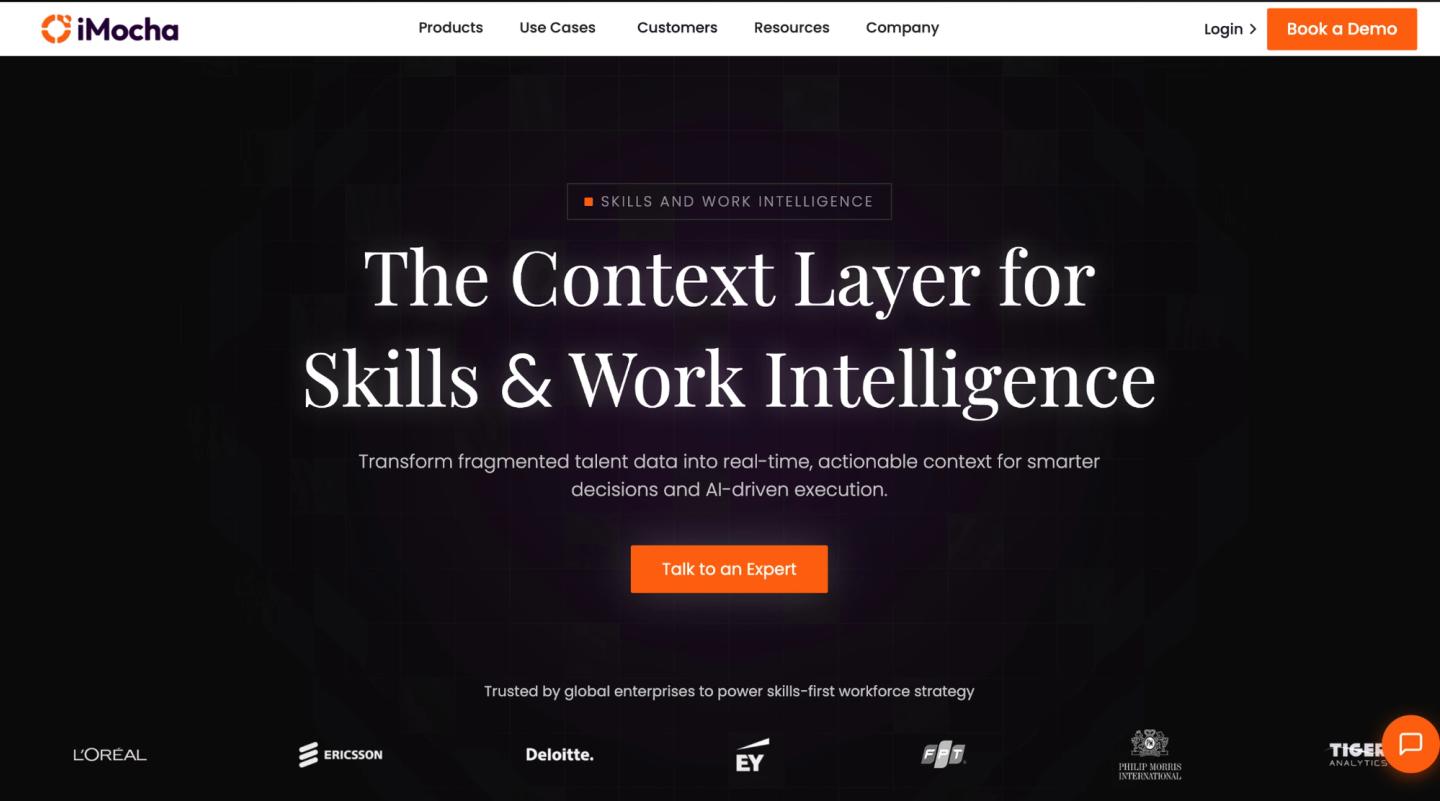
Best for: Enterprises that need validated competency scoring and workforce-wide skills reporting beyond what Vervoe provides.
iMocha is a skills-intelligence platform rather than a screening tool. It scores candidates by competency level and maps skills gaps across an entire workforce, not just a hiring pipeline. AI agents infer skills from resumes and certifications and validate them through assessments and conversational interviews.
It is used by more than 300 organizations, including 15 Fortune 500 companies, for hiring, internal mobility, and upskilling. Smaller teams may find it more than they require, but for enterprises seeking deeper reporting it is well suited.
Key features
- Extensive assessment library: More than 2,500 tests across technical, functional, cognitive, and domain-specific skills, plus live coding.
- Skills AI and AI interviews: Skills inferred from resumes and certifications, then validated through assessments and conversational interviews.
- Enterprise integrations: Connects with major ATS and LMS platforms, including a SAP SuccessFactors skills partnership.
Pros
- Deep, enterprise-grade library with skills-gap reporting and competency-level scoring that extends beyond candidate screening into workforce planning.
Cons
- Reviewers note the interface can feel dated and that building and curating assessments is less straightforward than expected
7. Testlify
Testlify
Best for: Small and mid-sized teams that want published, per-user pricing that stays affordable at low volume.
Vervoe offers less value for teams that hire only a few roles a year and cannot see pricing before committing. Testlify takes the opposite approach, with a published, low per-user price and a large library. It pairs more than 3,500 validated tests across technical, cognitive, language, personality, and role-specific skills with conversational AI interviews and a full proctoring suite.
Key features
- Conversational AI interviews: Chat, audio, and video interviews that capture structured responses at scale.
- Multilingual coverage: Tests and interviews across 16-plus languages.
- Proctoring suite: More than 18 anti-cheating and proctoring controls.
Pros
- Clean, intuitive interface with detailed analytics to support hiring decisions.
- Strong value for money, combining a large library and AI interviews at a low entry price.
Cons
- Reviewers note limited flexibility for building highly customized tests for niche roles
8. eSkill
eSkill
Best for: High-volume operational and clerical hiring that requires granular hard-skill tests rather than simulations.
Not every role needs a job simulation, and building one in Vervoe takes considerable setup time. eSkill takes a different approach, allowing recruiters to assemble a test question by question from a deep, human-validated bank of concrete skills, ranging from Excel to blueprint reading and medical coding.
Founded in 2003, it remains focused on hard-skill testing and offers extensive customization, though the interface shows its age.
Key features
- Question-level test builder: Combine questions from multiple categories into a single role-specific assessment.
- Human-validated content: A library validated by subject-matter experts rather than AI.
- Anti-cheating and proctoring: Photo ID checks, environment lockdown, and flagged-behavior review.
Pros
- A large, deep inventory of subjects and questions for tailoring tests to specific roles.
- Question-level customization that few tools match for granular hard-skill testing.
Cons
- Reviewers note that reporting and question ordering rely on dated workflows, and some capabilities such as custom branding are paid add-ons
9. Xobin
xobin
Best for: Startups and mid-market teams that want skills tests, psychometric assessments, video interviews, and a built-in applicant tracking system in one platform.
Xobin positions itself as an all-in-one talent operating system rather than a single-purpose testing tool. It combines role-based skill tests, psychometric assessments, video interviews, and a built-in applicant tracking system, which removes the need to connect several separate products.
The platform draws on a validated library of more than 2,500 job skills and is used by over 5,000 teams across 55-plus countries. It is priced for growth-stage and mid-market organizations, and reviewers frequently cite its unlimited candidate invites and responsive support. For teams that want broad coverage and workflow consolidation rather than Vervoe's simulation focus, it is a practical option.
See how it compares in our roundup of talent assessment tools.
Key features
- All-in-one platform: Role-based skill tests, psychometric assessments, video interviews, and a built-in applicant tracking system.
- Validated question library: More than 2,500 job skills across technical, aptitude, and behavioral categories.
- Proctoring and scale: Anti-cheating controls and unlimited candidate invites suited to high-volume and campus hiring.
Pros
- Broad, consolidated feature set that replaces several separate hiring tools.
- Strong value, with unlimited invites and consistently well-rated customer support.
Cons
- Reviewers note the question bank could go deeper on advanced or specialized concepts
Questions to ask when choosing a Vervoe alternative
Can I see how the AI scored? Look for a justification, transcript, and human override, not a bare number.
Is pricing published and fair at my volume? Favor a per-candidate model you can see up front over a quote-only wall.
How long does an assessment take? Long, multi-step tests lose good applicants, so check length, mobile fit, and completion.
How much setup does a strong test need? If simulations ate your time, ask how much a ready-made library covers.
Does its depth and reporting match how I hire? Confirm role depth, reporting past pass or fail, and clean ATS integration.
So, what is the best Vervoe alternative?
The right pick depends on the roles you hire for. But if you want the closest thing to a single answer, TestTrick is the strongest all-rounder here: 500+ built-in tests and custom builds, skills, psychometrics, and auditable AI video in one proctored assessment, and flat pricing with every feature on every plan. It starts at $35/month, billed annually, with a free trial.
If Vervoe isn't your only consideration, our wider look at skills assessment tools for recruiters covers the category more broadly.
FAQ
Choosing the right Vervoe alternative for your team
The best Vervoe alternative fits the roles you hire for and how your team works, not the longest feature list. TestTrick covers most of those needs in one place, with flat pricing that does not climb as you hire, AI grades you can audit, and proctoring built for remote roles. Book a demo and screen your next batch on evidence not resumes.
Build a Hiring-Ready Assessment
Create role-specific, anti-cheat assessments and shortlist candidates on evidence, not guesswork.
Start for freeBy Tooba Noman
August 24, 2026
12 min read
Build a Hiring-Ready Assessment
Create role-specific, anti-cheat assessments and shortlist candidates on evidence, not guesswork.
Start for free